Dwain Northey (Gen X)
https://www.cbsnews.com/news/naacp-travel-advisory-florida-says-state-hostile-to-black-americans/
Remember the good old days when there were only travel advisories and or ban for, what some would call, third word countries? Well now because of the vile vitriol of one Governor Ron DeSantis the state of Florida, a vacation destination, has received a travel advisory by the NAACP.
The wannabe future President has made the climate so venomous in Florida the anyone who is a part of any minority group does not feel safe in the state. Black, Brown, LGTBQ+, these are all groups that are under attack in the Sunshine State. The majority Republican legislature and their fearful leader has passed laws that make almost everything a jailable offence and the fact that the state has very loose gun laws and a stand your ground law makes it more dangerous than being a blonde female in central America.
Florida residents are able to carry concealed guns without a permit under a bill signed into law by Republican Gov. Ron DeSantis. The law, which goes into effect on July 1, means that anyone who can legally own a gun in Florida can carry a concealed gun in public without any training or background check. This with their ridiculous stand your ground law, ‘Florida’s “Stand-Your-Ground” law was passed in 2005. The law allows those who feel a reasonable threat of death or bodily injury to “meet force with force” rather than retreat. Similar “Castle Doctrine” laws assert that a person does not need to retreat if their home is attacked.’ Makes it really sketchy to go there.
This in top of the don’t say gay rule and the new trans ruling that just passed.
“Florida lawmakers have no shame. This discriminatory bill is extraordinarily desperate and extreme in a year full of extreme, discriminatory legislation. It is a cruel effort to stigmatize, marginalize and erase the LGBTQ+ community, particularly transgender youth. Let me be clear: gender-affirming care saves lives. Every mainstream American medical and mental health organization – representing millions of providers in the United States – call for age-appropriate, gender-affirming care for transgender and non-binary people.
“These politicians have no place inserting themselves in conversations between doctors, parents, and transgender youth about gender-affirming care. And at the same time that Florida lawmakers crow about protecting parental rights they make an extra-constitutional attempt to strip parents of – you guessed it! – their parental rights. The Human Rights Campaign strongly condemns this bill and will continue to fight for LGBTQ+ youth and their families who deserve better from their elected leaders.”
This law makes it possible for anyone to just accuse someone of gender affirming care to have their child taken from them this would include someone traveling from out of state. This alone justifies a travel ban to the Magic Kingdom for families.
Oh, and I haven’t even mentioned DeSantis holy war with Disney, the largest employer in the state. I really hope the Mouse eats this ass holes lunch.
Well that’s enough bitching, thanks again for suffering though my rant.
-
Mortality Check
Dwain Northey (Gen X)
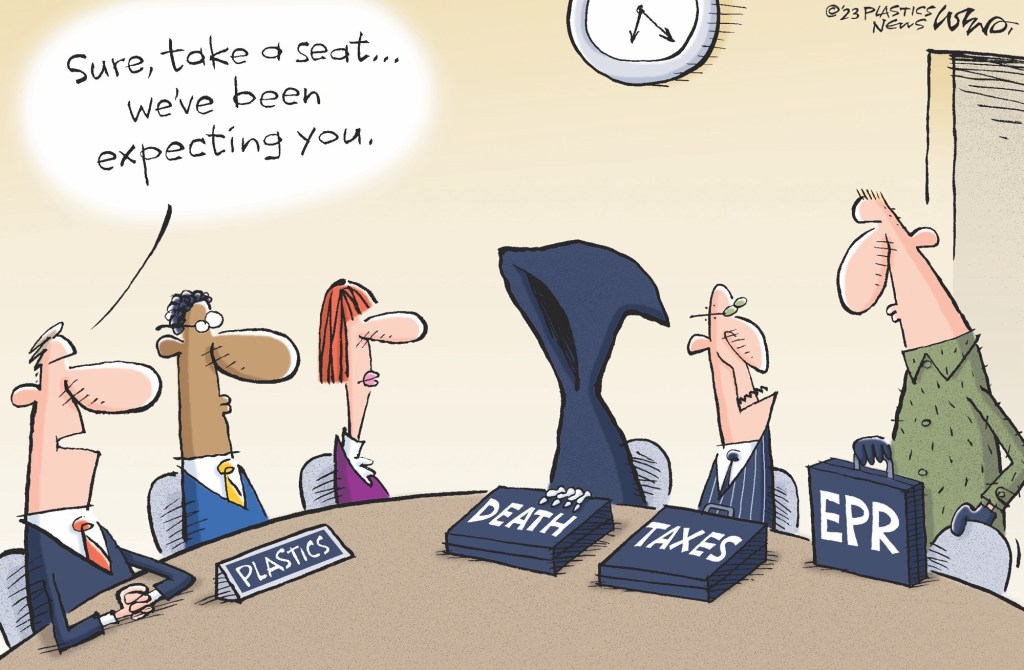
This week’s celebrity deaths have hit differently. For Generation X, it’s more than just a passing headline or another notification ping on the phone — it’s a quiet, unsettling reminder of our own mortality and the relentless march of time. We’ve always prided ourselves on being the in-between generation — not quite analog, not quite digital, sandwiched between the idealism of Boomers and the hustle of Millennials. But now, with icons from our youth and peers our own age passing away, we’re being forced to face the very truths we’ve spent decades side-stepping.
When someone we grew up watching, listening to, or admiring dies, it pulls at something deeper. These weren’t just celebrities; they were time markers. They gave shape to our identity when the world felt chaotic or uncertain. They were the background music at parties, the posters on our bedroom walls, the characters we quoted endlessly in college dorms. Losing them is like losing pieces of ourselves — fragments of innocence, joy, rebellion, and hope.
But the part that stings even more is when it’s someone our age. Not a legend from the generation before, but a contemporary — someone who came of age during the same cultural moments we did, who maybe even seemed invincible in their fame and vitality. It jolts us. We can no longer pretend that we’re immune or that we’re still “young enough” for everything to work out. We’re not the young ones anymore. We’re the ones people are starting to say “gone too soon” about.
There’s a sobering recognition that our bodies, our time, our chances — they’re all finite. This isn’t to say life loses its beauty, but its fragility becomes more apparent. These deaths are a quiet whisper in our ears: to check in on our health, to reach out to old friends, to spend more time being present rather than numbing out.
Gen X has often been called cynical or detached, but maybe it’s more accurate to say we’re protectively skeptical. Life hasn’t been easy, and trust hasn’t always been earned. But moments like this break through that hard shell. They make us pause, grieve, reflect, and—if we let them—soften. And in that softening, perhaps we find a new way to live the second half of our lives: awake, grateful, and fully aware.
-
Sustainability
Dwain Northey (Gen X)

Sustainability is often associated with clean energy solutions like wind and solar power, which are crucial in the global effort to reduce greenhouse gas emissions and combat climate change. These technologies offer long-term, renewable alternatives to fossil fuels and are critical in transitioning to a low-carbon economy. However, focusing solely on energy overlooks another significant aspect of sustainability: the materials we use in everyday products. To truly build a sustainable future, we must also address the destructive impacts of traditional industries—like logging—and turn toward renewable, fast-growing alternatives such as hemp and bamboo.
Old growth forests and regions like the Amazon rainforest are being destroyed at alarming rates to support industries such as paper production, textiles, and construction. These forests are not just carbon sinks but irreplaceable ecosystems that support biodiversity and regulate the global climate. The continuation of logging in these regions perpetuates environmental degradation, biodiversity loss, and the displacement of Indigenous communities.
Hemp and bamboo offer compelling solutions. Both are highly renewable and grow rapidly compared to traditional trees. Hemp can be harvested in just four months and grows in a variety of climates without the need for pesticides or herbicides. Bamboo, one of the fastest-growing plants on Earth, can regenerate without replanting, making it an ideal material for everything from construction to textiles and even paper. These crops can be cultivated on land unsuitable for traditional agriculture, reducing pressure on forests and food-producing areas.
Beyond their environmental benefits, hemp and bamboo also hold significant economic potential. Industries that rely on deforestation could shift to these alternatives without losing profitability—in fact, they might find new markets and efficiencies. Hemp is already being used in bioplastics, packaging, clothing, and paper, while bamboo has gained traction in construction, flooring, and even biodegradable utensils. Investing in processing infrastructure and supply chains for these crops could create jobs, stimulate rural economies, and build a more resilient, circular economy.
In short, while clean energy is a critical component of sustainability, it’s only one piece of the puzzle. To truly live in harmony with the planet, we must rethink not just how we power our lives but also the materials we consume. Shifting to sustainable crops like hemp and bamboo offers a clear path away from deforestation and toward a greener, more profitable future.
-
Dog with a Bone
Dwain Northey (Gen X)

For too long, Democrats have clung to the notion that playing fair will eventually win the day. But the modern Republican Party, led by Donald Trump, has rewritten the rules—and Democrats must catch up or be left behind. The GOP has mastered the art of relentless messaging, never letting a scandal die, and turning even the most damning truths into weapons of political advantage. Meanwhile, Democrats often back down or “move on,” allowing lies, corruption, and criminal behavior to fade from public memory. That must end.
Take the Epstein files, for example. Trump’s associations with Epstein, the allegations, the photos, the flight logs—these should be front and center every time he opens his mouth about “law and order.” Instead, Democrats too often shy away, fearing blowback or accusations of playing dirty. The same goes for Trump’s decades of lies, bankruptcies, racial discrimination cases, and his business dealings while in office. The GOP would hang these facts like a noose around any Democrat’s neck and never let go. Why don’t Democrats do the same?
The stakes are too high to keep fighting a fair fight when the other side is setting fire to the rulebook. If democracy is on the line—as Democrats claim—then it’s time to act like it. That means being ruthless with the truth, repeating it, weaponizing it, and refusing to let the public forget. Because if the Democrats don’t play the game to win, the country may lose everything.
-
25th Amendment… it is time
Dwain Northey (Gen X)

For years, critics and media figures have consistently portrayed President Joe Biden as too old or mentally unfit for office, citing his age, stumbles, or verbal gaffes as signs of decline. But this laser focus on Biden’s supposed senility has largely ignored the mounting, and arguably more serious, signs of cognitive deterioration displayed by Donald Trump — a man who is not only the same age as Biden but increasingly untethered from reality in ways that go far beyond slips of the tongue.
Take, for example, Trump’s recent bizarre assertion that people seeking asylum in the U.S. are being released from “insane asylums” or foreign prisons by their governments and deliberately sent to America. This isn’t just fearmongering — it’s a complete detachment from how asylum systems work, not to mention a deeply offensive mischaracterization of vulnerable populations. Yet Trump continues to double down on this fantasy as though it were fact. Even more telling, he recently claimed that “think tanks” are literal buildings where people physically go to “think,” a baffling misunderstanding of a term that has been standard in policy and academic circles for decades.
These are not isolated gaffes; they are symptoms of a man who appears to be cognitively unraveling. Trump has also repeatedly confused world leaders, slurred through speeches, and meandered through conspiracy theories with little grasp of their internal logic. If Biden had made even one of these comments, headlines would explode with questions about his fitness for office. When Trump does it, the media and political world too often shrug.
This double standard is dangerous. If cognitive fitness is going to be a legitimate concern in presidential politics — and it should be — then it must be applied fairly. Trump’s recent statements should raise immediate red flags about his mental acuity. The 25th Amendment, designed for moments when a president is no longer capable of fulfilling the duties of the office, exists for precisely this kind of situation. While its invocation is serious and rare, the time has come for a national conversation about whether Donald Trump meets the basic threshold of cognitive competence. Because the evidence is piling up — and it’s not pretty.
-
Does any of it work?
Dwain Northey (Gen X)
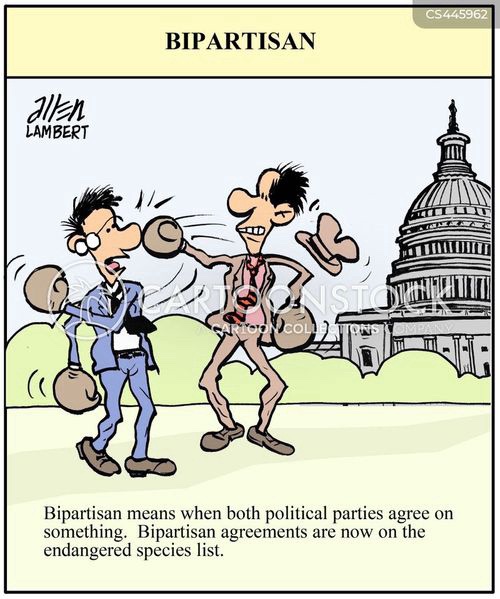
A parliamentary system and the U.S. system (called a presidential system) are two different ways of running a government.
In a parliamentary system (like in the UK or Canada), people vote for a political party. The party that wins the most seats in Parliament chooses the leader, called the Prime Minister. This leader is part of the law-making group and works closely with it. If the Prime Minister loses support, they can be removed quickly by a vote.
In the U.S. system, people vote separately for the President and for Congress (which includes the Senate and House of Representatives). The President is not part of Congress and cannot be easily removed unless they break the law. This system divides power more strictly between different branches of government.
Which one represents the people better? It depends.
Parliamentary systems can make decisions faster because the leader and lawmakers are usually from the same party. They can quickly pass laws that reflect what the people voted for. The U.S. system is slower, but it has more checks and balances. This can protect against one group having too much power, but it also means more gridlock and less action.
So, parliamentary systems may represent the people’s vote more efficiently, while the U.S. system focuses more on limiting power and protecting minority views.
-
Thank You Ozzy
Dwain Northey (Gen X)

I wanted to pen a tribute from all Gen Xers who melt on the altar of Ozzy Osbourne‘s rock ‘n’ roll Heritage thanking him for everything that he put forward in his Musick library that will live on

A Tribute to Ozzy Osbourne: The Prince of Darkness
From the thunderous riffs of Black Sabbath to the haunting solo echoes of No More Tears, Ozzy Osbourne has long stood as the unholy high priest of heavy metal. His voice—a chilling wail in “War Pigs” and a mournful cry in “Mama, I’m Coming Home”—pierced generations with truths too dark for daylight. A man who warned us “Satan laughing spreads his wings,” yet also told us “I’m just a dreamer, I dream my life away.” In Ozzy, contradiction became magic.
Beneath the wild theatrics, biting heads off bats and howling at the moon (“Bark at the Moon”), Ozzy gave voice to the wounded, the misunderstood, and the damned. “Crazy, but that’s how it goes,” he sang, and suddenly madness felt survivable. “I’m going off the rails on a crazy train,” became an anthem for anyone who ever felt like a misfit. He didn’t preach salvation—he lived through the fire and ashes, and came out screaming.
With every guttural howl in “Paranoid” and every echo of “Goodbye to Romance,” Ozzy reminded us that pain and power can share the same stage. He “looked through the window and stared at the sun,” unafraid of what he might see. Even in the shadows, he never lost the fight.
To call him a legend feels too tame. Ozzy Osbourne is immortal—in every riff, every scream, every time someone dares to say “I don’t wanna stop.” So here’s to the Madman, the Dreamer, the Prince of Darkness. As long as metal roars, your voice will never fade. “You can’t kill rock and roll, it’s here to stay.”
-
Only the Best People
Dwain Northey (Gen X)

During Donald Trump’s administration, the COVID-19 pandemic exposed critical failures in crisis management—especially in food distribution. When schools, restaurants, and hotels closed, massive disruptions hit the agricultural supply chain. Farmers, suddenly cut off from their usual buyers, were forced to dump milk, destroy crops, and euthanize animals. Meanwhile, millions of Americans faced food insecurity.
A key reason for this waste was the Trump administration’s inability to mobilize an effective response. Leadership at agencies like the USDA lacked the experience or urgency needed to handle such a crisis. Instead of quickly creating a streamlined national plan to reroute surplus food to food banks or families in need, the administration delayed aid, relied on underqualified political appointees, and allowed red tape to stall action.
The Farmers to Families Food Box program, while helpful to some, was slow to start and riddled with inefficiencies. Many contracts went to companies with no food distribution experience, leading to delays, spoilage, and inequitable delivery. In many cases, food banks lacked the resources or infrastructure to handle large deliveries without federal coordination or support.
This mismanagement reflected a broader pattern under Trump: prioritizing loyalty over competence. Key positions in federal agencies were filled with individuals lacking relevant expertise, which weakened the government’s ability to respond swiftly and effectively to emergencies.
The result? Thousands of pounds of fresh food wasted while families stood in long lines at food banks. What could have been a moment of coordinated national relief became a symbol of missed opportunity and poor leadership. A well-managed administration could have minimized waste and maximized aid. Instead, the lack of experienced personnel and strategic oversight turned a solvable logistics problem into a humanitarian failure.
-
Cult
Dwain Northey (Gen X)

Describing the current iteration of the Republican Party as a “cult” is a contentious but increasingly common perspective among political analysts and psychologists. This view stems from the party’s strong allegiance to former President Donald Trump, often at the expense of traditional conservative principles or empirical truth. Cult-like characteristics—such as unwavering loyalty to a central figure, rejection of external criticism, and the promotion of alternate realities—have become more evident since Trump’s rise.
A defining example is the Republican Party’s response to the 2020 presidential election. Despite numerous court rulings, audits, and investigations affirming Joe Biden’s victory, a significant portion of the party continues to push the false narrative that the election was “stolen.” This widespread denial of reality, reinforced by Trump and echoed by GOP leaders, mirrors the kind of reality distortion often found in cults.
Additionally, Republican figures who dissent—such as Liz Cheney or Mitt Romney—have faced censure, exile from leadership, or primary challenges, suggesting that loyalty to Trump supersedes ideological consistency or factual accuracy. Cheney’s removal from her leadership role for criticizing Trump’s role in the January 6 Capitol riot illustrates this point clearly.
Furthermore, Republican-led state legislatures have passed laws restricting access to voting, often justified by unfounded claims of voter fraud—another example of how conspiratorial thinking has supplanted policy-based debate. These patterns—devotion to a leader, demonization of dissent, and departure from objective truth—support the argument that the GOP, in its current form, displays cult-like behavior.
-
Conspiracies (why)
Dwain Northey (Gen X)

The rise of conspiracy theories in recent years has been fueled by a confluence of societal, psychological, and technological factors. The internet and social media have played a pivotal role, amplifying misinformation and connecting like-minded individuals who may feel alienated from mainstream discourse. Events that generate uncertainty or fear—such as political instability, pandemics, or economic downturns—create fertile ground for conspiracy thinking, as people seek order and explanation in the face of chaos.
Psychosocial behavioral therapists often equate belief in conspiracy theories to a maladaptive coping mechanism rooted in cognitive distortions, such as confirmation bias, proportionality bias, and the illusion of control. These beliefs can serve a psychological function by reducing feelings of powerlessness, restoring a sense of agency, or creating an in-group identity that validates personal worldviews. In times of stress or trauma, conspiracy theories can act as a framework for understanding complex or painful realities in simpler, emotionally satisfying terms.
Therapists also point to underlying mental health factors such as anxiety, mistrust, and past trauma as potential contributors. Individuals with low self-esteem or those who have experienced marginalization may find comfort in alternative narratives that frame them as privy to hidden truths. Furthermore, a distrust in institutions, often stemming from real or perceived grievances, reinforces a susceptibility to conspiracy ideation.
Behavioral therapy approaches address these tendencies by challenging cognitive distortions, promoting critical thinking, and developing healthier ways to cope with uncertainty. Therapists work with clients to explore the emotional needs that conspiracy beliefs fulfill, and to find more constructive ways to meet those needs. Ultimately, understanding the psychosocial roots of conspiracy thinking allows for more compassionate and effective interventions, not just at the individual level, but also through public education and community mental health initiatives.
-
Redraw for the Win
Dwain Northey (Gen X)

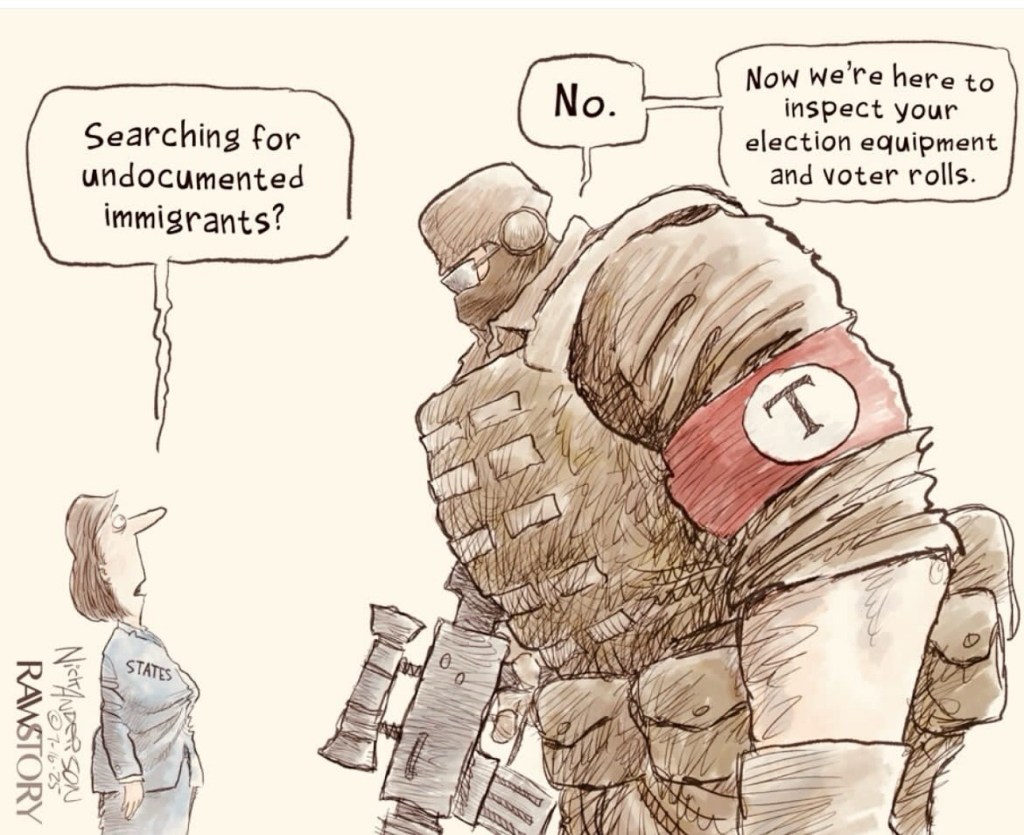
The GOP is increasingly concerned that its hardline policies—on abortion, immigration, and voting rights—could alienate moderate voters in the 2026 midterm elections, potentially costing them control of the House of Representatives. In response, Texas Republicans have taken proactive measures to secure their hold on power through redistricting and gerrymandering. By redrawing district lines to dilute Democratic votes and strengthen Republican-leaning areas, they hope to maintain or even expand their congressional seats, regardless of popular vote trends. This strategy reflects a broader national GOP effort to entrench power amid shifting demographics and growing backlash against controversial policies.
The question arises: should Democratic-controlled states respond in kind? Ethically, many argue that Democrats should hold the moral high ground by advocating for fair, nonpartisan redistricting. But politically, unilaterally disarming in the face of aggressive gerrymandering may weaken their ability to compete in a skewed system. If Republicans continue to manipulate district maps for advantage, some believe Democratic states must adopt the same tactics—at least until national reforms like independent redistricting commissions become standard. The balance between democratic integrity and political survival is a tough one, and with the stakes as high as control of the House, both strategy and principle are being tested.


You must be logged in to post a comment.