
Category: Uncategorized
-
Have you ever broken a bone?

Wouldn’t say I accident prone or necessarily fragile but I have had quite a few impact traumas that have resulted in broken bones. Have broken my right elbow, left wrist, left knee & ankle, right ankle, my nose twice, a few ribs, & recently a skull fracture from a fall. So the short answer is yes I have broken a bone.
-
How do you balance work and home life?

I lost a 20 year old relationship because I worked too much. Worked in hospitals and spent 4 to 5 twelve hours days a week just to support my small family and was raised to believe that’s what I had to do. Now I have been divorced for going on 12 years and I work for myself and work is all I do, don’t have a relationship haven’t taken more than 2 consecutive days off in at least 10 years. That all says I have zero work life balance and sadly don’t think that it will ever change.😢
-
What sacrifices have you made in life?

Hate to be that guy but a lot of what many elevate to sacrifice does not qualify. Skipping a meal so your kid can eat, forgoing a vacation to take care of a sick parent or friend, loaning your sibling money when you really didn’t have it to lend, all do not qualify as a sacrifice just an inconvenience.
I can’t think of anything in my life that would reach the level of a sacrifice, I have inconvenienced myself enumerable times but none was a crucifixion level sacrifice that many believe they may have made. My teenager thinks he is sacrificing his valuable time by merely cleaning his room of emptying the dishwasher. We as a society need to stop elevating things we don’t want to do or things that may be a mild inconvenience to the high drama of a sacrifice.
-
What’s the oldest things you’re wearing today?

I wear my Army Dog Tags issued in 1987 every day. To be honest I recently started wearing them after taking a fall and ending up in the hospital, the fall resulted in a head injury and the loss of blood, I was given blood in the ambulance but because my blood type was not known I was given the wrong type. I really hope that type of incident never happens again but if it does my Dog Tags have all that information on them.
-
St. Augustine, Florida

Credit: Barbara Smyers/ Shutterstock St. Augustine, Florida, was founded on September 8, 1565 — more than 200 years before the United States was an official country. Pedro Menéndez de Avilés was an explorer from Spain who came ashore in Florida on August 28, 1565, on the Catholic feast day of St. Augustine. St. Augustine soon became the capital of Spanish-controlled Florida, and remained so until 1824, when the country had been officially united and the capital of Florida became Tallahassee. Today, visitors to the city can discover more about the history of America’s oldest city in the Castillo de San Marcos history museum.
-
Are you a leader or a follower?

Too many of us believe to be that they are leaders, but don’t understand the situation when they should get out of the way. I have been in many situations that my ability to lead has been an asset but have been around long enough to know when my skill set is contractually and I will gladly follow the lead of another.
-
The “D” in D-Day doesn’t really stand for anything.WORLD HISTORY
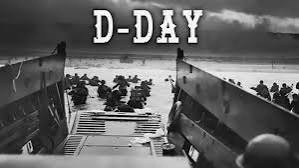
On June 6, 1944, the largest land, sea, and air invasion in the history of the world took place on the beaches of Normandy, France. It was the first phase of Operation Overlord, an Allied plan to land hundreds of thousands of troops into French enemy territory, then move east and liberate the rest of Nazi-occupied Western Europe. The planners of the operation gave it a simple name: D-Day. But what exactly does the “D” stand for?
The simplest and most widely cited explanation is that the “D” in D-Day stands for “day,” essentially a code indicating a date to be determined (or concealed from enemy forces). “It simply signifies the day that the invasion will launch and puts all the timetables into play,” Keith Huxen, a historian at the National WWII Museum, told TIMEmagazine in 2019. Military history also supports this theory. In the field, the U.S. Army began substituting the letters “D” and “H” for “day” and “hour” as early as World War I. The days and hours leading up to or following an operation, meanwhile, were often noted with plus and minus signs, such as “H-2” or “D+3.”
Not everyone has agreed with this interpretation, however. In his book The Facts on File Encyclopedia of Word and Phrase Origins, author Robert Hendrickson wrote that “the French maintain the ‘D’ means ‘disembarkation,’ still others say ‘debarkation,’ and the more poetic insist D-Day is short for ‘day of decision.’” Dwight D. Eisenhower, who served as supreme commander of the Allied forces in Europe during Operation Overlord, added to the confusion with his explanation. War Slang author Paul Dickson noted that in 1964, Eisenhower instructed his executive assistant to answer a letter he received about the meaning of D-Day by stating “that any amphibious operation has a ‘departed date’; therefore the shortened term ‘D-Day’ is used.” In fact, there were multiple “D-Days” during World War II, and other single-letter designations were used as well, such as M-Day for “mobilization.”
-

Ancient Olympic athletes competed naked.
ARTS & CULTURE
Many aspects of the ancient Olympics are similar to what we see in our modern competition, but there’s at least one notable difference: Today, all Olympians wear clothes. For ancient Greek athletes, nudity functioned as something of a national uniform, an intentional contrast to their Persian rivals, who traditionally found it against decorum to appear naked. Competing in the nude (often while covered in olive oil) was also seen as a way to show off status. According to historian Donald Kyle, “In Archaic Greece, disrobing fully to become naked for sport became an assertive communication of maleness, ethnicity, status, freedom, privilege, and physical virtue.” Some athletes also considered performing naked a tribute to Zeus. In fact, the words “gymnasium” and “gymnastics” both come from the Greek word “gymnasion,” which refers to a place to train or exercise naked.
While competing naked became a Greek tradition, it wasn’t always that way; some ancient vases from the Minoan period (which ended around 1200 BCE) depict Athenian athletes competing in loincloths. According to accounts by various scholars, the first naked competitor appeared in the 15th Olympiad in 720 BCE. Orsippus of Megara was said to have lost his loincloth during a race, and then ran on to victory. An epitaph of Orsippus, attributed to the poet Simonides of Ceos, reads, “First of the Greeks in Olympia was he crowned while naked; Before him, all contestants were girdled in the stadium.” In the modern Olympics, things have changed a little bit, and now competitors wear clothing — though on rare occasions, some modern runners will still go without shoes.
-
List your top 5 favorite fruits.
Love it when the algorithm goes fishing to send me more junk emails or trying to narrow down possible password.🤣🤣
 Esoteric Meandering Shouting Into the Void
You must be logged in to post a comment.