0.5% of Modern-Day Males Are Related to Genghis Khan
While Genghis Khan conquered land far and wide, his scope reached even further across the globe through his genetic lineage. During his lifetime, Genghis fathered children with six wives and an even larger number of concubines, beginning with his first marriage to a woman named Börte. With Börte, Genghis had five daughters and four sons — Jochi, Chagatai, Ögedei, and Tolui — and there were many more children to come. While it’s impossible to note just how many children Genghis sired, a 2003 study posited that Genghis Khan’s DNA could be found in 8% of Asian men along the Y-chromosome, a number large enough to account for 0.5% of the world’s total male population.
Elephants are massive and have pretty thick skin, about an inch deep. You’d think an insect smaller than a quarter, even one with a stinger, would be no big deal — but you’d be wrong. Elephants are so scared of bees that farmers use them as a natural, humane elephant deterrent. By hanging a beehive every 10 yards or so, researchers have been able to deter 80% of elephants.
African honeybees are small, but aggressive, and can sting areas that aren’t protected by thick elephant skin, like eyes and mouths. When bees start swarming, African elephants will start flapping their ears, kicking up dust, and yelling. Asian elephants react less dramatically, but they still get visibly nervous; they shrink away from bees, comfort one another, and sometimes slap their trunks on the ground.
We tend to think of the Roman Empire as an entirely ancient time period. Yet while the Western Roman Empire fell in the fifth century CE, leaving it firmly in the ancient world, the eastern half of the empire kept going for another millennium — as late as 1453. Emperor Diocletian divided Rome at the end of the third century BCE, believing the empire had become too big to be ruled by just one monarch. The western half encompassed Europe and Northern Africa, and the eastern half covered the Middle East. As the west faltered, the east stayed strong, largely thanks to in-demand exports such as spices. In 395 CE, the Eastern Roman Empire split off entirely, and it eventually even took back some former Western Roman territory.
Historians often refer to the Eastern Roman Empire as the Byzantine Empire, but that term wasn’t used until after it fell; the citizens of the empire still thought of themselves as Romaioi, or Romans. The capital was Constantinople (now Istanbul in modern-day Turkey), named after Emperor Constantine I. As Constantine was the first Christian emperor of Rome, the Byzantines adopted Christianity as the state religion. But they also embraced their heritage from ancient Greece, and in the seventh century CE, Greek replaced Latin as the empire’s official language.
In the 11th century CE, the Byzantine Empire faced escalating threats from both sides — the Crusades caused tension with Western Europe, and the Turks destabilized Anatolia, the point where Asia meets Europe. The empire fell in 1453when Ottoman Turks breached the walls of Constantinople after a 55-day siege, toppling the last vestiges of the long-powerful Roman Empire. By then, Europe was in the early stages of the Renaissance and the Age of Exploration. Christopher Columbus set sail to the Americas in 1492, just 39 years later.
News headline about 100s of missiles and drones being launched against Israel and who is having a positive experience from this event. It is not the people that are being attacked nor the ones that will suffer the counterattack. It is the weapons manufacturers and the politicians that continue to make money from others’ inability to get along with each other. What do all these conflicts gain? They are teaching a new generation to mistrust and hate others and that is universal because no matter where you are in a conflict there are always two sides that have different opinions about what is taking place. These events are not the kinds of things that are forgotten or resolved because if we really look at most conflicts we find a history that goes back centuries and they are still not resolved. The people that take advantage of these issues are getting rich and they really do not care who wins or loses as they know that in a very short period of time someone will start the entire insane game again. Mankind is supposed to be the intelligent being on this planet but that would have to be up for debate by anyone observing us. Other issues are just as mind numbing as these constant conflicts. We have all the efforts being made to stop abortion and that is never going to happen. Just like so many other things that the human species continues to be involved in no matter what laws get passed. Some manage to get a pass for their crimes, think rich white men, and some do not get a pass no matter what. Prostitution is considered illegal, immoral and against religious doctrine and yet It has been around since before recorded time and will be around as long as forever. Drinking was and is considered a sin by some and was once outlawed. Alcohol has been around since someone figured out how to make it and again will be around forever. Water kept getting contaminated by humans dumping their unwanted stuff in the rivers and lakes so booze made the water safe. Wine was a part of daily life even in the Bible and Jesus served it. Even our forefathers that were as strict a bunch of dower faced pundits as you could hope to find jumped ship at Plymouth Rock and did not proceed to Virginia because they ran out of beer. We need guidance in our society to protect those that need protecting and assistance to fulfill needs. All of this takes conscience and understanding, not the idea that one size fits all. A good many people have tattoos and others would not have one if they were free. They have been used to honor and they have been used to identify for persecution but they are still a part of society and like them or not we tolerate them. The same needs to be the case when we talk of choices to have a relationship that is not considered the norm, or a procedure that you would not think to have performed. Personal choice if it is not harming you and may help or even save someone else should be accepted or at least tolerated because in the end it has nothing to do with you and your opinion. None of us knows what is best for everyone and we are all unique as to how we view or feel about everything we encounter so if you won’t wear red shoes don’t condemn someone that dones.
Move over, modern-day billionaires — the wealthiest person of all time lived seven centuries ago. Musa I of Mali was a 14th-century king (called a “mansa”) who came into power in 1312 CE. He greatly expanded the Mali Empire, culminating in a large swath of West Africa, from the Atlantic Ocean to Timbuktu and beyond. The empire had significant reserves of salt and gold (nearly half of the world’s supply of gold at the time), and it became incredibly wealthy. Mansa Musa also controlled some of the biggest trade centers in Africa, establishing Timbuktu as a major hub. Some sources speculate that Musa’s wealth was equivalent to roughly $400 billion today — by comparison, the wealthiest modern billionaires have net worths of around $200 billion. Though an exact figure is impossible to calculate, many historians believe Musa to be the wealthiest person in history.
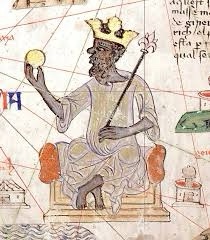
In 1324, the Muslim ruler decided to make a pilgrimage to Mecca. He traversed the Sahara Desert with tens of thousands of followers dressed in Persian silk (including soldiers, enslaved people, merchants, and the entire royal court). Adding to the spectacle, 100 camels carrying hundreds of pounds of gold were also in tow. The caravan reportedly spent three months in Cairo, Egypt, where Musa handed out gold as if it were candy. In fact, Musa’s trek through the Middle East caused the price of gold to plummet in Egypt due to the sheer amount of treasure he brought into the region. Although Musa died sometime in the 1330s, his legacy continued. He made Mali a well-known empire, and it was added to the Catalan Atlas (one of the most popular medieval maps) for the first time in 1375. On the map, a golden-crowned Musa is depicted holding a scepter and a gold nugget.
I don’t have a favorite, if I am traveling I always ask locals good places to eat that aren’t franchises. You would amazed at the wonderful food you can find that only the locals know about. My suggestion to everyone is step out of your comfort zone and try a small out of the way restaurant you may be pleasantly surprised.
“Facts are stubborn things; and whatever may be our wishes, our inclinations, or the dictates of our passion, they cannot alter the state of facts and evidence.” — John Adams
In March 1770, a group of British soldiers fired into a rebellious crowd of Boston colonists, killing five civilians. John Adams, a lawyer who steadfastly believed in the right to counsel, was asked to defend the redcoats when everyone else refused. In the trial, Adams claimed that the soldiers were victims of a mob — “if an assault was made to endanger their lives, the law is clear, they had a right to kill in their own defence [sic]” — and had fired their muskets in self defense. He uttered the quote “facts are stubborn things …” while making his case to the jury, and the strategy worked: The Captain and six of his soldiers were found innocent, with only two convicted of manslaughter.
Meet the ‘pursuer of nubile young females’ who helped pass Arizona’s 1864 abortion law
The Arizona Supreme Court has decided the law is still relevant. So let’s talk about the guy who led the body that passed it.
Perspective by Monica HesseColumnist|Follow authorFollow
April 10, 2024 at 7:53 p.m. EDT
Listen
Share
CommentAdd to your saved stories
Save
The time has come to reflect on the life and times — especially the times — of William Claude Jones.
Jones was a “prevaricator, a poet, a politician and the pursuer of nubile young females,” according to a 1990 article published in the Journal of Arizona History, which appears to be the most comprehensive biographical report published on the life of the 19th-century rogue.
His pursuit of such nubility began with a marriage to Sarah Freeman, who bore him two children in the 1840s, when Jones would have been in his 20s or early 30s. He was a sitting member of the Missouri state legislature at the time, but his family followed him to Arkansas and then Texas as he searched for more prominent government appointments. In 1854, President Franklin Pierce eventually named him U.S. attorney for the New Mexico territory, and it was hereabout that Jones’s first wife filed for divorce.
His next wife was a girl whose name was believed to be Maria v. del Refugio, writes L. Boyd Finch, the author of the journal article. New Mexico’s delegate to Washington, Miguel Otero, was bothered by the union. He “declared that the bride was twelve years old,” Finch writes, “and that Jones had ‘abducted’ her.” Otero petitioned President James Buchanan to fire Jones for the moral failing, but Jones resigned instead.
No matter! The mid-19th century was, by any standard you or I would recognize, a hideous place for women. The predatory relationship did not end Jones’s political career; he merely moved farther west, to the Arizona territory. There, Jones supported secession from the Southern states in the impending Civil War. He also landed upon his third wife, Caroline Stephens, who was 15 years old. Claude, by this time, was around 50.
Ah, well. They were married for only a year, anyway, because in 1865, Finch writes, Jones “left Caroline. She never saw or heard from him again.”
He had boarded a train for California, and then a boat for Hawaii, where he again entered local politics, winning a seat in the kingdom’s lower house. By 1868, a local girl named MaeMae Kailihao — “reportedly a princess from a noble family” — was pregnant with his child. She was 14.
Jones and Kailihao married and had several children together until she died at the age of 28 in 1881. Then Jones wed for a fifth time, a woman named Mary Akina — age unknown — only to file for divorce two years later. Shortly after that, Jones died on the island of Maui.
Finch, Jones’s biographer, is careful to say that there is a lot about W. Claude Jones’s life that has been lost to time. We know very little about his early upbringing, or how much he might have exaggerated some of the military exploits he was known to boast about. We also, it almost goes without saying, know very little about his wives, their inner lives, and what they thought of their unions and the times they lived in.
By now you are probably wondering why in God’s name I am writing about this lecherous caricature of a man — a man whose compatriots in the 19th century recognized that he was problematic.
Here’s why:
While Jones lived in Arizona, he was elected to represent Tucson in the 1st Arizona Territorial Legislative Assembly. And then, when that legislature convened in 1864, he was elected speaker of the House.
And it was that legislature — the one Jones presided over in 1864, after he had already abandoned his first wife, and married a 12-year-old and was just weeks away from marrying a 15-year-old, though still a few years away from marrying a 14-year-old — it was that legislature that passed a law reading, “Every person who shall administer or cause to be administered or taken, any medicinal substances, or shall use or cause to be used any instruments whatever, with the intention to procure the miscarriage of any woman then being with child, and shall be thereof duly convicted, shall be punished by imprisonment in the Territorial prison for a term not less than two years nor more than five years.”
And it was that piece of legislation that, earlier this week, was reinstated as law of the land in Arizona. It represents a near-total ban on abortion in the state. The state’s Supreme Court voted 4-2 that the 160-year-old law, put into place nearly five decades before Arizona was a state, should supersede the previous rule, which guarded the right to an abortion up to 15 weeks’ gestation. The new — and by new, I mean very old — law is scheduled to go into effect in two weeks’ time.
William Claude Jones sauntered into the wide expanse of a Southwestern territory more than 150 years ago, and this man’s morals are now the benchmark for the reproductive rights of the 7 million people who live in Arizona. Good night.







 Perspective by

 Esoteric Meandering Shouting Into the Void
You must be logged in to post a comment.