All weather is necessary and extremes are more prevalent today that seemed unheard of 50-100 years ago. I enjoy the rain that clears the air and sun that warms my skin but to have one or the other everyday without a break becomes monotonous. I have lived in Washington where the rain seems endless and now I am in Phoenix that has 360 days a year of sun both are necessary but getting a break is required for sanity.
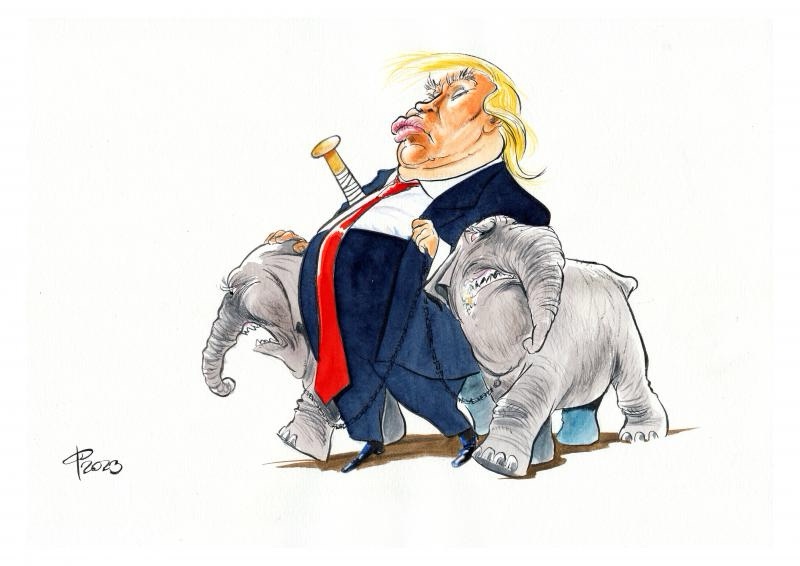
All this carry on over a status that has been addressed to the extent that it needs to be addressed in the Constitution. Not good enough for Trump, he wants full immunity for everything while in office as President. The real point is not that a President can not do his job without it because there have been 44 before him that have. The point is that an HONORABLE, HONEST Person will be able to hold that office without need of total immunity because they will operate within the bounds of law and order. If this Supreme Court chooses to grant him this then we have lost our Democracy and our identity as a nation. Every vote posted for sanctioning this is as treasonous as the act that has caused this entire mess. Each member of the court that votes that way ought to be punished just as the last persons were for treason, put to death. We can guess that a goodly number of the people that showed up on Jan 6 had no idea what the Constitution stated about such events or that they were in fact going to get into as much trouble as they did, but the justices have no excuse other than being bought and paid for and that makes they dishonest anyway.. The outcome of this election will hopefully not see Trump win. In that case the Congress should begin by expelling all the supporters of the attempted overthrow and when they have done that they need to purge the Court of those that have proven themselves as unworthy to wear the title of Justice. The need for term limits and for adequate policies of behavior is long passed for the Supreme Court. The entire scope of our Federal Government seems to be run at a level and with an attitude of being untouchable and that was not the way it was intended to be. The checks and balances that were in place have been changed with the biggest check being the voting public not having any voice in the way things are done. Disagreement is normal and we know that not everyone is going to like everything but we have had this carried to the extreme by people that believe they know best for all and that they alone should have the right to make those decisions. One issue alone speaks volumes about the impact of a one sided point of view and that is abortion. When it was legal women that were raped had the choice to keep or not the product of the event. Today that does not happen in many states and the number of cases of reported births from rapes is over 56,000 and over half of those are from Texas. Now keep in mind that the states that do not allow for abortion for any reason are also the states that do not approve of or will not accept the federal assistance for extra for lunches for children. These are the states that are hardest to get assistance of any kind and they also have the cities that will help people with expenses if they will move there. Says a lot about how others feel about those states.
Monopoly has been beloved for generations, but the history of the classic board game isn’t all fun and games. During World War II, specially manufactured Monopoly boards were used to help prisoners of war escape from captivity. In 1940, the British government struck a deal with Waddingtons, the company that manufactured London-themed editions of Monopoly, in which MI9, a secret department of the War Office, tasked Waddingtons with creating a version of Monopoly that contained various tools and information to aid POWs in their potential escape efforts.
The sneakily altered Monopoly boards were distributed to Nazi-run POW camps as part of larger aid packages. In addition to the standard thimble and dog game pieces, each board contained metal “playing pieces” that were actually escape tools, such as a file and magnetic compass. Each version also contained silk maps provided by the intelligence agency, which could be unfolded discreetly without drawing attention. What’s more, these special editions swapped out fake Monopoly money for real German, Italian, and French currency that could be used to bribe guards. The British government also contracted game company John Jaques & Son to create chess sets and versions of Snakes and Ladders that contained hidden compartments with escape tools.
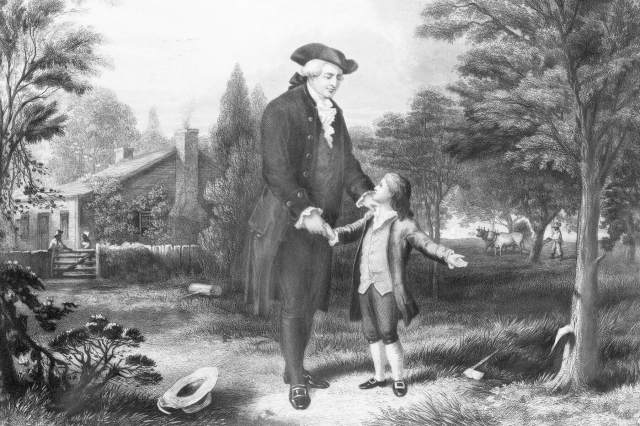
Washington telling his father, “I cannot tell a lie… I did cut it with my hatchet,” is coincidentally one of the biggest lies about this larger-than-life figure. Legend says that George Washington received a hatchet as a gift when he was 6 years old, and took the ax to one of his father’s beloved cherry trees. During the subsequent confrontation with his father, he came clean, unable to tell a lie. The encounter was recreated in artist John C. McRae’s 1867 engraving “Father, I Can Not Tell a Lie: I Cut the Tree.” There’s just one problem: None of this ever happened. The famous legend was devised by biographer Mason Locke Weems in the 1806 edition of his book “The Life of Washington.” Published shortly after Washington’s death, the book immortalized the founding father as a national hero with a steadfast moral compass despite his faults, including the ownership of hundreds of enslavedpeople at his Mount Vernon estate.
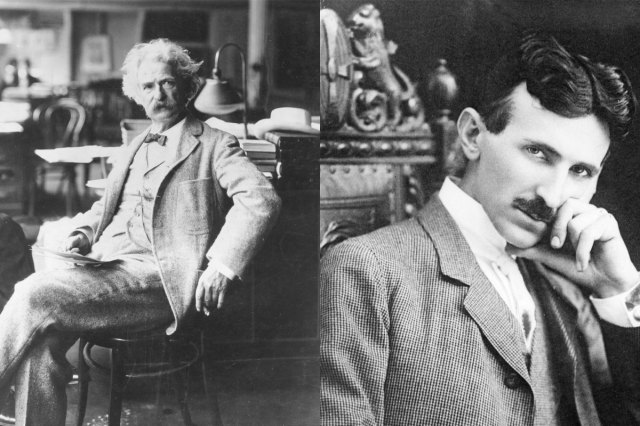
A friendship between the famed writer Mark Twain and inventor Nikola Tesla might, on the surface, seem unlikely. And yet, before the two met, they already shared some significant interests. Tesla had once been bedridden for nine months with a severe bout of cholera, during which time he read some of Twain’s earlier works. He later described them as “unlike anything I had ever read before and so captivating as to make me utterly forget my hopeless state.” Twain, meanwhile, was fascinated by technological innovations and, in particular, electricity. When the two men eventually met in the 1890s, they became friends and spent a lot of time together in Tesla’s lab and elsewhere. One famous account tells of Twain’s participation in an experiment involving an electromechanical oscillator, which Tesla believed might be therapeutic. But when Twain sat on the vibrating plate, it served as something of a laxative, forcing the acclaimed author to run for the bathroom.
Calvin L. Graham was the youngest U.S. military member during WWII, and is still the youngest recipient of the Purple Heart and Bronze Star. It wasn’t unusual for boys to lie about their age to enlist, but Graham was just 12 years old when he forged his mother’s signature and headed to Houston to enlist. The 125-pound, 5-foot-2 boy was miraculously cleared for naval service and assigned to the USS South Dakota as an anti-aircraft gunner.
On November 14, 1942, the South Dakota was ambushed by Japanese forces at the Battle of Guadalcanal. Graham was severely burned and thrown down three stories of the ship, but still mustered the strength to tend to his severely wounded shipmates. He was honored for his heroism, but when his mother found out about the honor, she informed the Navy of his real age and he was stripped of his medals and thrown into the brig for three months. In 1978, President Jimmy Carter learned of Graham’s story and restored his medals, except for his Purple Heart, which wasn’t restored until two years after Graham’s death.
First developed in the late 1820s, photography combined art and science into one medium capable of capturing an image in the moment. The innovation transformed recorded history into something that could be documented in pictures as well as text. As the technology advanced, the medium exploded in popularity, making it possible for families to create snapshots of memories for future generations to appreciate. These early photographic portraits transport us back in time, painting a picture of a different way of life: Families were larger, clothes were bulkier, and postures were noticeably stiff and formal. But perhaps the most conspicuous difference of all is that no one ever seemed to smile.
The somber expressions preserved in early photographs might lead us to assume that past generations led austere and joyless lives. However, the lack of joviality in these snapshots can be attributed to several other factors. Here’s the truth behind those stern expressions in old photos.
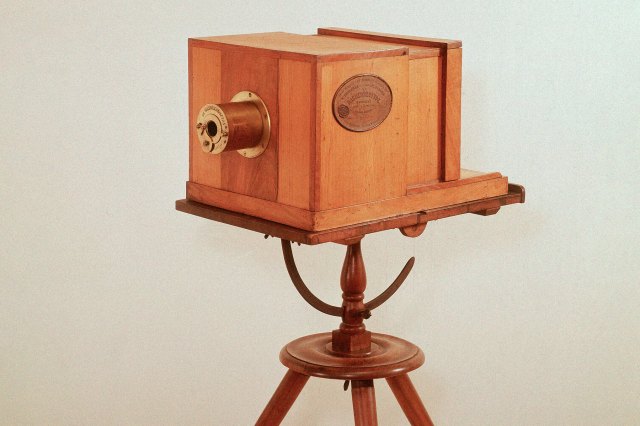
In the earliest days of photography, the lengthy exposure periods made it impractical to photograph people. For instance, French inventor Nicéphore Niépce’s 1826 “View from the Window at Le Gras,” credited as the oldest surviving photograph, required an exposure time of eight hours. It was more than a decade before Louis Daguerre’s 1839 invention of the daguerreotypemade portrait photography practical. But even then, it was a relatively slow and meticulous process that required the subject to remain still for as long as 20 minutes.
By the early 1840s, photographic technology had advanced further, and the daguerreotype images that once required a 20-minute exposure neededonly 20 seconds to process. Still, even modern photo subjects understand the difficulty of maintaining an open-mouthed smile for any amount of time. It only takes a few moments for a candid smile to turn into something more like an awkward grimace. And anyone who has dealt with a restless child can attest that more than a few seconds of remaining motionless is a formidable challenge. To minimize movement and guarantee a sharp image, children were sometimes put into restraints for the length of a photo shoot.
Additionally, until the 20th century, the expense of photographic equipment and the toxic and dangerous chemicals needed to process film meant that most photographs were taken by professional photographers working out of studios or traveling with their equipment. A photography session was a time-consuming and pricey undertaking; it cost the average person as much as three or more months’ salary, and a person might only be photographed a few times in their life. The requirement for stillness, combined with the novelty and cost of posing for a professional photographer, created an atmosphere where it was simply easier to maintain a neutral or serious expression. But even once the technology existed to capture more relaxed expressions, it was a long time before smiling in photos became the norm.
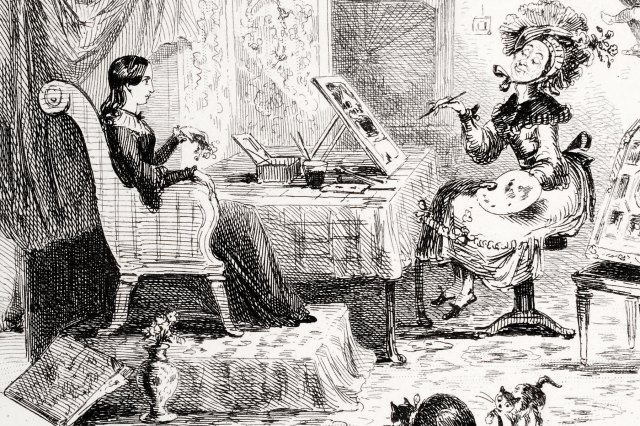
Though technological limitations are frequently cited as the reason for the solemn expressions in old photographs, it wasn’t the only reason our ancestors so often appeared solemn in front of the camera. One notable feature shared by artist portraits from the 17th and 18th centuries and photographs from the early 19th century is the presence of stoic, enigmatic expressions on the subjects’ faces. As portrait artist Miss La Creevy observes in Charles Dickens’ novel Nicholas Nickleby, only two types of expressions existed in portraiture: “the serious and the smirk.”
Before photography, a painted portrait was the only way to preserve someone’s image for posterity. Having your portrait painted was an activity associated with wealth and social status, and accordingly, the art form had its own rules and expectations. This formal portraiture proved to be a big influence on early photographers, who featured their subjects in ways that represented their social status, occupation, or other interests. The social mores associated with painted portraits carried over into photographic portraiture, and smiling was discouraged.
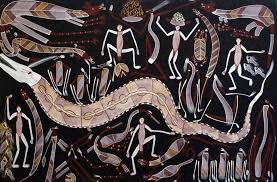
What is the oldest continuous culture in the world? Some might say it’s the Egyptians, since they’ve been kicking around for several thousand years, or perhaps the Indians living along the Indus River Valley — one of ancient history’s greatest (and least-known) civilizations. However, the real answer lies far away from these centers of ancient wonder, in the Land Down Under, among that continent’s first peoples — the Aboriginal Australians. A study in 2016 by an international team of researchers gathered genomic data that showed this group first arrived on the continent some 50,000 years ago, after leaving Africa about 70,000 years ago.
However, it’s worth noting that Aboriginal peoples are far from a homogenous unit. After the first peoples arrived on the continent, they quickly spread across Australia, forming isolated pockets that developed independently of one another. By the time Europeans arrived en masse in the late 18th century, some 200 nations of Aboriginal Australians — each with their own language — lived throughout the continent. But that diversity goes beyond just tribes or nations; a study in December 2023 concluded that Aboriginal peoples have high levels of genetic diversity compared to European or Asian populations.
Unfortunately, Aboriginal Australians continue to struggle compared to non-Indigenous Australians, and experience an eight-year shorter life expectancy, poorer health and educational outcomes, and other ill effects stemming from colonialism and mistreatment. But if the past 75,000 years have taught us anything, it’s that Aboriginal Australians are a resilient culture, and they aren’t going anywhere.





 Esoteric Meandering Shouting Into the Void
You must be logged in to post a comment.