It’s a very diplomatic phrase, but Lincoln never said it. Quote Investigator traced the expression to 19th century humorist Charles Farrar Browne, also known as Artemus Ward. In 1863, Browne created a series of fake testimonials for some lectures he was performing, including a fictitious blurb from one “O. Abe.” This “Abe” supposedly said: “I have never heard any of your lectures, but from what I can learn I should say that for people who like the kind of lectures you deliver, they are just the kind of lectures such people like.”
The testimonial was reprinted in multiple places, and versions of the saying became associated with Lincoln. Later on, a story arose that Browne had read a lecture to Lincoln, who responded with a version of the phrase. Later still, Browne’s name was dropped from the situation entirely. The writers George Bernard Shaw, Max Beerbohm, and Muriel Spark have all used the phrase — but long after it was already circulating.
By the way, other things Lincoln never said include: “In the end, it’s not the years in your life that count. It’s the life in your years,” and “Nearly all men can stand adversity, but if you want to test a man’s character, give him power,” among many other examples.
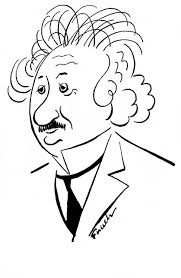
Albert Einstein was one of the most famous and influential physicists of the 20th century, and although he was widely revered in his life, he had complicated feelings about being the subject of such adulation. When Einstein died from a ruptured abdominal aneurysm at age 76 in 1955, he had already made it clear that he wished to be cremated so “people don’t come to worship at my bones.” Per his wishes, Einstein’s ashes were scattered by his family at a private spot along the Delaware River. But it wasn’t the entirety of the physicist’s body: Before cremation, his brain was removed and taken to be studied.
On the same day Einstein died, Thomas Harvey, a pathologist at New Jersey’s Princeton Hospital, conducted an autopsy, during which Harvey removed the scientist’s brain. Removing organs was common autopsy practice, as they were often kept by medical institutions for research. But Harvey decided to keep this one for himself. He claimed he wished only to conduct medical research on the genius’s brain, and promised Einstein’s family he would not use the organ for his own cultural cache. Over the next four decades, Harvey occasionally sent sections of the brain to other scientists to study, but most of it was stored in pieces in jars of formaldehyde at his home. While studies done on Einstein’s brain over the years did reveal differences from the average person’s, it ultimately remains unclear where his extraordinary intellect really came from. Today, samples of Einstein’s brain are kept at the National Museum of Health and Medicine in Washington, D.C., and the Mütter Museum in Philadelphia.
The Lincoln and Kennedy Assassinations Share Many Strange Similarities
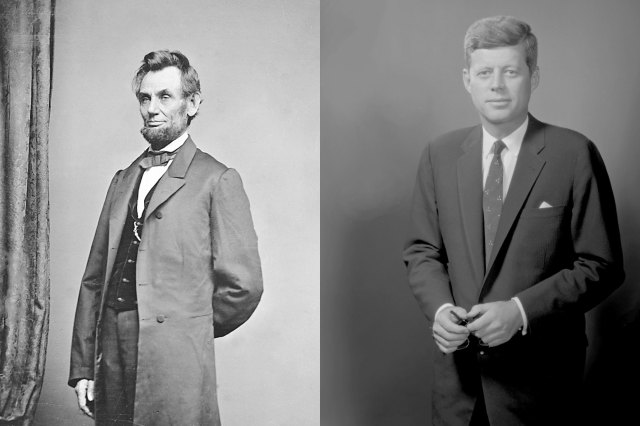
Abraham Lincoln and John F. Kennedy are widely considered two of the greatest Presidents in U.S. history, and the coincidences surrounding their assassinations further link the two leaders. In fact, books have been written about them, and members of Congress have even discussed the topic. Both Presidents were killed on a Friday with their wives by their sides. Both were succeeded by men whose last name was Johnson (Andrew Johnson and Lyndon B. Johnson). There are also some parallels in the assassins: John Wilkes Booth shot Lincoln in a theater and was caught in a warehouse; Lee Harvey Oswald shot Kennedy from a window in a book warehouse and was apprehended in a movie theater. What’s more, both Booth and Oswald were themselves killed before they could face justice. Not everyone agrees as to whether these similarities have a deeper meaning or no meaning at all, but at the end of the day, the sheer number of coincidences is quite surprising.
At first glance, the base of the U.S. “Ghost Army” would have resembled a movie set, with artists painting dummy airplanes, actors reciting fake radio broadcasts, and soundtracks playing on repeat. But this was a real World War II military operation, officially known as the 23rd Headquarters Special Troops. It had one mission: to trick German intelligence by any means necessary. The first of its kind, the 1,100-person covert unit was a mix of artists, radio broadcasters, sound engineers, actors, architects, and, of course, professional soldiers. This special unit staged no fewer than 22 deceptions in some of the most volatile areas of Europe between January 1944 and the end of the war in 1945.
The Ghost Army operated near the front lines. They set up dummy artillery on Omaha Beach following D-Day, erected dozens of fake tanks to inflate troop numbers during sieges, and helped draw German forces away from General George Patton’s troops during the Battle of the Bulge. Sometimes, the con artists took their acting talents into local bars and cafés, spouting off inaccurate information for German spies to take back to their commanders. Loudspeaker broadcasts of military drills and rumbling tanks (which could be heard from 15 miles away) gave the illusion of massive numbers of troops. The army’s deception skills allowed them to mimic forces of 40,000 men, misleading German intel. By some estimates, these ploys saved the lives of up to 30,000 American troops. However, it wasn’t until recently that these heroic efforts were brought to light. Military records of the Ghost Army weren’t declassified until the mid-1990s, and it wasn’t until 2022 that the 23rd Headquarters Special Troopswere awarded the Congressional Gold Medal for their role in the Allied victory.
What is your middle name? Does it carry any special meaning/significance?
My middle name has absolutely not significants and no interesting story behind it. My sons middle name is Jazz and when I am asked why that is his middle name I say because souvenir is why to hard to spell🤣. My son was a souvenir from the 2004 New Orleans Heritage Jazz Fest that we did not plan on bringing back. He was the product of a lot of wine and seeing Lenny Kravitz concert.
Well, shoot: Curse words have been through a lot of doggone stages to get to where they are today. Mark Twain once said that “under certain circumstances, profanity provides a relief denied even to prayer,” and people have been swearing as long as they’ve been praying. What is considered “cursing” or “swearing” has always depended on what was taboo at that point in time, whether it be blasphemous or simply crude. These off-limits words and topics have shifted over time, too. Here’s a brief look at the history of cursing, from A to Z… or “arse” to “zounds!”
The Original Curse
Why do we call forbidden terms “curse” or “swear” words? It’s likely the English terms evolved from the Bible, where “swearing” was sometimes used to refer to false promises or lies, such as when someone claims to do something that is not possible. These were considered vain oaths, and this “swearing” would sometimes be made in God’s name. Some of the earliest expletives were phrases referencing religion, such as “by God’s bones,” “God’s nails,” or really anything to do with God that wasn’t a literal and sincere oath.
Frequently, curse words originated from the combination of two or more taboo words pushed together in a way that obscured the literal meaning, creating a new slang term in the process. For instance, “gadzooks” was a curse used in place of “God’s hooks,” and by the 1600s, the word “zounds” — a shortening of “God’s wounds” — appeared in William Shakespeare’s Othello and King John. In the 19th century, people in Ireland used “bejabbers” as a way to get around saying “by Jesus.”
The Rise of the Four-Letter Word
The phrase “four-letter word” was first used as a euphemism for swear words in the 1920s, and for good reason: Of the approximately 84 commonly used American English swear words, 29 of them have four letters, including some of the most popular. “Damn,” for instance, appeared as a verb as early as the 13th century, meaning “to condemn,” and was used as an exclamation starting in the 17th century.
The “F-word,” meanwhile, was preceded by a different four-letter word in the 10th century: “sard,” which described the same intimate act. The common myth that today’s F-word derived from an acronym, either “fornication under consent of the king” or “for unlawful carnal knowledge,” is untrue. Instead, the expletive may come from the Middle Dutch “fokken,” Norwegian “fukka,” or Swedish “focka,” all of which mean several things, including “to copulate.” Another theory supported by the Dictionary of Slang and Unconventional English and TheRootsofEnglish:AReader’sHandbookofWordOrigin tracks the word back to the Indo-European term “peuk,” meaning “to prick.” According to the Oxford English Dictionary, the first recorded use of the modern F-bomb was in 1503, in a Scottish poem, though the word was likely used even earlier. In 1965, the F-word became an official part of the English lexicon when it was included in The Penguin Dictionary.
The four-letter word beginning with “sh” has had several meanings through the years. According to the Old English Dictionary, it was used to mean “an obnoxious person” starting in 1508, although the early version of the word wasn’t four letters; it began as the Old English curse “scite.” In Latin, “scite” means a very different thing: shrewdly, cleverly, or skillfully. By 1934, when it was used in Henry Miller’s novel Tropic of Cancer, the modern, four-letter version of the word had evolved to essentially mean “stuff,” regardless of quality.
Swearing Goes to Hollywood
By the 20th century, the explosion of mass media brought curse words to the mainstream. Filmmakers even had to fight to get the now-classic line “Frankly, my dear, I don’t give a damn” into Gone With the Wind. Producer David O. Selznick told regulators, “This word as used in the picture is not an oath or a curse. The worst that could be said of it is that it’s a vulgarism.”
Comedian Lenny Bruce was arrested multiple times in the 1960s for “obscenity” for using explicit language, and in 1972, George Carlin was arrested for performing his “Seven Dirty Words You Can’t Say on Television” act, even though he wasn’t on television at the time (he was performing at Summerfest in Milwaukee, Wisconsin). A year later, Carlin’s routine was played on the radio, which led to a series of court cases about what language should be banned from broadcast radio and TV. In 1999, the CBS series Chicago Hope brought the first scripted curse word to network TV when actor Mark Harmon said “sh** happens.” (Prior to this, swearing on TV was limited to cable television.) Today, the film industry’s Classification and Rating Administration decides just how many of those naughty words it takes to add up to an R-rating.
“I feel like someone is watching me” is a classic horror film trope, but the idea also taps into a biological fact: Humans are good at sensing when someone is looking at them. While some label this gut feeling a kind of sixth sense, it’s really a biological phenomenon known as gaze detection, caused by a complex neural network in our brain. This detection system rests largely in our peripheral vision; the sense dissipates quickly when someone turns only a few degrees away from us. Because some 10 regions of the brain are involved with human vision, and little is known about gaze detection generally, scientists haven’t pinpointed what’s controlling this seemingly uncanny ability — although researchers have detected a dedicated group of gaze-detecting neurons in macaque monkeys.
Gaze detection is particularly interesting in humans because our eyes are unlike any other in the animal kingdom. The area around the pupil, known as the sclera, is very prominent and white, which makes it easier to discern in what direction someone is looking. The overall theory as to why humans are so good at gaze detection boils down to the evolutionary advantage of cooperation. Simply put, humans are social creatures, and the detection of subtle eye movements helps us work with others while also helping us avoid potential threats. But because of the evolutionary importance of knowing when someone is looking at you, our brains tend to oversignal that someone is staring at us, when they’re really not. So if you’re ever feeling a bit paranoid, blame your brain.
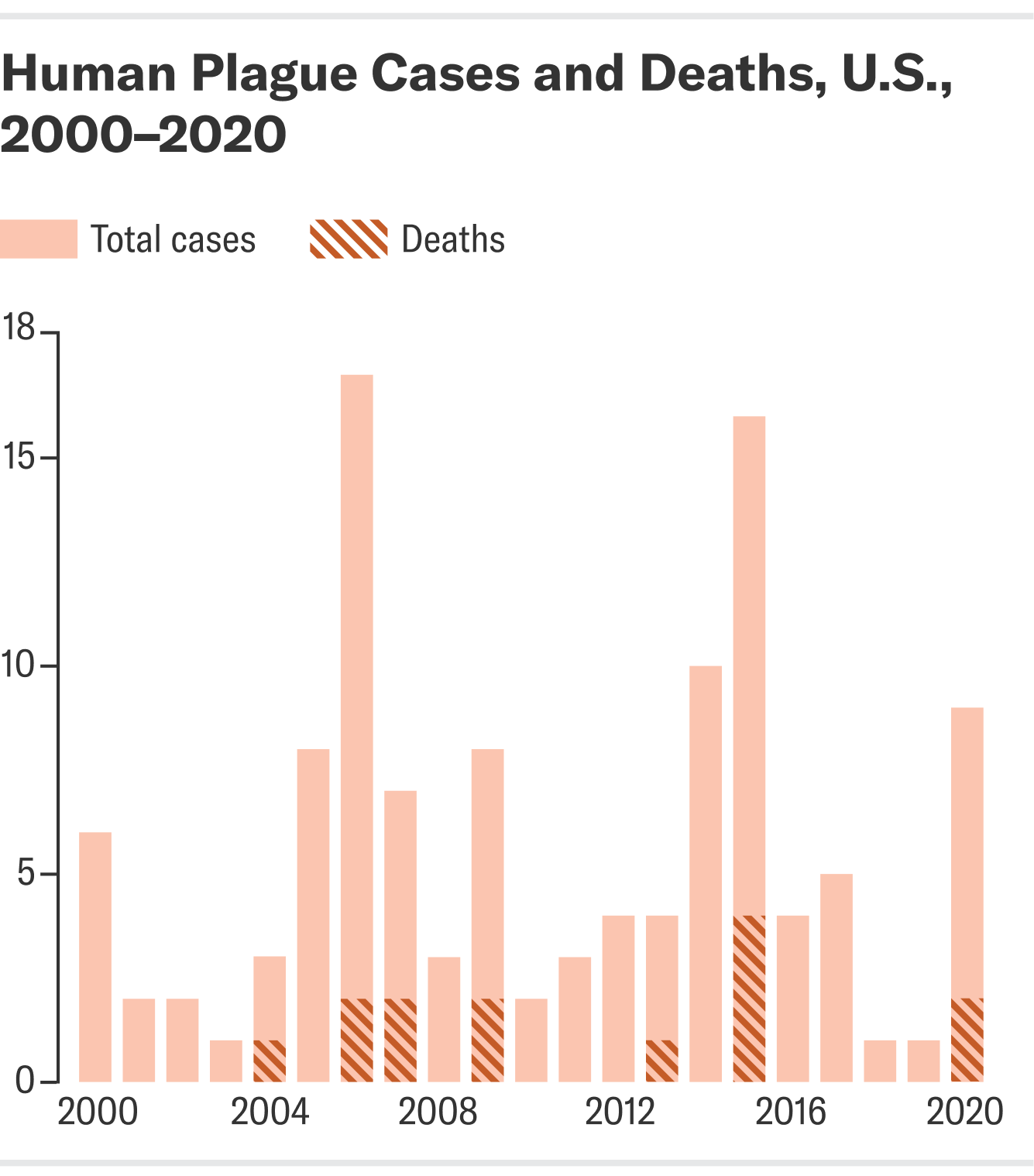
Earlier this month a person in rural Oregon was diagnosed with plague—the state’s first case in eight years. According to health officials in Oregon’s Deschutes County, the person likely contracted the disease from a pet cat.
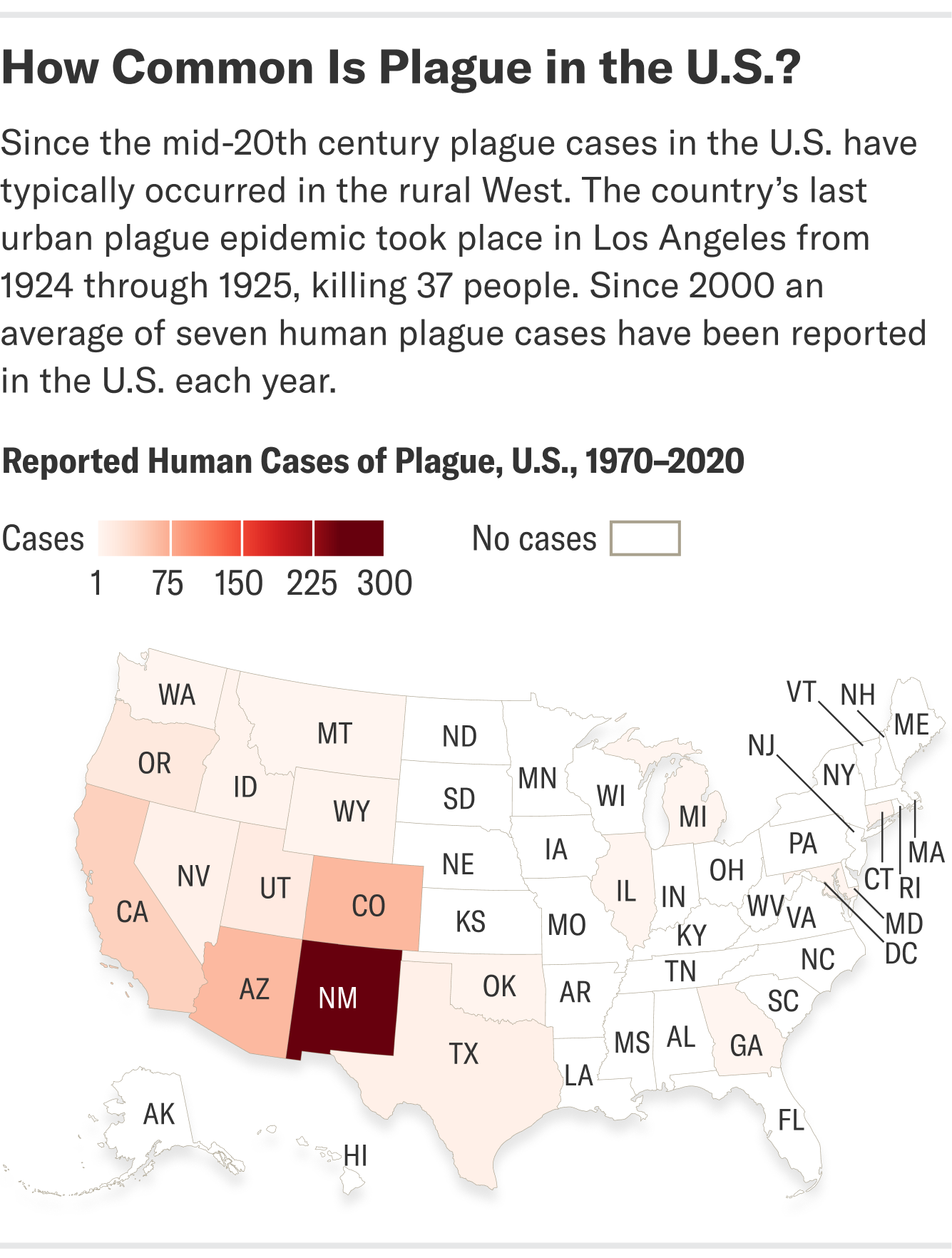
Plague is often thought of as a medieval disease, but it continues to affect people across the globe—most commonly in Madagascar, the Democratic Republic of the Congo and Peru. In the U.S. about 10 cases of plague are diagnosed per year. Most of these are reported on the West Coast and in Southwestern and Rocky Mountain states—particularly in New Mexico.
Plague is caused by a bacterium called Yersinia pestis. Most people know it as the microbe behind the “Black Death,” which wiped out at least a third of Europe’s population in the 14th century. Humans and the animals that travel with them have spread it to every continent except Antarctica. It most likely arrived in the U.S. on ships docking in California sometime around the year 1900.
Y. pestis can make humans extremely ill, but it doesn’t naturally thrive in human populations. Instead it lives in wild rodents. “It doesn’t make them particularly sick, and so that means it can just kind of quietly circulate in that population,” says Erin Phipps, state public health veterinarian of New Mexico. The particular rodent species that carry plague can vary from region to region, but in the U.S. it can be found in rats, prairie dogs, marmots, squirrels and, occasionally, chipmunks.
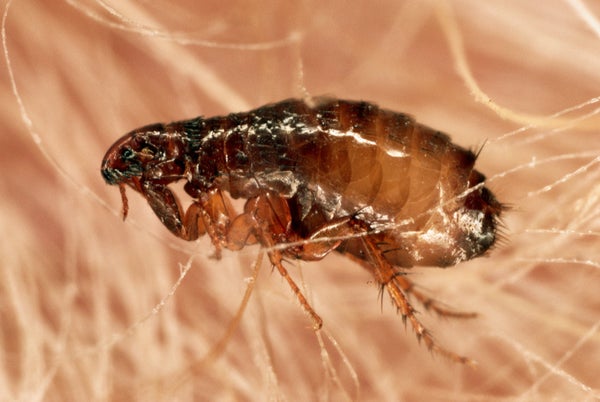
From these “reservoir” species, plague can spread to other animals via fleas. If a flea bites an infected rodent and then leaps onto another animal, its bite may transmit some of the Y. pestis bacteria. This can happen in humans, but it can also happen to animals closely associated with us. “Cats are very susceptible to Yersinia infection” because they tend to hunt rodents specifically, says Susan Jones, a biomedical historian at the University of Minnesota who is working on a book tracing the history of plague in the former Soviet Union.
Even today the disease can be deadly for both humans and pets who contract it if left untreated. Unlike medieval physicians, however, modern doctors are well equipped to deal with the illness, thanks to antibiotics.
“Antibiotics work very well against plague,” says Javier Pizarro-Cerdá, a systems biologist at the Pasteur Institute, a nonprofit research organization in France. “But we have to diagnose [it] early for them to be effective.”
By far the most common form of plague is bubonic plague. It’s characterized by painful swollen lymph nodes called “bubos” around the armpits, throat and groin. Bubonic plague is the easiest type of plague to diagnose and the most survivable. It is primarily spread by flea bites.
Sometimes Y. pestis travels from the lymph nodes into the lungs to become “pneumonic” plague. “Once the bacteria arrive in the lungs, they are very, very happy there. They proliferate like crazy,” Pizarro-Cerdá says. This form of plague is transmitted directly through respiratory droplets, much like SARS-CoV-2, the virus that causes COVID. It also triggers a fairly generic—though severe—set of symptoms, including fever, body aches, cough and shortness of breath. Pneumonic plague is more deadly and more difficult to diagnose than bubonic plague.
Very rarely, a person might contract a third form of the disease known as septicemic plague. This occurs when Y. pestis bacteria enter and begin to multiply in the bloodstream. People can be exposed to this form of plague through flea bites but also from handling the corpses of infected animals. Left untreated, septicemic plague is nearly always fatal. There is not currently a vaccine against plague commercially available in the U.S. The plague vaccines that have been approved under certain circumstances in other countries aren’t very effective, but groups such as Pizarro-Cerdá’s are working to develop a better shot.
Luckily, for most people in the U.S., avoiding plague isn’t difficult. The first step is to be aware of your surroundings when hiking or exploring wilderness areas in the western part of the country. If you are in an area where plague is endemic, make sure to wear long sleeves and pants, carry insect repellant and avoid dead animals, Phipps says. In addition, people who live in states where plague is endemic should take measures to avoid attracting rats or other rodents to their home, such as keeping outdoor animal feed in sealed containers and not letting wood or garbage pile up in the yard. Keeping cats indoors can also decrease the likelihood that they will become infected by a plague-infected rodent.
If you think you may have been exposed to a plague-carrying animal, you should let a doctor or health official know right away so that they can treat you. At the end of the day, “humans cannot completely separate ourselves from the natural environment,” Jones says. Some risk of disease is unavoidable—but it doesn’t have to be deadly.









 Esoteric Meandering Shouting Into the Void
You must be logged in to post a comment.