
Category: Uncategorized
-
What do you complain about the most?

Complaining is a pointless act, if you don’t like something change your situation or take action to make it more amenable. I truly believe that there is no reason to moan and complain because I always have a choice to change myself or the situation.
-
What are your favorite sports to watch and play?

I don’t live and die by the game but enjoy watching the Packers play especially with my son who is a diehard Cheese Head.
-
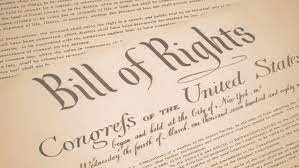
The U.S. Constitution is among the most important and esteemed texts in American history. Since its ratification on June 21, 1788, this living document has served as the groundwork for the country’s government on both the federal and state levels. It’s also constantly evolving: The Constitution has been amended 27 times over the years, beginning with the certification of the first 10 amendments, known as the Bill of Rights, in 1791. Here’s a closer look at each of those first 10 amendments to the U.S. Constitution.
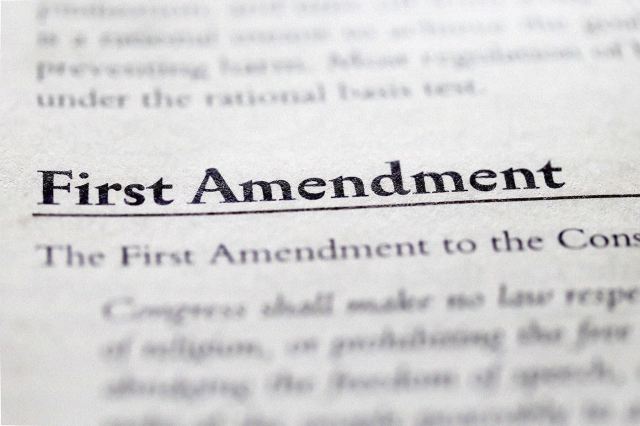
Photo credit: J. Nicklaus/ Shutterstock The First Amendment Was Introduced by James Madison
Long before he assumed the role of commander in chief, America’s fourth President, James Madison, introduced the Bill of Rights to Congress, starting with the First Amendment, which protects freedom of speech, religion, the press, assembly, and the right to petition the government. Madison drafted the Bill of Rights in 1789. A representative of Virginia, he based the First Amendment’s text on the Virginia Declaration of Rights, as well as the English Bill of Rights and the Magna Carta.
The Second Amendment Was Agreed Upon as a Compromise
The right to bear arms as defined by the Second Amendment has been a controversial topic for ages, even dating back to when it was first agreed upon. Like much of the Bill of Rights, the final text was a compromise between pro-government Federalists and rival Anti-Federalists, who argued over whether an adequately armed population could deter potential government oppression. Anti-Federalists fought for a Second Amendment that preserved the right of the people to fight back against government oppression, while Federalists maintained that those fears were overblown.
The Third Amendment Has Never Been Argued in Front of the Supreme Court
While many constitutional amendments have been the subject of heated judicial debate, the Third Amendment has never been the focus of a U.S. Supreme Court case. The amendment forbids the government from forcing citizens to house soldiers in their private homes without their consent during peacetime. It is one of the more universally agreed-upon elements of the Constitution.
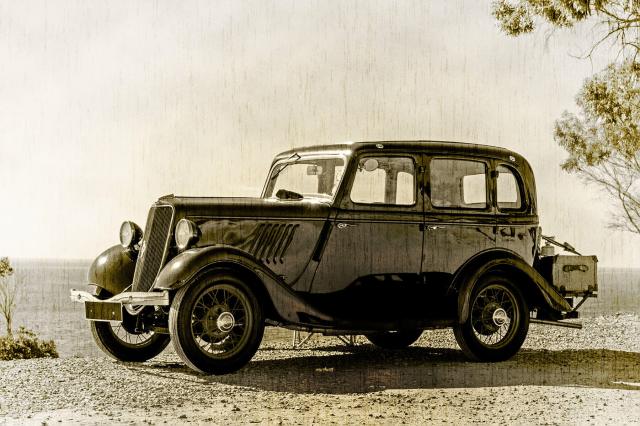
Photo credit: Nadinlargo/ iStock via Getty Images Plus An Exemption to the Fourth Amendment Was Created for Cars
The Fourth Amendment was ratified in 1791, establishing rules against warrantless searches by law enforcement. Given that the amendment was ratified long before cars existed, it wasn’t until the 1925 case Carroll v. United States that vehicle searches were first debated on a judicial level. The case ultimately established an exemption to the Fourth Amendment that permits warrantless vehicle searches, provided there is probable cause to suspect there is contraband inside.
A
“Due Process” Was Added to the Fifth Amendment at New York’s Request
The “due process” clause — which guarantees fair treatment under the law — is an integral component of the Fifth Amendment, which protects those accused of criminal activity against self-incrimination and prohibits “double jeopardy” (being prosecuted twice for the same offense twice), among other protections. In essence, the concept of due process ensures that every American will be treated fairly in court, but it may never have existed if not for a request made by delegates from the state of New York, which had a similar concept included in its own Bill of Rights Statute. The request led James Madison to draft due process into the Fifth Amendment.
The Sixth Amendment Didn’t Include State Court Cases for 172 Years
The Sixth Amendment protects the rights of those facing criminal charges, such as the right to a fair and speedy trial by an impartial jury, as well as legal representation. It has provided the right to a free defense counsel on a federal level since its ratification in 1791, but it wasn’t until 1963 that the amendment was expanded to include felony cases facing state prosecution. The expansion was a result of the landmark decision in the case Gideon v. Wainwright, in which the court ruled that states must provide attorneys to any criminal defendant unable to afford their own counsel.

Photo credit: Bettmann via Getty Images The Seventh Amendment Still Applies to Cases That Exceed a Value of Just $20
The Seventh Amendment guarantees the right to a trial by jury in federal civil cases, but only regarding issues where the value exceeds $20 — a stipulation that’s still in place today. The amendment was ratified in 1791, so in modern terms, that $20 would be roughly equal to around $650. However, the text of the amendment still reads “twenty dollars.”
The Eighth Amendment Was Taken Nearly Verbatim From the English Bill of Rights
The Eighth Amendment — which reads, “Excessive bail shall not be required, nor excessive fines imposed, nor cruel and unusual punishments inflicted” — was taken nearly verbatim from the English Bill of Rights of 1689. While many other amendments from the Bill of Rights were influenced by the British Constitution, the Eighth Amendment is notable for its highly similar wording.
The Ninth Amendment Doesn’t List Any Specific Rights
While the first eight amendments clearly define the rights they’re meant to protect, the Ninth Amendment is significantly more abstract in nature. It was put in place to reaffirm that rights shouldn’t be denied solely because they aren’t explicitly stated in the Constitution. The entirety of the amendment reads, “The enumeration in the Constitution, of certain rights, shall not be construed to deny or disparage others retained by the people.”
Photo credit: iVazoUSky Shutterstock The 10th Amendment Has Never Been Invoked to Protect Individual Citizens
The 10th Amendment essentially establishes the concept of states rights, and underscores the limits of the federal government as restricted to the powers enumerated in the Constitution. The text reads, “The powers not delegated to the United States by the Constitution, nor prohibited by it to the States, are reserved to the States respectively, or to the people.” Though the 10th Amendment has been invoked many times with regard to protecting state’s rights, it’s never been invoked by an individual citizen in a case against the federal government.
-
Lyle Northey (Silent/Boomer)
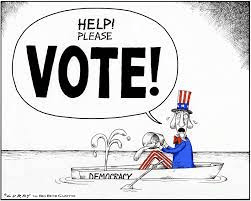
The election of 2024 could very well be the last one we ever get if the wrong person wins. Hopefully the generations that have the most at stake will go to the voting booth and pull the handle that keeps our democracy alive.
There are rumors of all sorts flying around about both major candidates and when it comes to health issues we can only speculate as to the truth. The age thing is possible in both as neither man is a spring chicken. Age does not make you sit on the bench as much as whether your whole being is broken would require you to stop playing in the sand box. Trump is reported to have an STD and with his lifestyle it is believable and his hero was sick when he died. His mental well being has been questioned but anyone that consumes McDonalds all the time would be lucky not to have brain issues.
A call to send National Guard troops from other republican led states to challenge federal authority on the southern border of Texas is not a bright move. If I were a guardsman in one of the states I would refuse to go to Texas as it is not my state that I am assisting, and it is an attempt to overthrow the US government. Crossing the border is a mistometer not a felony. Seeking asylum is not a crime. What the governor of Texas is doing is according to the Supreme Court. May be time to send forces to Texas and make arrests and removal of criminal elements
At present one of our greatest difficulties as a nation is the fact that we are not using duplex communication devices. By that I mean we are speaking into a radio that is broadcasting and never listening to anything or anybody in response to any issue. If we start to use telephones and take time to listen to a response when we make a point, and I mean listen not just hear a response we may be able to fill the potholes in our political highway..
Please use your better judgement and let this Democratic Republic have a 250th Anniversary.
-
What would you do if you won the lottery?

If my chance I were to win a lottery no one would know I won. First I would receive the winnings under a LLC and the proceeds would instantly go into a trust that would pay out to me a set amount every month. I would not quit working or start buying expensive toys. I would in the words of a friend have ‘Fuck You’ money and have to ability to just walk away from a bad situation without thinking twice about it.
-
What books do you want to read?

I read a lot and there are always new titles I want to read but what I would like to do is reread things I read before but read them like it’s the first time. Classics like ‘To Kill a Mockingbird’, ‘ Moby Dick’, ‘The Great Gatsby’… all titles I have read many times but to read them like it is the first time again would be amazing.
-
Write about a few of your favorite family traditions.

When my dad went back into the military in 1980 we moved away from paternal family and any loose traditions dissolved. I have been away from my family since college and never had a desire to participate in any gatherings. When I was married I did spend more time participating in my wife’s families events but now divorced those things have been forgotten. I am trying to start a father son tradition of going to a Green Bay Packers game every year but due to finances that hasn’t happened yet but hopefully it will, we started by going to a game for my sons 18th birthday and I hope it will be an annual event.
-
It’s hard to say precisely when rock ’n’ roll began, though the genre has its roots in African American music such as jazz, rhythm and blues, boogie-woogie, and gospel, as well as country music. Ask a room full of music historians what the first rock ’n’ roll record was and you’ll likely receive a number of different answers. Was it Sister Rosetta Tharpe’s “Strange Things Happening Every Day” in 1944? Or perhaps “Rocket 88,” first recorded in Memphis by Jackie Brenston & His Delta Cats in 1951? Or Bill Haley & His Comets’ 1955 single “Rock Around the Clock?” It’s hard to say for sure.
What we do know is that rock ’n’ roll became a defined mainstream genre during the 1950s, when the sound and the image coalesced around one man: Elvis Presley. Elvis took rock music to new and giddy heights, bringing about a seismic shift in popular culture — and causing deep concern among certain sections of society that considered rock the “devil’s music.” Once unleashed, however, there was no going back: Rock ’n’ roll was here to stay. Here are some of the most defining moments in the history of the genre, from the King himself to the rise of MTV.

Photo credit: Michael Ochs Archives via Getty Images Elvis on Ed Sullivan
On September 9, 1956, Elvis Presley made his first appearance on The Ed Sullivan Show. At this point, Elvis had already put out a number of successful singles, and his debut album, Elvis Presley, released in March 1956, was the first rock ’n’ roll album to make it to the top of the charts. Elvis had yet to cement his status as the “King of Rock ’n’ Roll,” but his first performance on Ed Sullivan can be seen as his coronation. He performed a number of songs — including “Don’t Be Cruel,” “Hound Dog,” and “Love Me Tender” — in front of screaming audience members at the studio and watching from home. Despite ongoing fears that his hip-shaking gyrations would corrupt the nation’s youth, viewers were given full head-to-toe shots of the 21-year-old singer’s performance. The show was a massive success, as 60 million people — 82.6% of the entire television audience at the time — tuned in to watch the then-21-year-old perform.
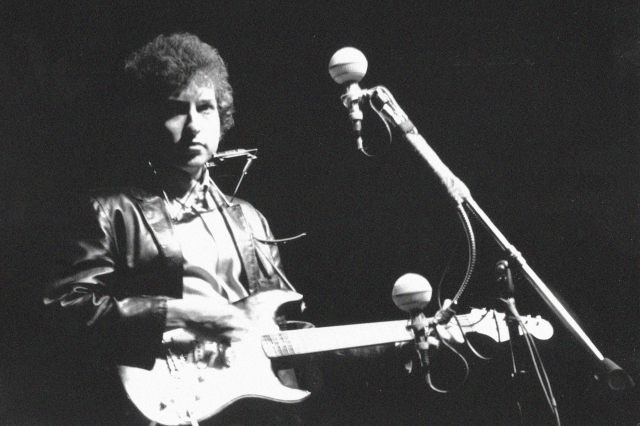
Photo credit: Alice Ochs/ Michael Ochs Archives via Getty Images Dylan Goes Electric
Rock historians aren’t in total agreement as to what precisely went down when Bob Dylan took the stage at the Newport Folk Festival on July 25, 1965. They all agree, however, that it was a hugely significant night for rock music. Dylan was the champion of the folk music revival of the early 1960s — a traditionally all-acoustic movement. So, when he strode onto the stage carrying a Fender Stratocaster rather than his more familiar acoustic guitar, the crowd was not pleased.
At the time, Dylan’s now-classic single “Like a Rolling Stone” was hugely popular on the radio, but folk purists didn’t like the song’s mix of electric blues and rock ’n’ roll. When Dylan and his accompanying backing band — some also wielding electronic instruments — started playing, sections of the crowd began booing. Accounts vary as to the intensity of the crowd’s reaction, but Dylan played only three songs before leaving the stage. When he returned, he performed two songs on acoustic guitar — “Mr. Tambourine Man,” followed by “It’s All Over Now, Baby Blue” — and then left for good. It was an edgy night by most accounts, but a pivotal moment in the development of folk rock, expanding the bounds of rock ’n’ roll.

Photo credit: Science & Society Picture Library via Getty Images The Beatles Release “Sgt. Pepper’s Lonely Hearts Club Band”
In 1967, Paul McCartney played the Beatles’ latest album, “Sgt. Pepper’s Lonely Hearts Club Band,” to Bob Dylan. Dylan’s response: “Oh, I get it, you don’t want to be cute anymore.” He was right — the Fab Four had turned a creative corner. Deciding that live performances and screaming fans weren’t enough, they wanted to become a serious studio band, and with “Sgt. Pepper’s,” the Beatles announced to the world that they were true artists. The album was revolutionary. Regarded by many as the first concept album, it is bursting with creativity and musical innovation, featuring French horns, tape loops, bass harmonicas, harpsichords, sitars, and more. The album changed not only rock music, but pop culture itself.
Related:Revealing Facts About 5 Celebrated Painters
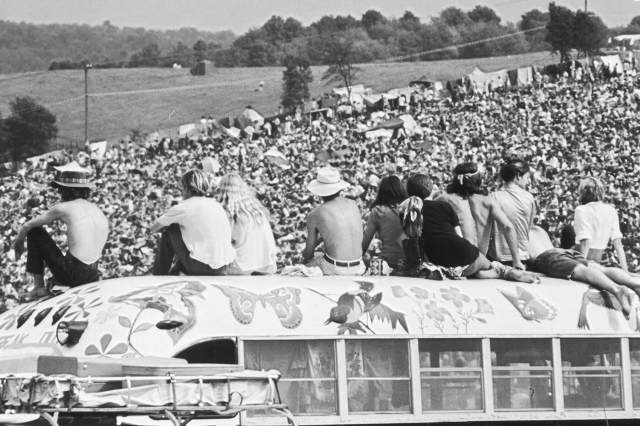
Photo credit: Archive Photos/ Archive Photos via Getty Images Woodstock
On August 15, 1969, 32 acts and more than 400,000 attendees arrived at Max Yasgur’s dairy farm in Bethel, New York, for three days of peace, love, drugs, and, most importantly, rock ’n’ roll. It was immediately obvious that the festival was going to be big, but no one knew just how iconic Woodstock would become. Despite various technical difficulties, food shortages, and bad weather, the festival became a living embodiment of the 1960s counterculture. As for the lineup, it was quite something: The Who, Carlos Santana, Jefferson Airplane, Janis Joplin, Sly and the Family Stone, the Grateful Dead, The Band, Creedence Clearwater Revival, Joan Baez, and Crosby, Stills, Nash & Young, to name but a few. And then there was Jimi Hendrix, who gave arguably the most iconic performance of the entire festival with his stirring, feedback-fueled rendition of “The Star-Spangled Banner.”

Photo credit: Michael Ochs Archives via Getty Images The Launch of MTV
Just after midnight on August 1, 1981, MTV — the world’s first television channel devoted to showing music videos — launched with the announcement, “Ladies and gentlemen, rock and roll,” as the station went on air. The first video broadcast on the fledgling channel was, fittingly, “Video Killed the Radio Star” by the Buggles. Despite some initial hype and interest, MTV struggled in its early years, in part due to a lack of music videos. But as it expanded its programming, MTV took off in a major way. By the mid-1980s, it was having a major cultural impact not only on music and TV but also on movies and advertising. Record companies began noting video’s effect on record sales, and soon the channel was launching the careers of newcomers such as Prince, Cyndi Lauper, and Duran Duran, and turning the likes of Madonna and Michael Jackson into global superstars. Music videos became big business, and MTV’s adoption of grunge and rap in the 1990s brought about a major shift in popular music.
-
Lyle Northey (Silent/Boomer)
Reading a book about the harm religion has done and one of the stories is about a young lady that decided to join the Muslim religion. In this story she is being very close to an inman and he finally decides to make her a wife. Not in the sense of a wife you go home to or support or any of that just one you have sex with. According to the teachings this is okay as a man can have up to 4 wives and keep 3 of them out of the picture and unknown to his 1st wife.
It occurred to wonder if these shadow wives can have regular husbands and additional shadow husbands. That is probably not possible as women have no rights under that faith. The fact that a convenient way for a man to have multiple sex partners with no religious guilt is another indicator that men write the book and make up the story.
All of it, no matter what name you attach, is a cock and bull story that was dreamed up by one guy or a group of guys that were trying to control others and make a profit doing it. Every religious text has numerous pot holes in the story line that just scream to be recognized to be bs statements and nonsense. If you insist on believing then do not try to shove your beliefs up others’ tailpipes.
Every faith seems to take the view that they have a leg up on some other faith. Islam claims to have the highest ranking disciple as he came after all the others. The entire book is written to give a mortal the wisdom of the ages and the sages and yet nothing could be further from the truth, except perhaps Donald Trump.
Radical ideas to say the least. Teach and preach a document that forbids just about everything you can think of and that includes having sex outside of marriage and then create a loophole that makes it possible at least for the inman.
Being involved with a church that forbids the use of computers and scorns TV and basically attempts to keep everyone in the dark ages. Where do we find these ideas in any religious work? Apparently it is possible to find almost anything in a religious text if you twist it around to make it follow a certain line of reason.
Just like the law enacted by an all benevolent legislation that now allows for people in Kentucky to kill the homeless with nothing more than the suspension that they might be on your property to camp, rob or in some way interfere with the property owner. Are we a thoughtful nation or what?
 Esoteric Meandering Shouting Into the Void
You must be logged in to post a comment.