Share a story about someone who had a positive impact on your life.
Every person that has come into my life has had an impact, some positive and some negative. The realization of life and experience is that many times the person that may have been the cause of the most negative event actually had the most positive impact.
Each May, American families celebrate their matriarchs with brunches, flowers, cards, and phone calls. Thousands of years before this modern Mother’s Day tradition started, the ancient Romans had a similar observance, although it focused on marriage and childbirth at least as much as mothers themselves. Celebrated each year on March 1, Matronalia commemorated the establishment of a temple to Juno Lucina, the Roman goddess of childbirth, on Rome’s Esquiline Hill.
As on our modern Mother’s Day, husbands would give their wives gifts — but that’s about where the similarity ends. Matronalia was a pretty pious affair; after a procession of married women to the temple to make offerings to Juno Lucina, families would return home and pray for marital happiness. Enslaved women were also given a feast by their female enslavers as part of the festivities.
Matronalia wasn’t the only ancient Roman holiday relating to mothers, however. In fact, it was pretty tame in comparison to the annual celebration of the Great Mother of the Gods, also known as Magna Materor Cybele, who entered the Roman pantheon around the third century BCE. Her festival, called Megalensia, took place over several days in March or April, and included games, theatrical performances, and other rituals.
Armistice negotiations to end the Korean War began in 1951 and lasted for two years, the longest such negotiations in history. While the Korean Armistice Agreement of 1953 ended active military conflict on the Korean Peninsula, it was not an official peace treaty. The agreement was adopted by the United Nations Command, the North Korean army, and the Chinese army, but South Korea leaders refused to sign. To this day, no official peace treaty has been signed between North and South Korea, and the two nations still technically remain at war. A tense ceasefire is maintained by the Demilitarized Zone that runs across the Korean Peninsula and divides the two nations, but both sides maintain a heavy military presence there, and the area still sees occasional outbreaks of violence. Despite continued negotiations, North and South Korea have been unable to reach an official peace agreement 70 years after the Armistice Agreement.
I am torn between saying Freedom is a ‘misnomer’ or an ‘oxymoron’ a term containing elements which are inconsistent or in conflict. Why would I think that? I think and believe that because no freedom is free, there are to many people that whole hearty believe that their freedom is untethered and has zero consequences. The laws of physics state that every action has an equal and opposite reaction, that truth being constant freedom is not free. You have freedom until that freedom impedes another freedom. Here in the U.S. we have wider lanes to live our lives in that other countries but our actions still have consequences so that makes that notion of freedom a misnomer.
In 1964, an Austrian journalist asked a travel agent in Vienna to book him on a flight to the moon, and it gave the folks at Pan Am an idea. Within weeks, the popular airline created a waitlist for would-be space travelers eager to reserve a spot on the first lunar flight. It was an advance reservation to be sure: The airline predicted that the first commercial flight to the moon would depart in the year 2000.
Though Apollo 11 would not make its historic journey to the lunar surface for another five years, Pan Am was already busy working out the messy details of spaceflight service (chief among them being the inevitable discomfort of rocket launches). As the airline advertised its lunar list on radio and TV, the waitlist only grew. By the time Neil Armstrong took his “one small step for man” in July 1969, some 25,000 people were waiting for their ticket beyond Earth’s gravitational embrace. Pan Am even set up a “First Moon Flights” Club, issuing club cards to around 93,000 certified members between 1968 and 1971.
Ultimately, Pan Am was unable to deliver on its lofty lunar promises; high operational costs combined with an economic slowdown led to the airline’s financial decline in the 1970s and eventual bankruptcy in 1991. The dream of space tourism, however, lives on. In 2021, Virgin Galactic’s space travel waitlist (at $250,000 per ticket) had some 600 names on it, including Tom Hanks, Leonardo DiCaprio, and Lady Gaga. The spaceflight company Axiom Space, meanwhile, is busy curating 10-day visits to the International Space Station for a cool $55 million and launched its first private mission in April 2022. Still, though humans have clearly long been hungry for ways to leave our home planet, the surface of the moon remains an exclusive destination for professional astronauts — for now.
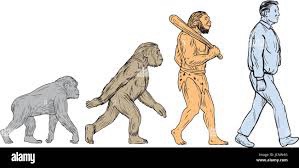
Though humans have been the planet’s dominant species for some 50,000 years, our reign is a blink of an eye in the grand scheme of things. Homo sapiens(Latin for “wise man”) has been on Earth for only 0.0067% of its existence, an infinitesimally small amount of time that emphasizes both how insignificant and how impressive a species we are. Homo sapiens first emerged in Africa approximately 300,000 years ago, at which point several other types of humans were still extant, including Neanderthals, Denisovans, Homo floresiensis, Homo naledi, Homo luzonensis, and Homo erectus. Though our ancestors are known to have coexisted with Neanderthals and Denisovans, it’s possible they never encountered the other early humans.
There are a number of theories seeking to explain why we survived and our predecessors didn’t, including superior brainpower and dumb luck, plus a newer theory suggesting that our interpersonal skills and dependence on one another helped us succeed where others failed. (Perhaps the secret really was the friends we made along the way.) We haven’t been here the longest — that would be Homo erectus, whose 1.5 million years on the planet is a record among humans that we sapiens won’t surpass for some 1.2 million years — but we have left the most sizable footprint. Whether that ends up being a good thing may be for the next species to decide.
JOB is an acronym for Just Over Broke I classify a career as Self imposed socioeconomic prison sentence that we have been programmed to believe is how are lives have to be defined.
I still remember the line from ‘Wayne’s World’ in the 80s when Wayne said ,”he had lots of careers which meant he had a lot of paper hats and name tags .”
I have had lots of JOBs in many different vocations but I would not say any one of them was a career.
One of the most common myths about medieval society is that people widely believed the Earth was flat, but there’s no evidence that supports this. On the contrary, by the fifth or sixth century BCE, ancient Greeks (specifically Pythagoras) had already begun investigating the planet’s true spherical nature, and by 240 BCE, Greek mathematician Eratosthenes even measured the globe’s circumference (and was pretty dead-on). In fact, the popularity of the flat Earth myth is a considerably more modern development: The myth was perpetuated in 1828 when Washington Irving, who’s known for his inventive short stories, penned The Life and Voyages of Christopher Columbus, which told a tale of the Italian explorer’s mission to prove that the Earth has curves.








 Esoteric Meandering Shouting Into the Void
You must be logged in to post a comment.