What is your favorite holiday? Why is it your favorite?
With the over commercialization of all of our holidays,  I am at the really don’t care about holidays at all this point in my life. It’s just another day. 
The courts have allowed Trump to continue his bully pulpit nonsense without holding him accountable. It is understood that he is a former President but at this point he is just another person of the nation. Is it fear of public opinion or what his followers might do that is keeping him on the streets and not behind bars? That is unclear, but if we take a look at history we find that at some point people reach a point where status does not matter. The Russians executed a Czar and all his family, the English beheaded a King and the French did the same to most of the Court of French Crown. When do we say enough is enough and require he pay for his crimes? The general feeling probably is that we do not want to kill anyone but just remove them from the spotlight. If the result of the election allows him to move back into the White House, then execution of those he does not like is a very real possibility. There has been a call in Colorado for killing Joe Biden, and I would classify that as a threat and have that idiot locked up. The Supreme Court is doing a lot of nothing about all this just finding ways to waste time and very possibly trying to let Trump off the hook which is just wrong. The method by which Justices are selected, the amount of time they remain in the job, and a code of ethics written by someone other than themselves that allows for termination of seats for violation of the code. The other courts that are getting a bad wrap are the courts trying the Jan 6 participants. Everyday there is another tale of how badly they are being treated and that the message the Feds are sending is don’t challenge the government. The lesson these people should be taking away is not that they can’t challenge the government, that they cannot overthrow the government by means of violence on the whim of an idiot. Other candidates to the office have lost out by way of the vote of the Electoral College, not the vote of the people. They have not called for a riot or an insurrection they have accepted it and we the people have had to put up with Presidents like Bush and Trump that really should not have been in office. They do not deserve to be treated worse than others that are held in jail, but they do not deserve to be treated better either. Attacking guards and attempting to interrupt an official proceeding does not get them a room at the Holiday Inn. It gets them a jail cell and all the luxury that comes with it. Remember most of you are the ones that were so keen to defund the police. Where did you think they were going to cut back first, no new cars, or more austere conditions in jail cells. You that are in those cells chose to rally behind a perpetual loser and do his bidding. So a choice was made, the outcome should have been obvious, and not the piper must be paid. Welcome to the adult world that has no room for the antics of a spoiled two year old.
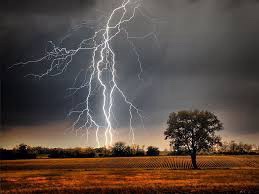
“How hot is lightning?” is a bit of a trick question. Lightning itself doesn’t have a temperature, because it’s just the movement of electrical charges in the atmosphere. (You can think of it as one big spark of electricity that happens when positive and negative charges build up within a cloud, between clouds, or between a cloud and the ground.) But that doesn’t stop lightning from heating up whatever it passes through — in this case, air. Air is a poor conductor of electricity, so it heats up tremendously when lightning strikes. In fact, lightning can heat the air to 50,000 degrees Fahrenheit, which is five times hotter than the surface of the sun.
Suffice to say that the air stays extremely hot near Venezuela’s Lake Maracaibo, home of what’s been dubbed the “everlasting lightning storm.” Known locally as Relampago del Catatumbo, or the Lightning of Catatumbo (named for a nearby river that enters into the lake), the phenomenon has been recognizedby the Guinness Book of World Records as involving the most lightning strikes (250) per square kilometer of any spot in the world. Ten-hour lightning storms occur some 150 times per annum, and lightning itself can be seen up to 300 nights every year.
Efforts were made to remove Trump from state ballots based on his alleged criminal activity and the fact that many felt he is unfit to serve. Now we have two states that want to remove Biden from the ballot because of convention timing and little else. The first situation mentioned caused all kinds of calls of unconstitutional and election interference, the second situation has not yet seemingly caused a ripple in the pond. Everything that has to do with the Trump campaign is a problem of huge consequence if it does not go well. An ad put out by the party members that are not Trumpers show that by Trump and his staff that you are either in all the way or you are out and the gates to “Heaven” have been locked. So much of what we are seeing from the GOP and the religious right is intolerance for any view, opinion, action that does not adhere to the dictates of the leaders, be that Trump or one of the equally fanatical religious leaders. Please take a look at the world from a political perspective and note what nations are progressing and which are either stagnant or going backwards. Nations that have citizens that are encouraged to bring forth ideas and present different courses of action are progressing and growing, they are democratic nations. The ones that seem to be stuck in a time warp are the ones that only one view is accepted and that is the view of the leader. Not all ideas that are presented are good or acceptable but we may well need to have them presented so that debate and compromise are possible. We must tolerate some things that may seem unnecessary or unfair in order to keep the wheels turning. Many believe that the use of alcohol is unacceptable, and in excess it is not good. However, it has been around for longer than anyone can remember and people are unwilling to stop using it so it is part of our social makeup. The same can be said of other practices, some that have been accepted in many nations but not all. Our nation needs to keep all lines of communications open. We cannot afford to have any one person or group determine what is right for all of us. The efforts to subvert the rights of our citizens so that one element of society dictates what news you hear, what medical treatments you may have, who is allowed to be different or not, and the persecution of anyone that is critical of the state is not to be tolerated. The dictators of the world need to be put back into the cages they are building to house those that do not agree. We have spent far to long being politically correct and allowing others to take advantage of the system. A segment of our population has been able to dominate by claiming they are the victims when they are in fact the perpetrators of the problems. Time to pin the tail back on the donkey.
Though it’s nearly ubiquitous today, wearing pants was considered highly uncivilized in ancient Greece and ancient Rome, where tunics and cloaks, such as togas and chitons, were the norm. The anti-pants sentiment had little to do with clothes themselves, and was more a result of xenophobia toward the cultures that traditionally wore them. Ancient Greek texts deride pants on Persians and Scythians, two groups who were frequently at war with Greece, and in ancient Rome, pants were associated with the Gauls, who fought Rome in the Gallic Wars.
Even academic texts are full of trouser trashing. In his treatiseDe aere aquis et locis (Air, Waters, and Places), written around the fourth or fifth century BCE, famed Greek physician Hippocrates belittled the Scythian people by calling them “the most impotent of men,” in part “because they always wear trousers and spend most of their time on their horses.” In the early second century CE, Roman historian Tacitus wrote that Roman general Aulus Caecina Alienus offended the public when he rode through Italy wearing trousers in 69 CE. And in the fifth-century-BCE text The Histories, ancient Greek historian Herodotus quoted a “wise man”giving advice to the king of Lydia about conquering Persia, which, he said, had “no luxury and no comforts.” As evidence, he pointed out that they “wear trousers of leather”— a pretty high-priced item today. (For the record, the pants-wearing Persians ended up conquering Lydia in that conflict.)
Anti-pants rhetoric persisted even as the fashion tide changed. The Theodosian Code, a set of Roman laws published in the fifth century CE, banned wearing trousers, punishable by exile — although many Romans had started wearing pants by that time because they were practical, warm, and much more comfortable than bare legs for riding horseback. By the medieval period, pants were a staple garment throughout Europe.










You must be logged in to post a comment.