“I feel like someone is watching me” is a classic horror film trope, but the idea also taps into a biological fact: Humans are good at sensing when someone is looking at them. While some label this gut feeling a kind of sixth sense, it’s really a biological phenomenon known as gaze detection, caused by a complex neural network in our brain. This detection system rests largely in our peripheral vision; the sense dissipates quickly when someone turns only a few degrees away from us. Because some 10 regions of the brain are involved with human vision, and little is known about gaze detection generally, scientists haven’t pinpointed what’s controlling this seemingly uncanny ability — although researchers have detected a dedicated group of gaze-detecting neurons in macaque monkeys.
Gaze detection is particularly interesting in humans because our eyes are unlike any other in the animal kingdom. The area around the pupil, known as the sclera, is very prominent and white, which makes it easier to discern in what direction someone is looking. The overall theory as to why humans are so good at gaze detection boils down to the evolutionary advantage of cooperation. Simply put, humans are social creatures, and the detection of subtle eye movements helps us work with others while also helping us avoid potential threats. But because of the evolutionary importance of knowing when someone is looking at you, our brains tend to oversignal that someone is staring at us, when they’re really not. So if you’re ever feeling a bit paranoid, blame your brain.
Earlier this month a person in rural Oregon was diagnosed with plague—the state’s first case in eight years. According to health officials in Oregon’s Deschutes County, the person likely contracted the disease from a pet cat.
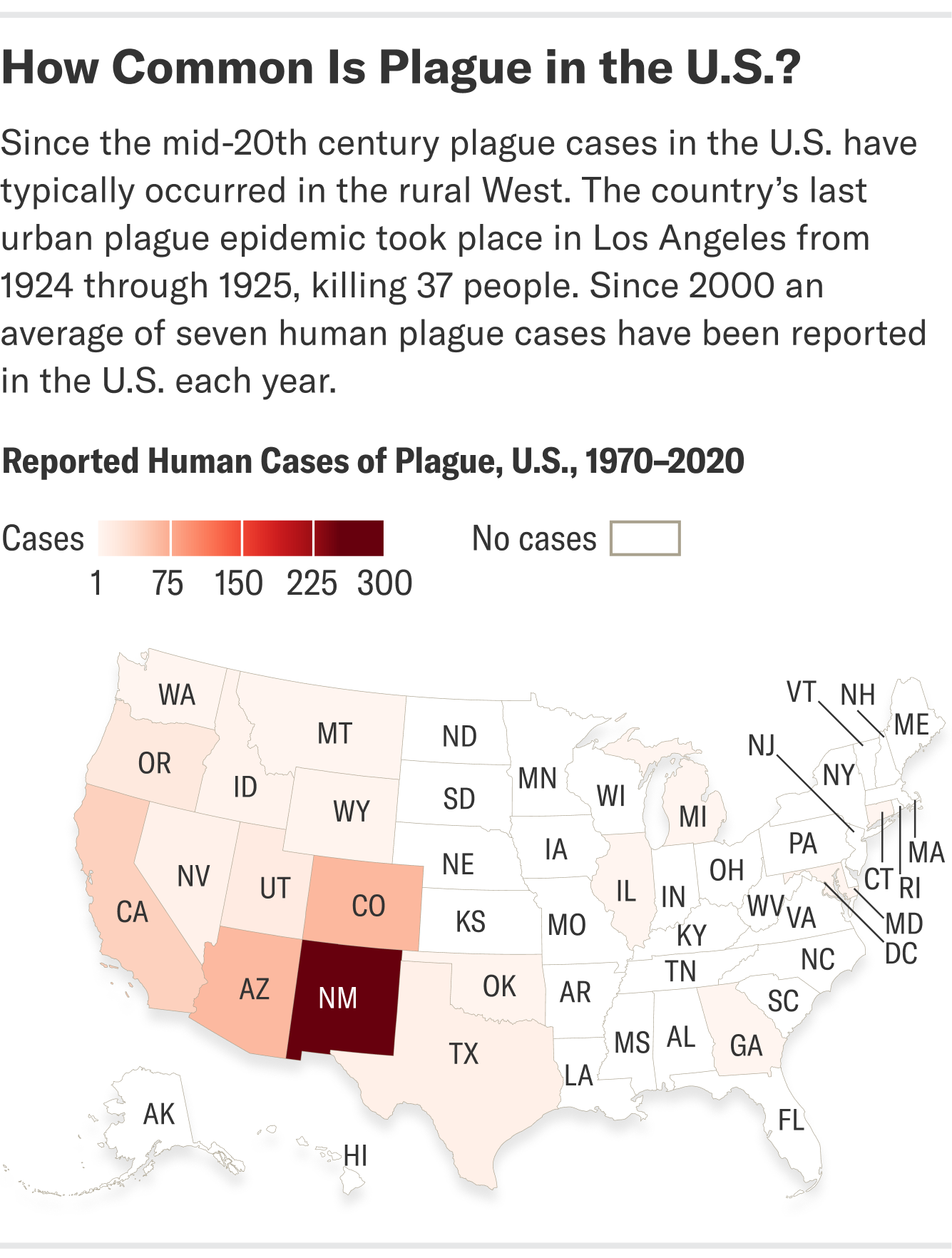
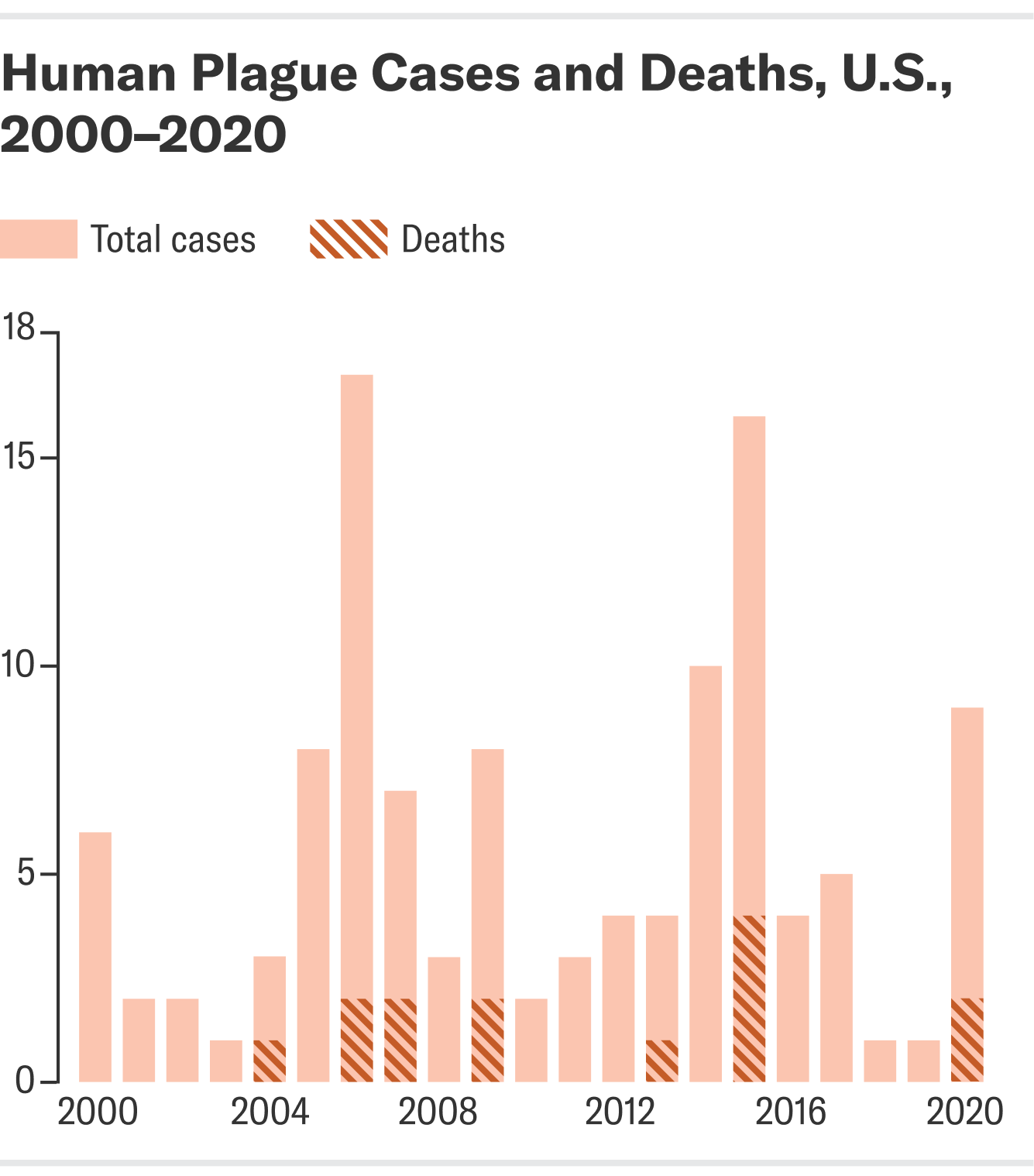
Plague is often thought of as a medieval disease, but it continues to affect people across the globe—most commonly in Madagascar, the Democratic Republic of the Congo and Peru. In the U.S. about 10 cases of plague are diagnosed per year. Most of these are reported on the West Coast and in Southwestern and Rocky Mountain states—particularly in New Mexico.
Plague is caused by a bacterium called Yersinia pestis. Most people know it as the microbe behind the “Black Death,” which wiped out at least a third of Europe’s population in the 14th century. Humans and the animals that travel with them have spread it to every continent except Antarctica. It most likely arrived in the U.S. on ships docking in California sometime around the year 1900.
Y. pestis can make humans extremely ill, but it doesn’t naturally thrive in human populations. Instead it lives in wild rodents. “It doesn’t make them particularly sick, and so that means it can just kind of quietly circulate in that population,” says Erin Phipps, state public health veterinarian of New Mexico. The particular rodent species that carry plague can vary from region to region, but in the U.S. it can be found in rats, prairie dogs, marmots, squirrels and, occasionally, chipmunks.
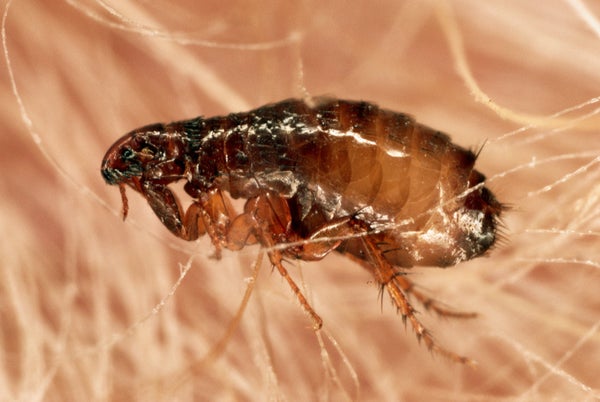
From these “reservoir” species, plague can spread to other animals via fleas. If a flea bites an infected rodent and then leaps onto another animal, its bite may transmit some of the Y. pestis bacteria. This can happen in humans, but it can also happen to animals closely associated with us. “Cats are very susceptible to Yersinia infection” because they tend to hunt rodents specifically, says Susan Jones, a biomedical historian at the University of Minnesota who is working on a book tracing the history of plague in the former Soviet Union.
Even today the disease can be deadly for both humans and pets who contract it if left untreated. Unlike medieval physicians, however, modern doctors are well equipped to deal with the illness, thanks to antibiotics.
“Antibiotics work very well against plague,” says Javier Pizarro-Cerdá, a systems biologist at the Pasteur Institute, a nonprofit research organization in France. “But we have to diagnose [it] early for them to be effective.”
By far the most common form of plague is bubonic plague. It’s characterized by painful swollen lymph nodes called “bubos” around the armpits, throat and groin. Bubonic plague is the easiest type of plague to diagnose and the most survivable. It is primarily spread by flea bites.
Sometimes Y. pestis travels from the lymph nodes into the lungs to become “pneumonic” plague. “Once the bacteria arrive in the lungs, they are very, very happy there. They proliferate like crazy,” Pizarro-Cerdá says. This form of plague is transmitted directly through respiratory droplets, much like SARS-CoV-2, the virus that causes COVID. It also triggers a fairly generic—though severe—set of symptoms, including fever, body aches, cough and shortness of breath. Pneumonic plague is more deadly and more difficult to diagnose than bubonic plague.
Very rarely, a person might contract a third form of the disease known as septicemic plague. This occurs when Y. pestis bacteria enter and begin to multiply in the bloodstream. People can be exposed to this form of plague through flea bites but also from handling the corpses of infected animals. Left untreated, septicemic plague is nearly always fatal. There is not currently a vaccine against plague commercially available in the U.S. The plague vaccines that have been approved under certain circumstances in other countries aren’t very effective, but groups such as Pizarro-Cerdá’s are working to develop a better shot.
Luckily, for most people in the U.S., avoiding plague isn’t difficult. The first step is to be aware of your surroundings when hiking or exploring wilderness areas in the western part of the country. If you are in an area where plague is endemic, make sure to wear long sleeves and pants, carry insect repellant and avoid dead animals, Phipps says. In addition, people who live in states where plague is endemic should take measures to avoid attracting rats or other rodents to their home, such as keeping outdoor animal feed in sealed containers and not letting wood or garbage pile up in the yard. Keeping cats indoors can also decrease the likelihood that they will become infected by a plague-infected rodent.
If you think you may have been exposed to a plague-carrying animal, you should let a doctor or health official know right away so that they can treat you. At the end of the day, “humans cannot completely separate ourselves from the natural environment,” Jones says. Some risk of disease is unavoidable—but it doesn’t have to be deadly.
What is one question you hate to be asked? Explain.
Being the child of a military father and also serving in the Army I have had the opportunity to live in multiple countries and have lived in or at least been to every state in the union… I am frequently asked “ what’s your favorite place?” That question frustrates me because it generally comes from a person who has never been out of their own backyard. The honest answer to that question is every place has its ups and downs, it just more fun to see every place with open arms and no preconceived notions to taint the experience.
Waterfalls are some of the world’s most amazing wonders. Millions of people flock to these water-rushing giants — with names like Niagara, Yosemite Falls, and Iguaçu — to see them up close and in person. However, the largest waterfall in the world has no ticket counter, no gift shop, and no tourists. In fact, there’s nothing at all to see, because this waterfall is entirely underwater.
Nestled between Greenland and Iceland is a body of water known as the Denmark Strait, and beneath its waves lies the world’s largest waterfall. Known simply as the Denmark Strait cataract (a “cataract” is a type of powerful, flowing waterfall), it cascades 11,500 feet toward the seafloor. This incredible deluge — like other underwater cataracts — is actually a dramatic dance between warm and cold water. In the case of the Denmark Strait cataract, cold water from the Nordic Sea meets the much warmer water of the Irminger Sea southwest of Iceland. The cooler, denser water sinks beneath the lighter, warmer water, dropping more than 2 miles to the seafloor. The resulting waterfall completely dwarfs Venezuela’s Angel Falls, the tallest terrestrial waterfall in the world, by more than 8,000 feet. The Denmark Strait cataract is also a staggering 100 miles wide, nearly 15 times wider than the widest terrestrial waterfall, the Khone Phapheng Falls in Laos, which is only 6.7 miles wide. By every single metric, this underwater avalanche towers over the competition — even though it never rises above sea level.
In World War II, the British had a plan to make aircraft carriers out of ice.It was 1942, and, among many other challenges, wartime Great Britain had a big problem: Nazi U-boats. These German submarines destroyed U.K.-bound merchant ships laden with much-needed food and supplies, and the attacks became so frequent that from March to September of that year they sank close to 100 merchant ships a month. Airplanes at the time couldn’t fly far enough from land-based airstrips to protect these ships in the ocean, and this aviation limitation left a 300-mile lane of unprotected waters known as “the mid-Atlantic Gap.” Britain’s legendary prime minister, Winston Churchill, was desperate to close this gap by any means necessary, and dreamed of building floating islands where planes could refuel. Unfortunately, aircraft carriers were few and far between, and steel was hard to come by during the war effort, when it was needed for weapons, tanks, ships, and more.
One day, a potential solution arrived when Lord Louis Mountbatten, the head of Britain’s Combined Operations Command(and beloved uncle of the future Prince Philip), presented Churchill with a strange chunk of ice. This wasn’t any normal piece of ice, however: It was pykrete (named after its creator Geoffrey Pyke), which was a type of ice reinforced with wood pulp. The result was a material that melted very slowly, and for Churchill, a vision of a fleet of aircraft carriers made from pykrete came into focus. The proposed pykrete ship would’ve been the biggest “ship” ever constructed, displacing 26 times more water than the largest ship at the time and requiring 26 electric motors for propulsion. A 60-foot-long prototype was soon constructed in Alberta, Canada, that weighed as much as five blue whales. But by 1943, things had changed. Escort carriers had arrived in the Atlantic and long-range aircraft such as the B-24 Liberator had closed the gap for good. Despite pykrete’s amazing ability to hold its shape, the dream of an iceberg aircraft carrier soon melted away.
The Court, we can hardly call them supreme, has passed the buck to Congress. This body of persons collectively does not have enough spine to stand upright. They take on issues that have been done and dusted for half a century and overturn them because of an asshole with a larance making noise. Same source of noise, different effort, to usurp the power of the Constitution, and they pass the buck. The world is on fire with conflict and natural events that are consuming lives and resources. These are times that call for leadership of the highest order, and we seem to have nowhere to turn. Every political hot spot is being kept in a state of flux by someone that wants power but has no idea of the concept of leadership. Continued problems in Gaza, as there have been since 1947 when the nation of Israel was placed there, or re-established there. Either way the people on the ground were not happy with the new neighbors. Basis of origin is the Bible which claims that area as home for Jews. Then we have Russia and the land grab. What is the point with the threat to bring atomic weapons into the mix if NATO troops are brought into the fight. Nukes on your own back door does not sound bright to me but then, unlike Putin, I do not want to glow. North Korea and China and other regions of the world are in a constant stage of bullying their neighbors and rattling chains to see who they can scare. Hopefully the Big Foot community and the Aliens don’t get together and kick our butts. Here at home we have the posturing and blustering of the man that wants his name in the headlines. He does not care how it gets there as long as it is there. Last entry could be killed by an assassin and he would be happy, his name would be in the headline. If it were a killing like Kennedy in Dallas and the investigation should last for decades he would be pleased as his name would be in the headlines and that is all that matters. Get the point? All the noise about money raised to buy the House, the Senate and the Presidency is just proof that the government has become the latest blue light special at failing K Mart. This reinforced the view that everything in Washington DC is for sale. The willingness to fall in line and kiss the ass of the lead dog, not knowing policy, not understanding history, international relations, and preaching against everything under the sun from abortion to allowing someone in a line waiting to vote having something to drink then running home to your same sex partner. Hypocrisy at its finest.
In 1899, in the months leading up to William McKinley’s 1900 reelection campaign, Vice President Garret Hobart began suffering from symptoms of a severe heart condition, including fainting spells. Though Republican Senator Mark Hanna tried to assure the public that “nothing but death or an earthquake can stop the re-nomination of Vice President Hobart,” the former seemed to be exactly the concern. Unfortunately, Hobart’s health worsened, and he died on November 21, 1899. And McKinley found himself unexpectedly looking for a running mate for reelection.
At the time, Theodore Roosevelt was serving his first year as governor of New York, and immediately emphasized a slate of reforms that put him at odds with the establishment in his own party. Republican Party bosses realized that they could effectively remove “that damned cowboy” (as Hanna referred to Roosevelt) from New York politics by nominating him as McKinley’s running mate. Roosevelt realized the political exile the vice presidency would entail, and argued against his nomination. Hanna, for his part, was vehemently opposed to the idea of Roosevelt as Vice President, at one point pleading, “Don’t any of you realize that there’s only one life between that madman and the presidency?”
The strangely aligned Roosevelt and Hanna were both unable to stem the tide, and the tally at the 1900 Republican National Convention concluded with 929 of a possible 930 votes in favor of Roosevelt as Vice President. The count was not unanimous only because there was one delegate who abstained from voting: Theodore Roosevelt himself. There was no choice but to accept the nomination, and party boss Thomas Platt quipped that he would attend McKinley’s second inauguration just “to see Theodore take the veil.” But Hanna’s warning would prove prescient just one year later, when McKinley was shot and killed, and Roosevelt assumed the presidency.
Every state has an official bird or tree, but only one state’s governor has declared a state monster. Washington state is home to some impressive forests, and it’s within these misty woods that a legend has grown about an apelike man known as Bigfoot or Sasquatch (sasq’ets means “hairy man” in the Halq’emeylem language of British Columbia). The myth of the Sasquatch began centuries ago with West Coast Indigenous peoples, and gained steam in the 19th century when British explorers (allegedly) discovered “Sasquatch prints” during explorations of the Columbia River. However, the modern legend really kicked into high gear in 1958, when a journalist for the Humboldt Times in northern California pondered if a set of mysterious footprints, mentioned by a reader, could be a relative “of the Abominable Snowman of the Himalayas.” Almost a decade later, the famously grainy video shot in Bluff Creek, California — known as the Patterson-Gimlin film (named for its creators) — cemented the iconic status of this hirsute creature.
Today, Bigfoot’s image can be found throughout the Pacific Northwest, emblazoned on festival signs and gift shop tchotchkes. In 1970, Washington state’s governor issued a proclamation declaring Sasquatch the state monster of Washington; he even affixed a lock of the legendary monster’s supposed hair to the document. (The proclamation also deemed “all Sasquachii” a protected state resource.) More recent endeavors, in 2017, attempted to solidify that official status when state Senator Ann Rivers introduced bill SB 5816, calling for Sasquatch to become the state’s official monster. The bill was referred to committee but has yet to be signed into law, which means that for now, the Sasquatch’s official status — much like the creature itself — remains elusive.
Did you know that honey is the only type of sugar that actually improves your tooth health instead of harming it? It’s true!
Most types of sugar feed bad bacteria that cause tooth decay and bad breath. However, honey is VERY different!
Honey naturally contains antimicrobial compounds that kill harmful bacteria in the mouth and allow good oral bacteria to flourish. In fact, many hunter-gatherer tribes around the world that consume large amounts of honey have been found to have very good oral health and ZERO cavities despite their frequent honey consumption.
Not only that, but honey has dozens of health benefits in the body including helping your body produce nitric oxide, which improves blood flow (a big benefit that older men enjoy from honey for both heart health and erectile health!)…
Just make sure when choosing honey to choose local when possible and always raw. You want to avoid mass produced honey that came from China which is often fraudulently cut with high fructose corn syrup to make it cheaper.
While honey is one way to reduce bad bacteria in your mouth to improve oral health, there’s another newly discovered way below to get specific types of “healthy mouth bacteria” to prevent cavities and rebuild teeth, improve gum health, and more…
Swallowing These Bacteria is Better Than Dental Implants
It may sound odd but it is scientifically proven…
According to a Harvard scientist, swallowing these newly discovered bacteria is all you need to do to fix all your dental issues, from gum bleeding and teeth rotting to bad breath and cavities.
These amazingly efficient bacteria work by reconstructing your enamel (the outer layer of your teeth)…
Making them 20x stronger than a normal tooth…
Like a titanium shield against cavities, root infection and enamel erosion.
Some say their teeth are now stronger than a dental implant…
Click here to find out how easy it is to get these bacteria and start your teeth reconstruction today.
____
Disclaimer: The information in this email is not intended or implied to be a substitute for professional medical advice, diagnosis or treatment. All content, including text, graphics, images and information, contained on or available through this email is for general information purposes only. Primal Source makes no representation and assumes no responsibility for the accuracy of information contained in or made available through this email, and such information is subject to change without notice. You are encouraged to confirm any information obtained from or through this email with other sources, and review all information regarding any medical condition or treatment with your physician.
____
A recent article from my friend Mike you may have missed:
The Meat Diet: Better than Vegetarian for Fat Loss, Diabetes, Autoimmune Issues, Digestion and More…
You may have heard in the news in the last couple years that “carnivore diets” have been growing in popularity, and have some surprisingly powerful health benefits that often shock a lot of people, since this way of eating is so contrary to what you hear in the mass media.
In fact, you may have even heard that the famous Joe Rogan (comedian and most popular podcast host in the world) tried a full month of a carnivore diet and said it was the “best he’s ever felt” while also losing 12 lbs of body fat and losing his love handles that he could never get rid of previously. He also reported that his energy was perfectly stable for the month that he ate carnivore. He felt so good eating an all-meat diet that he did it for 30 days again this past January, and reported similar results again.
As you read today’s newsletter, I’d encourage you to be open minded and realize that most “gurus” out there that you hear from in the media actually don’t have much depth of nutrition education, and most powerful food companies that sell ultra-processed “plant based” junk food actually have a lot of influence on spreading propaganda trying to blame all health problems on meat, eggs, and other healthy animal foods because they know that you’ll buy more highly profitable “plant-based” junk food if you eat less animal food.
But when you dig into the real science, and explore it with an open mind, you actually find that most information about nutrition that’s preached in the mainstream isn’t necessarily correct, and I’ll explain some of my findings in this email.
If you’ve never heard of the “carnivore diet”, it’s basically a way of eating that focuses either entirely or mostly on healthy meat, fish, and eggs, while avoiding most plant-foods, or choosing only small amounts of plant foods based on a scale of plant toxicity… for example, with leafy greens, nightshades, grains, and beans being the most toxic plant foods, and fruits generally being the least toxic types of plant foods (I’ll explain more on that concept of plant toxicity levels in a bit)…
I’ve been intensely studying the science of carnivore and carnivore-ish (animal-based) diets for several years now, and have been fascinated by the impressive health benefits that thousands of people are getting from this way of eating. However, as with any way of eating, there are some types of people that get a lot more benefits than others.
The biggest categories of people that seem to benefit the most from animal-based diets are people with these conditions…
1. Autoimmune conditions — a very high percentage of people with autoimmunity see a dramatic reduction in symptoms, and many times, and full resolution of symptoms by following either a carnivore diet or a mostly carnivore diet that contains only the simplest and least toxic plants. For autoimmunity, it’s basically the most efficient type of elimination diet, since there’s so many types of plants that trigger autoimmune symptoms.
It’s fairly common for people with autoimmune conditions to get triggered by plant foods such as gluten-containing grains, beans (very high in lectins), nightshades (tomatoes, peppers, eggplant, and white potatoes), oxalates from leafy greens, and other problematic compounds in plants.
2.Gut/digestion issues — since excessive fiber and excessive plant-based antinutrients and plant toxins can worsen digestive conditions, a mostly meat diet can actually be really healing for the digestive system in a lot of people, even though that statement surprises most people. Even the world-renowned digestive doctor Dr. Michael Ruscio stated in an interview that somewhere around 60% or more of his patients need less fiber, not more. Too much fiber can cause overgrowths of certain types of bacteria that can cause more digestive distress. Too much fiber can also irritate the digestive tract in a lot of people as well.
I personally know a LOT of people that are using carnivore diets and experiencing dramatically improved digestion. I also know several people with Crohn’s disease where carnivore is the only thing that has worked for them to control their Crohn’s, and they had tried everything before that. It won’t work for everyone, and most conventional doctors have never even heard of carnivore diets, so don’t expect your doctor to know anything about it if you ask. In fact, most conventional doctors (I’d say 95% of them) don’t know much at all about nutrition since there’s almost zero nutrition education in medical school. So the only MDs that know a lot about nutrition are usually just the small percentage of them that are self taught.
3. Diabetes and obesity — although carbs aren’t “bad” necessarily, especially for metabolically healthy people or people that do intense exercise, low-carb diets (including carnivore type low-carb diets) can be particularly powerful for at least some time frame for getting type 2 diabetics back to normal blood sugar and insulin functioning in the body. If you’re diabetic or pre-diabetic, I’d highly recommend reading this natural method for reversing Diabetes here.
Also, weight loss gets pretty darn easy when you’re eating almost entirely meat, because meat is the single most satiating food you can eat, and it’s basically impossible to overeat on calories with a meat-only or mostly meat diet. Think about how hard it is to overeat on steak. You just simply stop when you’re full. But think how easy it is to overeat on mac n cheese, cereal, bagels, bread, pizza, ice cream, and other carb/fat combos that are highly addicting. I know personally when I have pizza, bread, or pasta in front of me, I can’t stop eating it because it’s so addictive, and I end up over-stuffing myself with thousands of excess calories. But with a juicy grass-fed steak, I just eat until I’m satisfied and then naturally stop.
As for me personally, I’ve done about an 85-90% carnivore diet for about 3 years now (I’d call it animal-based, with only carefully selected plants such as fruit that I know does well with my body)… For me, this has been the absolute easiest and best diet for me, and I’ve never felt so good. My digestion is basically almost perfect since cutting out most veggies, beans, nightshades, etc, and my energy and body composition have improved as well. And my bloodwork has been nearly perfect too for these last few years on a mostly meat-based diet.
And no, despite the false belief by outdated doctors and the mainstream media that cholesterol causes heart disease, nothing could be further from the truth… in fact, the biggest causes of heart disease are actually plant foods like vegetable oils and sugar, but NOT meat. Meat, fish, and eggs actually contain important nutrients that can help prevent heart disease, such as vitamin K2, carnosine, carnitine, DHA/EPA, stearic acid, etc.
As for what I personally eat… I eat mostly red meat almost every day (grass fed beef, bison, lamb, and yak), fish and shellfish a couple times a week, eggs, and the only plants I eat are small amounts of squash, sweet potatoes, carrots, avocado, cucumbers, coffee, wine, and sweet fruit only during the local fruit season, but not during winter. I also enjoy a small spoonful of honey a few days a week as a dessert replacement.
I personally choose to avoid chicken and pork mostly, since they have about 10x the inflammatory omega6 content of red meat (red meat only contains 2-3% omega6, while chicken and pork contain about 15-20%, since chicken and pork are fed almost entirely grains and soy, whereas red meat like beef, lamb and bison eats mostly grass and forage for the majority of their lives)… I explain in more detail why RED meat is healthier than chicken or pork in this article, and also why red meat is more environmentally sustainable too, which surprises most people.
The best diet change I ever made that had the biggest impact on improving my health was cutting out most veggies and beans over the last 3-4 years. I actually intentionally avoid almost all veggies and beans now, and this had the most dramatic improvement on how I’ve felt on a daily basis.
I personally don’t think veggies are an ancestrally consistent food source for humans, and a study of over 300 hunter-gatherer tribes showed that the average diets of hunter-gatherers around the world was about 80-85% meat, fish, and fruit, and the other 15% was basically small amounts of nuts and roots… But hunter gatherers really didn’t eat much of what we’d call “vegetables” in our modern day food supply. Leaves and stems were only 1% of the average hunter-gatherer diet, even in tropical areas.
After all, 99% of leaves in the wild are toxic, and why would hunter-gatherers have wasted time and energy gathering something that has no calories…it just makes no logical sense. The majority of plant foods our ancestors ate was actually fruit mostly (the only part of the plant that wants to be eaten so we can spread the trees seed elsewhere), along with a little bit of nuts and roots, since those are the more calorically-dense plants that would have made sense to gather.
I also think that about 50% of vegetables are actually harmful to a lot of people based on genetics and other health conditions… For example, brassica veggies can be bad for people with thyroid conditions, nightshade veggies can be bad for people with arthritis, leafy greens can cause oxalate issues such as kidney stones, and certain other vegetables can often worsen digestive issues. So as you can see, veggies can often have more detriments than benefits.
Another thing I have noticed over the years is that the majority of men in general seem to do fantastic on carnivore or mostly carnivore diets, whereas women seem to be more 50/50… some women feel amazing on carnivore, and other women feel the need for more fiber and more plant foods in general. This is actually ancestrally consistent too, since hunter-gatherers generally had the men as the main hunters and the women more frequently as gatherers, and the men had access to more frequent meat than the women in a lot of these tribes. So it’s possible that men are built for a slightly higher protein diet than women as a generalization.
Another good example is my friend Dr Paul Saladino, who wrote the popular book The Carnivore Code… he’s been mostly carnivore for 3 years now too, and eats nothing but meat, organs, honey, and a small amount of fruit, and the guy is one of the healthiest people I know, whereas when he was vegan I think 6 or 7 years ago, he destroyed his health eating that way.
Lastly, I’d recommend people have an open mind when researching things like carnivore vs plant-based diets, as there’s a LOT of closed-mindedness from the plant-based community to even consider or research anything other than what the biased information they currently believe. I’ve come to the conclusion that most humans can thrive just fine on either a meat-based diet or possibly even a plant-based diet as long as those plants are considered on a scale of plant toxicity and chosen carefully, while also getting at least some animal-based foods to balance out the micronutrients that simply can’t be obtained from plants only. And some people (if you have northern genetics) might even consider being more animal-based in the winter and early spring, when our northern european ancestors would have been mostly carnivore, and then switching to a higher plant diet in the summer and fall when fruits, nuts and roots would have been more plentiful.
Another thing is that it seems more important for longevity that we’re careful about avoiding the WORST foods that are causing most disease… with the absolute worst foods that are killing most people being vegetable oils (aka seed oils like soybean oil, corn oil, sunflower oil, cottonseed, canola, etc) and sugar, and possibly too much refined grains too. And for people that try out eating a more meat-based diet (with smaller amounts of carefully selected plant foods), they often find that it becomes really easy to avoid the worst foods like vegetable oils and sugar because they don’t need to eat any processed food and also don’t have cravings for unhealthy food anymore either since meat is so satiating.
To read more about how eating a fun and delicious carnivore style diet can potentially dramatically improve your body composition, energy, digestion, and more, don’t miss this article below about my friend Ross and his experience…











You must be logged in to post a comment.