What are your thoughts on the concept of living a very long life?
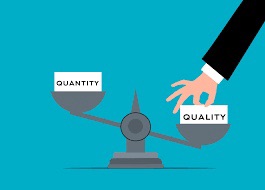
I truly believe there’s a difference between quality versus quantity. Sometimes quality is far more important than quantity. If you can’t live along healthy, productive life, then quality is not there.
The idea of having one person rule is as arcane as you can get. Most of the citizens of this nation have a problem listening to their parents, their teachers, police officers, religious persons, employers, customers, if they are in the military their NCO’s and Officer’s and their spouses. Based on the lack of cooperation given to any and all of these mentioned individuals it is hard to imagine that they are going to do well with a one man show. There is a concept of control that says most positions of power are capable of managing 3 to five units. Generally a unit is considered a single individual and if that is the most that is known to be controllable then how is a single person going to control an entire country? It may happen but it will mean that very many extremely brutal people will be employed to make sure the leader’s wishes are carried out or at least some semblance of his wish is carried out. This is the case in all of the dictator-run countries of the current world, the ruler may think he has control but he is just a puppet the real power belongs to those that “serve” him. These people stay loyal only as long as they see that the loyalty serves them. Are they allowed certain freedoms that they would not otherwise have? Can they commit crimes with immunity, is their lifestyle much better than other peoples?All these differences are important and they will be kept secret even if they must kill to insure that. Prisons will be filled with all that have in any way been known to be anti the person in charge. That person’s family may be in as much jeopardy as he is and have no choice in the matter. Absolute power corrupts absolutely, and we definitely saw that with Trump. His desire to rule is the force that is driving him at present and will continue to drive him till the day he dies. The idea to be a dictator is an ego trip that with luck will end when someone decides that they have had enough of his bull and decides to do him in, sooner as opposed to later. Every dictator needs to be eliminated in one way or another with the most violent method that the oppressed can think of. All the issues with his being able to run much less serve are to be settled by the supreme court. This is a very unsound arrangement in that Trump appointed 1⁄3 of the court and they may feel that they have to give him his way. If they made this and issue in a special election for all to vote on and the results of the vote give yes or no to the problem. It is very unlikely that the majority of this nation’s populus will want to give up their way of life to be run by a dictator. If it turns out that they do then it’s time to move out of the country to somewhere else that has more to offer. The results of this vote would also be used to determine if the members of Congress that supported Trump will remain in as well and to cleanse the Supreme Court of dead wood, all that choose to listen only to the people that wish to turn back the clock.
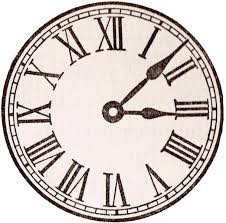
Ever wondered why there are 24 hours in a day? We have the ancient Egyptians to thank, at least in part. The basis for our modern calendar dates back to the New Kingdom period of ancient Egypt, around 1550 BCE to 1069 BCE. During this era — about a thousand years after the construction of the Great Pyramids of Giza — the Egyptians became the first civilization to divide the day into 24 smaller parts — though with a couple of key differences to how we do it today.
For starters, the ancient timekeeping system tracked daytime and nighttime separately, with each divided into 12 parts. Also, these parts — which were measured in various ways, including sundials and water clocks — were not hours as we think of them today. Known as temporal hours or daylight hours, their length changed with the total amount of daylight at different times of year: For instance, the daytime hours would be longer in the summer than in the winter. So why 12? There are a couple of theories. Ancient astronomical tables suggest that nighttime was divided into 12 hours based on how the stars moved across the sky over time, as well as the cycles of the moon. It’s also possible these Egyptian timekeepers were following the duodecimal system, which is based on the easily divisible number 12, and was used in many ancient cultures.
It wasn’t until the second century BCE that the idea emerged to break the day into 24 parts of equal length, a concept first introduced by the ancient Greek astronomer Hipparchus. The 24-hour day became the standard for tracking time throughout Europe in the Middle Ages, and remains so to this day.
I could work more on interpersonal contact I don’t tend to have friends, not true don’t have close friends, tend to keep people at an arms distance it’s just easier that way, and I suppose that’s something I could absolutely do differently.
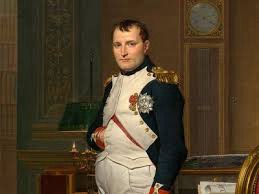
There are few individuals in European history as influential as Napoleon Bonaparte. The historic leader is remembered for his iconic bicorn hat, his allegedly short stature (a bit unfairly, since he was actually of average height for his time), and his singular military skill. During his lifetime, Napoleon went from a student in a French military academy to the ruler of an empire that spanned nearly all of continental Europe. By the time he was finally defeated in 1815, his series of conquests, known as the Napoleonic Wars, had changed the European continent forever. Here are seven facts about Napoleon Bonaparte that offer a small glimpse into his spectacular rise and fall.
French Wasn’t His First Language
Despite the central role Napoleon played in the history of France, he didn’t start learning to speak French until he was 9 years old. Napoleon was born on the Mediterranean island of Corsica, where most people spoke a regional dialect of Italian, and this was the language he grew up speaking. He spoke with a Corsican accent throughout his life, and even after he became emperor of France, this accent continued to mark him as a foreigner on the French mainland and served as a reminder of his Mediterranean origins.
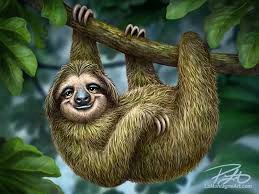
Their sluggish metabolism, as well as their ability to slow their heart to one-third its normal rate, give sloths an unexpected superpower — they can hold their breath for an impressively long time. With estimates suggesting that some two-toed sloths can hold their breath for upwards of 40 minutes, this makes sloths better at conserving oxygen than even some marine mammals such as dolphins, who can only hold their breath for 15 minutes, max. The sloth breathing technique, aided by the design of their lungs, helps make sloths excellent swimmers. So while their leisurely lifestyle may seem a bit lazy to the untrained eye, don’t blame the sloth — they’re just built that way.
If you had a freeway billboard, what would it say?
I wouldn’t want an actual billboard, but our freeways have the electronic billboards that they write messages on every day. Some good some bad my message would be “stop driving like an asshole”… “Yes, I’m talking to you. “
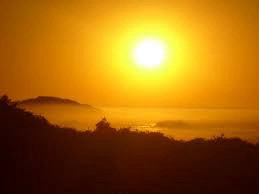
There’s a spot on Earth that’s nearly as sunny as Venus.Compared to other planets in our solar system, Earth is filled with impressive landscapes, including snow-capped peaks, lush rainforests, and vast oceans. But some places on our planet are so extreme, they’re otherworldly — like Venus otherworldly. The Atacama Desert in Chile is one of the driest places in the world, so it makes sense that such a parched ecosystem would get its fair share of sun. But in the summer of 2023, scientists discovered that some parts of this immense plateau in fact get far more sunlight than any other place on Earth. While taking measurements of solar irradiance (light energy from the sun) on the Chajnantor plateau, researchers discovered — via a complex meteorological process known as “forward scattering” — that this area was nearly as sunny in summer as the surface of Venus.
Despite some key differences between the two planets, scientists often call Venus Earth’s twin. Venus is roughly the same size as Earth, formed in the same area of the inner solar system, and is composed of much the same material — scientists even theorize that Venus was just like Earth some 3 billion years ago. But it is definitely not Earthlike now; it’s a sweltering hell planet thanks to an atmosphere of thick carbon dioxide that traps all greenhouse gases. If you somehow found yourself on Venus, high levels of solar irradiance would be the least of your immediate worries, considering its surface temperatures of 900 degrees Fahrenheit and sulfuric acid-filled clouds.
Do you spend more time thinking about the future or the past? Why?
I spend way more time thinking about the past, some would say dwelling on it. The suppose the reason why is because being in my 50’s there is a lot more of it that the perceived about of future that I or any of us have when on a down hill slide to 60. Thankfully I still have my parents but don’t have grandparents anymore but with patents pushing 80 the reality that their time in the plain of reality is not going to last.
The past may have been good, bad or otherwise but it is known so reminiscing about it and sharing those lived experiences with others and the younger generation is comforting.

 Esoteric Meandering Shouting Into the Void
You must be logged in to post a comment.