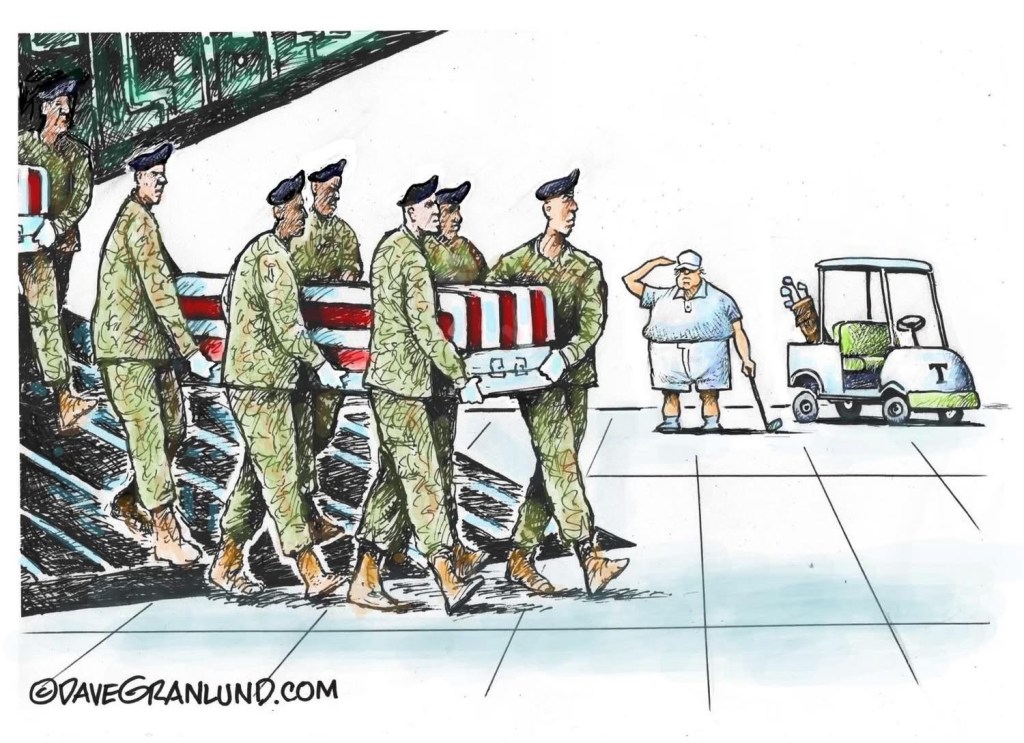
There are many traditions in the United States military. Saluting the flag. Honoring the fallen. And at a dignified transfer ceremony—when the remains of American service members return home at Dover Air Force Base—there is one particularly complicated ritual: you take your hat off.
It’s not difficult. Millions of Americans learned this before they were ten years old. Ball caps come off during the national anthem, during prayer, and certainly when six flag-draped coffins are carried off a military transport plane.
Yet somehow this proved to be an unsolvable puzzle for Donald Trump.
This is the same man who constantly assures us he loves the troops more than anyone. The same man whose supporters wrap themselves in flags, wear “Back the Blue” T-shirts, and treat military worship like a competitive sport. The same crowd that will write a 900-word Facebook post about someone kneeling during the anthem.
But when American soldiers killed in the war with Iran were brought home, the commander-in-chief showed up wearing a white “USA” baseball cap—reportedly even one sold through his own merchandise line—while saluting their coffins. Critics from across the political spectrum immediately pointed out the obvious: at a ceremony literally called a dignified transfer, maybe take the hat off.
Apparently that was asking too much.
And just to make the moment even more surreal, some coverage on Fox News briefly showed older footage of Trump without a hat—accidentally (they say)—which critics noted had the convenient effect of hiding the actual moment from viewers.
So let’s recap the modern definition of “support the troops”:
Start a war. Send young Americans to die in it. Receive their bodies back on American soil. Keep the campaign merch on.
But don’t worry—the red-hat brigade will still insist that they are the true defenders of the military. After all, nothing says reverence for fallen soldiers quite like refusing to remove the hat in front of their coffins.
Because apparently honoring the troops is very important… right up until it interferes with the branding. 🇺🇸🧢
After the industrial-scale slaughter of World War I and the even more catastrophic devastation of World War II, the world’s nations came to a stunning realization: perhaps there should be rules about how wars are fought. Radical idea, apparently. When millions of civilians die and entire cities are flattened, people tend to conclude that maybe warfare shouldn’t operate like an unmoderated comment section.
So the international community created a framework of laws designed to put at least some guardrails on human brutality. These rules were codified in agreements such as the Geneva Conventions and their later protocols. The basic principles were not complicated:
Don’t intentionally target civilians. Don’t bomb hospitals, schools, or aid workers. Treat prisoners humanely. Distinguish between military targets and civilian populations. Use proportional force.
In short: if you’re going to fight wars, at least pretend you’re not trying to wipe out innocent people.
These rules weren’t created because nations suddenly became compassionate. They were created because history showed something painfully obvious: when civilians are targeted and populations are terrorized, the violence does not end. It multiplies. Children who watch their families die under bombs rarely grow up thinking, “Well, that seemed reasonable.”
Instead, they grow up angry. And anger has a long memory.
Which brings us to the current moment and the apparent “rules optional” strategy being embraced by figures like Donald Trump and his defense leadership, including Pete Hegseth.
The post-WWII rules of engagement were designed precisely to avoid the cycle of retaliation that fuels insurgencies and terrorism. When those rules are ignored—when bombs hit schools, civilian infrastructure, or densely populated areas without clear military necessity—the immediate tactical gain often creates a long-term strategic disaster.
Military historians have watched this pattern repeat for decades:
Civilian casualties rise. Local resentment grows. Extremist groups recruit from that resentment. Violence spreads far beyond the battlefield.
It’s not a new theory. It’s practically a case study.
During conflicts in places like Iraq and Afghanistan, even accidental civilian deaths often became powerful propaganda tools for extremist organizations. Every destroyed home, every grieving family member, became a recruiting poster.
This is precisely why modern militaries—at least on paper—invest heavily in rules of engagement, legal oversight, and targeting review. The goal is not just moral; it’s strategic. Limiting civilian harm reduces the number of people who might later decide that attacking Americans is a perfectly reasonable career path.
Ignore those rules, however, and the equation changes.
If the world perceives that the United States no longer cares about the very laws it helped create after WWII, two dangerous things happen simultaneously:
First, America loses moral credibility. The country that once championed the rules now looks like it’s treating them as optional guidelines.
Second—and far more dangerous—other actors start playing by the same logic. If rules don’t apply to powerful countries, then why should anyone else follow them?
That’s when conflicts become less like wars and more like vendettas.
And vendettas have a nasty habit of traveling. What begins as a bombing campaign in a distant region can, years later, end up as radicalized individuals deciding that revenge should be delivered closer to home.
This is the lesson military strategists have repeated since WWII: brutality against civilians rarely ends conflicts—it plants the seeds for the next one.
So the postwar architects of international law tried to build something resembling a firewall. The Geneva Conventions weren’t perfect, but they were a collective attempt to say: we’ve seen where unlimited war leads, and maybe we shouldn’t go there again.
Ignoring those lessons doesn’t make the world safer. It simply rewinds history to the era before those rules existed—when total war was normal and civilian suffering was considered just another tactical variable.
And if that experiment is repeated, history suggests the outcome won’t be stability or security.
It will be exactly what those post-WWII rules were designed to prevent: a world where violence breeds more violence, and where the consequences eventually reach far beyond the original battlefield. 🌍⚖️💣
For decades the United States had this dangerously radical idea that sometimes the best way to protect national interests wasn’t with bombs, but with bags of rice, vaccines, and clean water. This reckless philosophy was carried out by the United States Agency for International Development—better known as USAID. Its mission was simple and apparently deeply suspicious: feed starving people, help countries recover from disasters, stop diseases before they spread, and keep struggling nations stable enough that they didn’t collapse into chaos, war, or mass migration.
The truly shocking part of this operation was the cost. USAID ran most of these programs for less than one percent of the U.S. federal budget. In many years it hovered around a few tenths of a percent. That’s right—America was spending pocket change, by federal standards, to prevent famine, reduce global instability, and make the United States look like something other than the world’s heavily armed landlord.
Naturally, something that dangerous had to go.
Because while feeding hungry people costs a fraction of the budget, dropping bombs—now that’s where the real fiscal responsibility comes in.
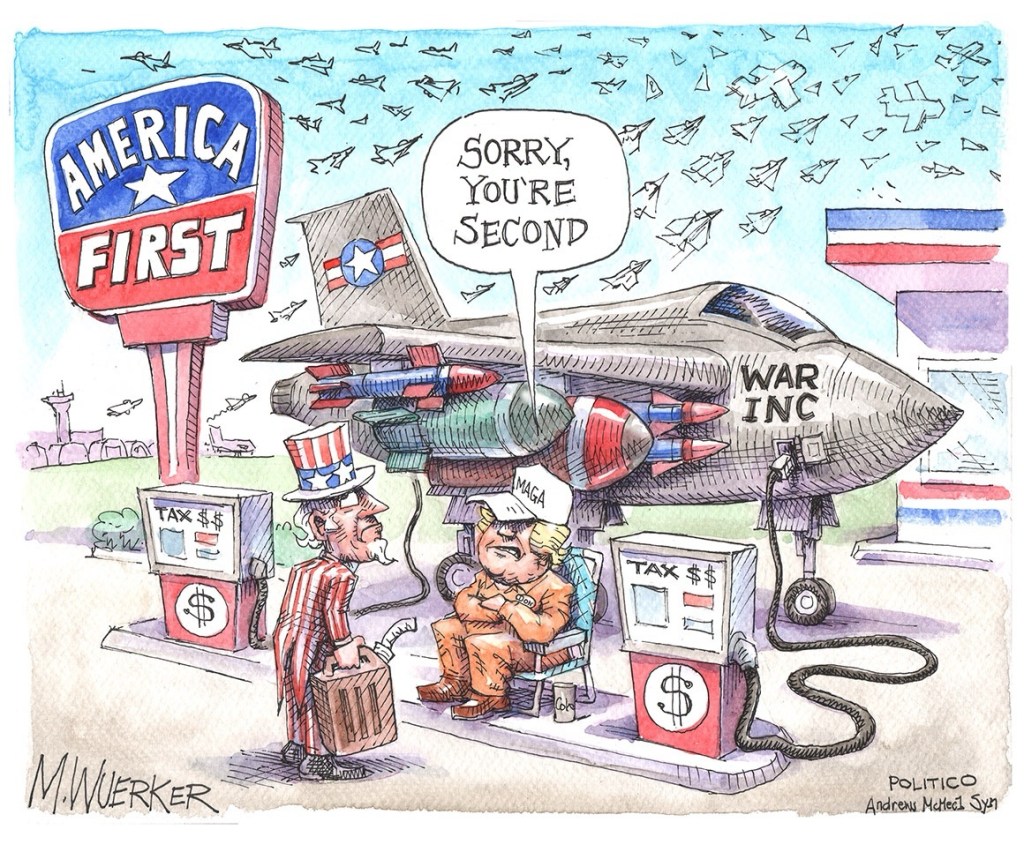
Modern military operations can burn through billions faster than a hedge fund manager at a yacht convention. Precision missiles cost millions each. Aircraft carriers cost billions to deploy. Drone operations, logistics chains, contractors, intelligence support—before long you’re spending what used to be an entire year of humanitarian aid sometime between breakfast and lunch.
But at least bombs don’t create the awkward side effect of people around the world actually liking the United States.
For decades USAID quietly built something diplomats call “soft power.” When drought hit Africa, American food shipments showed up. When earthquakes leveled cities, American disaster teams arrived. When diseases like malaria or HIV threatened entire regions, American-funded programs delivered treatment and prevention.
This had the unfortunate effect of strengthening alliances, stabilizing fragile countries, and making it harder for hostile governments to paint the United States as some kind of global villain.
Clearly unacceptable.
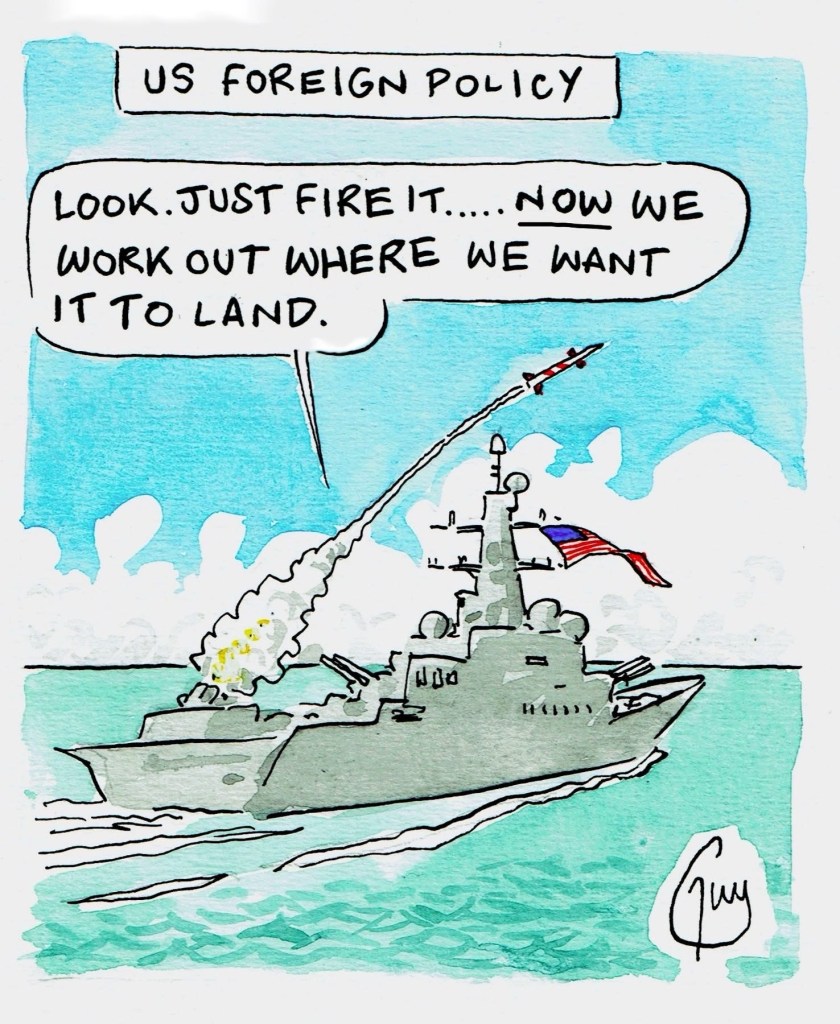
So now we’re moving toward a far more streamlined foreign policy model. Instead of preventing crises for pennies, we can allow them to spiral into disasters and then respond with aircraft carriers and cruise missiles. It’s a much cleaner system if you think about it. Why spend a few billion stabilizing regions when you can spend hundreds of billions cleaning up the mess later?
And while humanitarian programs shrink or disappear, we still have plenty of energy for the really important geopolitical projects: saber-rattling toward Iran, tough talk about Venezuela, and occasional conversations about whether Greenland might look nice with an American flag planted on it.
This, apparently, is the grand strategy of the modern “peace president.” The plan seems to be: cut the tiny programs that prevent instability, let instability grow, and then deal with the consequences using the most expensive tools in the federal arsenal.
It’s an elegant cycle.
USAID used to prevent wars by addressing the problems that cause them—poverty, famine, disaster, disease, and political collapse. Now we can skip that inefficient step entirely and jump straight to the part where we fire missiles.
And in the process we’ve managed to accomplish something remarkable: dismantle one of America’s most effective diplomatic tools, erase decades of global goodwill, and replace it with the comforting knowledge that if anything goes wrong anywhere on Earth, we’ll be ready—with a very expensive bomb.
All to save less than one percent of the budget.
Fiscal genius. Diplomatic brilliance. And proof once again that nothing says “peace” quite like cutting food aid so we can afford more missiles. 🚀
I must admit I’m still trying to keep up with the plot here. The storyline changes faster than a streaming series that got renewed before the writers finished the script.
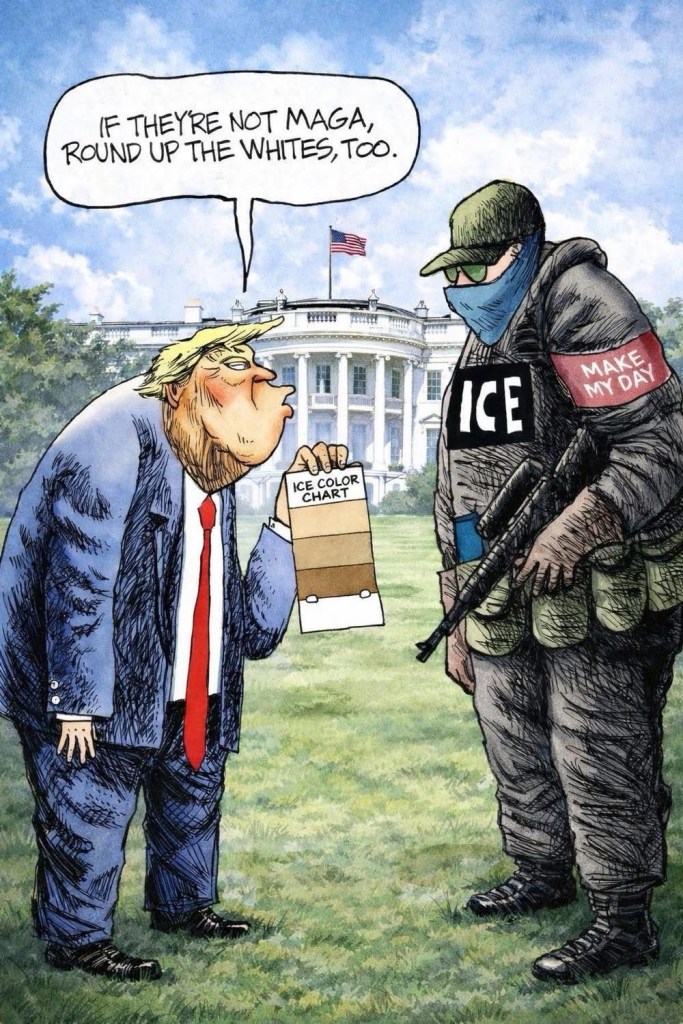
For a while we were told that the administration’s tough immigration policy was focused on “the worst of the worst.” You know, hardened criminals, gang leaders, international masterminds—the kind of people who apparently also hold steady landscaping jobs and show up for the 6 a.m. shift at construction sites.
Now Kristen is gone (apparently sacrificed to the political optics gods for making the boss look bad), but the messaging remains: don’t worry, everything is under control because the raids are only targeting the worst criminals imaginable.
Now I’m not a legal scholar, but I’m trying to follow the logic.
On one hand, we are told these people are dangerous criminals. On the other hand, the government seems to have located many of them by… checking tax records.
Tax records.
Apparently the modern criminal mastermind is someone who wakes up at 5 a.m., goes to work, files a tax return, and dutifully sends money to the federal government every April.
Somewhere along the way we skipped over the part where hardened villains are known for carefully reporting income to the IRS.
It also complicates a classic political stereotype. Remember the old standby: the “lazy immigrant living off welfare”? That image gets a little blurry when the same people are being picked up at their workplaces after paying taxes that help fund the very government arresting them.
So now the narrative requires a bit of mental gymnastics:
They’re lazy freeloaders… who somehow maintain steady jobs… while also paying federal taxes… but are still apparently the “worst of the worst.”
That’s quite a résumé.
In fact, if paying taxes and showing up to work qualifies someone as a top-tier criminal threat, a lot of Americans might want to start checking their own status. Because by that standard, the real danger to the nation appears to be people with W-2 forms.
But don’t worry. The messaging is clear: this is all about law and order.
Except for the part where the court says the law might have been violated.
History has a funny way of echoing—sometimes as inspiration, sometimes as a warning label that everyone politely ignores.
Take Andrew Jackson, the seventh president of the United States and patron saint of the political shrug. In 1832 the Supreme Court, under John Marshall, issued a ruling in the case of Worcester v. Georgia. The Court said that the state of Georgia had no authority over Cherokee lands. In other words: the law was the law, the Constitution meant something, and the Cherokee Nation had rights.
Jackson’s reported response—whether perfectly quoted or not—has become legendary: “John Marshall has made his decision; now let him enforce it.”
Translation into modern English: “Neat opinion you’ve got there. Be a shame if someone… ignored it.”
The result was the policy that led to the Trail of Tears, where thousands of Cherokee and other Native Americans were forcibly removed from their homes and marched west. The Supreme Court ruled. Jackson shrugged. History kept the receipts.
Fast forward nearly two centuries to Donald Trump, who has occasionally shown a similar enthusiasm for treating constitutional guardrails like polite suggestions at a buffet. If Jackson’s philosophy was “the Court can rule whatever it likes,” the modern remix sometimes sounds suspiciously like: “Interesting ruling… but what if we just didn’t?”
Consider the perennial debate over elections. The Constitution, inconveniently, places primary authority for running elections with the states. That’s not just a tradition; it’s right there in Article I, Section 4. States decide how voting works—machines, mail-in ballots, early voting, the whole democratic smorgasbord.
But imagine a scenario where a president declares that mail-in ballots are invalid, voting machines are suspect, and elections must suddenly follow a brand-new federal rulebook written somewhere between a campaign rally and a late-night social media post. If the Supreme Court were to say, “Actually, that’s unconstitutional,” the historical question would become: does the executive branch accept the ruling… or channel its inner Jackson?
Because the Jackson playbook is simple:
Do the thing. Get told you can’t do the thing. Respond with a constitutional version of “OK, stop me.”
Of course, America in the 21st century is not the America of the 1830s. Institutions are stronger, the press is louder, and the public has a habit of noticing when democracy starts getting rewritten like a terms-of-service agreement nobody agreed to.
Still, history whispers uncomfortable questions. When leaders talk about changing how elections work after losing faith in the results, when courts become obstacles rather than arbiters, and when constitutional limits are treated like optional upgrades—people start remembering Andrew Jackson.
And that’s not exactly the chapter of American history most presidents should be eager to reenact.
After all, the last time someone used the “make me” approach to the Supreme Court, it didn’t end up as a proud footnote in the civics textbook. It became a tragedy called the Trail of Tears—and a permanent reminder that ignoring the Constitution rarely ages well.
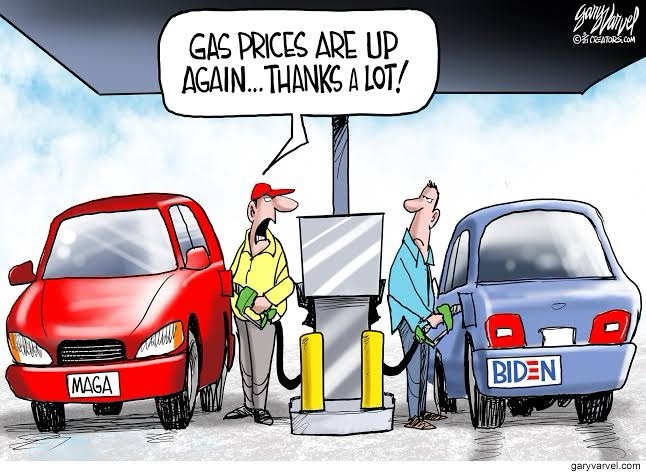
During the presidency of Joe Biden, America witnessed one of the great grassroots art movements of our time: the gas-pump sticker. If gasoline went up a nickel, suddenly every pump in the country had a little picture of Biden pointing his finger with the caption, “I did that!” It was a marvel of civic engagement. People who had never participated in democracy before were suddenly curating petroleum-based political commentary between the unleaded and premium options.
Fast forward to the triumphant return of Donald Trump. Gas prices jump thirty cents in two days. Thirty. Not a nickel. Not a dime. Thirty cents. And yet—mysteriously—the Biden sticker industry seems to have collapsed overnight. The pumps are silent. No pointing fingers. No tiny presidential accusations. Apparently the sticker supply chain has been disrupted, possibly by the same mysterious economic forces that now control gasoline prices.
Of course, it couldn’t have anything to do with the small detail that Trump decided to unilaterally escalate conflict with Iran, which tends to make oil markets behave like they just drank six Red Bulls. Markets get nervous, shipping lanes get tense, and suddenly the numbers on the pump start spinning like a Vegas slot machine.
But surely that has nothing to do with it. I’m certain the same people who treated a five-cent increase like a federal crime scene will be out any minute now with fresh stickers: a smiling Trump pointing proudly at the price display saying, “I did that!”
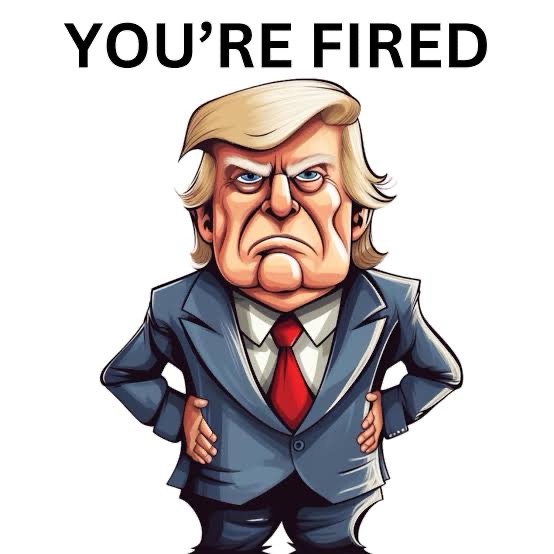
It seems the staffing philosophy around Donald Trump operates on a beautifully simple principle: if reality makes the boss look bad, then clearly the problem is… reality. Or, more conveniently, the nearest person standing in front of a camera when reality happens.
And so, Kristen is gone. Apparently the latest casualty in the ongoing Washington tradition known as “The Trump Image Protection Program,” where the main job qualification isn’t competence, loyalty, or even basic literacy—it’s the ability to ensure that absolutely nothing reflects poorly on the Dear Leader. If something does? Well, congratulations, you’ve just volunteered for the unemployment line.
The logic is elegant in its absurdity. If the economy sputters, fire someone. If a press conference goes sideways, fire someone. If the news accurately reports something embarrassing, obviously the reporter—or the staffer who allowed the question to exist—must be removed immediately. Because in this administration, bad headlines don’t come from bad decisions; they come from insufficiently loyal humans.
Which raises the obvious question: who’s next on the hit parade?
Perhaps Pete Hegseth. At the moment he seems safe—largely because he specializes in the ancient and noble art of televised nodding. But the danger with working around Trump is that loyalty has a half-life roughly equal to a gallon of milk left in the Arizona sun. The moment a segment goes off script or a narrative fails to land, suddenly yesterday’s “great guy, tremendous guy” becomes today’s “I barely knew him.”
It’s really a remarkable management style when you think about it. Most leaders try to fix problems. This one simply rotates through human shields until the problem goes away or the news cycle gets bored.
In fact, if the pattern continues, Washington may soon need a White House revolving door with airport-runway lighting, just to help staffers find the exit quickly enough. Cabinet members, advisors, spokespeople—anyone within a ten-foot radius of a microphone—should probably keep a cardboard box under their desk at all times. It saves time when the inevitable tweet arrives.
Because the real rule here isn’t competence or truth.
The rule is simple:
If you make Trump look bad, you’re gone.
Which means the most dangerous job in America right now might be standing next to him while reality happens.
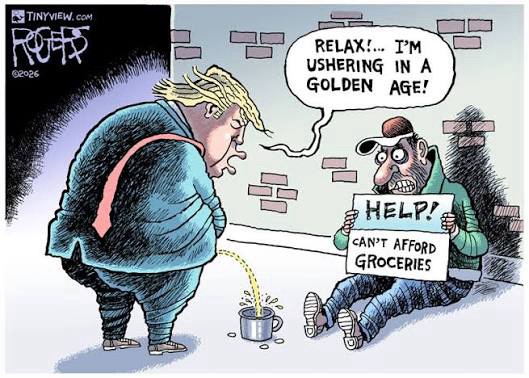
Ah yes, the Golden Age of the Personal Economy—that magical era when everything is apparently fantastic, at least according to the man with the microphone and the teleprompter.
According to Donald Trump, the economy is roaring. Incredible. The best ever. People are winning so much they might get tired of winning. Jobs are everywhere, prosperity is overflowing, and somewhere in America an eagle is probably carrying a briefcase full of stock dividends.
Meanwhile, back in the real world, many of us are experiencing a slightly different economic miracle.
For example, there’s the fascinating financial transformation where a credit score that once proudly hovered around 800—the kind banks send thank-you cards for—has now taken a thrilling roller-coaster ride down to somewhere south of 500. Apparently this is what economists call “dynamic market participation.” Some might call it “what the hell just happened.”
Debt, of course, is also booming. Absolutely booming. If personal debt were a stock, we’d all be ringing the bell on Wall Street. Credit cards are maxed, interest rates are climbing like they’re training for Everest, and the monthly bills arrive with the regularity and enthusiasm of subscription boxes nobody remembers signing up for.
But don’t worry—the experts on television assure us everything is fine.
After all, the official economy is doing great. The stock market has numbers. Charts have arrows that go up sometimes. And somewhere, someone with three vacation homes just got a tax strategy clever enough to buy a fourth.
The personal economy, on the other hand, seems to be running a slightly different program. In this version, groceries feel like luxury goods, insurance payments require a small prayer ritual, and the phrase “minimum payment due” has become the national motto.
Naturally, the long-term solution appears to be the classic American financial plan: hope the courts sort it out. Bankruptcy lawyers may soon become the fastest-growing sector of the economy. Forget tech startups—the real booming industry might be people helping the rest of us figure out which chapter of financial collapse we qualify for.
Chapter 7, Chapter 11, Chapter “please just make the phone calls stop.”
But again, we should remember the important message: everything is great. Fantastic, even. If you’re feeling broke, buried in debt, or watching your credit score collapse like a poorly built casino in Atlantic City, it’s probably just because you’re not looking at the right economic indicators.
There was a time—gather round, kids—when going to war required something quaint and ceremonial called authorization. You know, that dusty little constitutional speed bump where Congress had to raise its hand and say, “Yes, let’s do this.” We even used to declare wars. The last time we formally did that was during World War II. Since then? Apparently we’ve replaced declarations with vibes and a presidential shrug.
Now we have Donald Trump—self-appointed Commander of Whatever He Feels Like—deciding that we’re at war with Iran because, well, reasons. Strategic reasons. Classified reasons. Very serious reasons. Reasons that absolutely have nothing to do with polling numbers, cable news cycles, or the irresistible urge to look “strong” on social media.
And the truly modern twist? Most Americans aren’t even seeing American lives lost. Not because war has suddenly become humane or restrained—but because it’s been outsourced to drones, algorithms, and “precision strikes.” It’s a war you can scroll past. A war that hums quietly above rooftops in Iraq and Iran. A war conducted by remote control, as if foreign policy is just another video game with upgraded graphics and a muted casualty counter.
We’re told it’s efficient. Clean. Surgical. The future.
Except “the future” apparently includes bombing a school. A school. For “reasons” that will be explained at a later date, pending review, subject to redaction, classified for your safety, trust us. Nothing says moral clarity like a press conference that boils down to: “We had intelligence. No, you can’t see it. Yes, it’s real. Probably.”
When in our history did we decide that the President could just wake up, glance at a map, and think, “You know what would really tie the week together? Some strategic explosions.” The Constitution doesn’t say, “The President may declare war whenever beachfront development opportunities seem promising.” It doesn’t say, “If Congress is annoying, just skip them.” It doesn’t say, “War is fine as long as it’s done with Wi-Fi.”
But here we are.
And somewhere, echoing through history, is the gravelly warning of Dwight D. Eisenhower. In his farewell address, he cautioned the country to beware of the “military-industrial complex.” At the time, it sounded like sober, grandfatherly advice. Now it reads like prophecy.
Because what if this isn’t about security at all? What if it’s about contracts? Defense stocks. Manufacturing quotas. Refill orders for precision-guided morality. Drones don’t build themselves. Missiles don’t restock for free. Every explosion overseas is a line item somewhere, a quarterly earnings bump wrapped in patriotic branding.
Follow the money.
Wars used to require sacrifice visible enough to spark outrage. Now they require Wi-Fi, plausible deniability, and a press secretary with steady hands. The battlefield may be in Iran, but the profits land comfortably at home.
We haven’t declared war since 1942, and yet we’ve mastered the art of permanent conflict. Endless authorizations. Open-ended military actions. “Police actions.” “Kinetic operations.” Anything but the scary W-word. Because declaring war would require debate. Accountability. Ownership.
Now war is just another executive order with better lighting—and a healthy return on investment.
Maybe this is just who we are now: a nation that once agonized over entering World War II and now treats military engagement like a subscription service—auto-renewing, rarely read, impossible to cancel.
Oceanfront property may rise and fall. Approval ratings may wobble. But the drones? They’re always on time.
And the military-industrial complex? It doesn’t need authorization. It just needs a market.
Congress can issue a strongly worded letter after recess. The contractors, however, have already cashed the check.
Ever notice how American foreign policy since George H. W. Bush feels less like strategy and more like a rebooted sitcom that refuses to get canceled?
Season One: Desert Storm. Roll credits, wave flags, declare victory, assure everyone this will restore confidence and unity forever. Spoiler alert: it did not. The ratings bump was temporary, like a Fourth of July sparkler—bright, loud, and gone before the hot dogs cooled.
Enter Bill Clinton, stage left, saxophone in hand, tasked with cleaning up the geopolitical confetti. He balances budgets, stabilizes things, and generally plays national custodian. The Cold War is over, the economy hums, and for a brief, shining moment we consider the radical idea that maybe—just maybe—constant war isn’t mandatory.
Then comes the sequel nobody asked for. George W. Bush steps in, and suddenly we’re not just at war—we’re at war’s extended director’s cut. Afghanistan. Iraq. Mission Accomplished banners that aged like unrefrigerated milk. The “longest war in history” becomes less of a statistic and more of a lifestyle choice. Entire generations grow up assuming desert camouflage is formal wear.
Cue Barack Obama, whose job description once again reads: “Clean up aisle forever.” He winds things down, recalibrates alliances, and tries diplomacy like it’s some bold new experiment. The wars fade from front-page headlines, though never quite from existence. Peace, it turns out, is harder to market than shock and awe.
Then in walks Donald Trump, promising to end “endless wars.” To be fair, he did seem allergic to starting brand-new ones—though the drumbeat never quite stopped. The rhetoric was a cocktail of isolationism and brinkmanship, like someone trying to defuse a bomb with a flamethrower while insisting it’s all part of a genius plan.
Next up: Joe Biden, inheriting the forever conflicts and pulling the plug on at least one of them, only to watch the global chessboard flip over in other directions. Cleanup duty, again. Mop. Bucket. Repeat.
And now? The carousel spins back. Donald Trump returns, and somehow we’re once more flirting with—or fully stepping into—another conflict. Because apparently, in America, war is the one bipartisan infrastructure project that never stalls.
It’s been over three decades of this rhythm: Shock. Cleanup. Shock. Cleanup. A geopolitical washing machine stuck on the “heavy duty” cycle. Each new administration campaigns on strength or stability, and somehow we keep rediscovering that bombs are easier to launch than long-term policy.
At this point, the half-century of déjà vu is less dramatic than exhausting. We’ve turned global conflict into a relay race where each president hands off either a smoldering crater or a diplomatic broom. The American public, meanwhile, keeps being told this time is different. This time it’s necessary. This time it will finally make us safer, stronger, more respected.
And yet the credits keep rolling on the same script.
Maybe one day we’ll try something radical—like breaking the loop. But until then, welcome to Season 12 of As the World Burns. Don’t worry. Cleanup starts after the next election.

 Esoteric Meandering Shouting Into the Void
You must be logged in to post a comment.