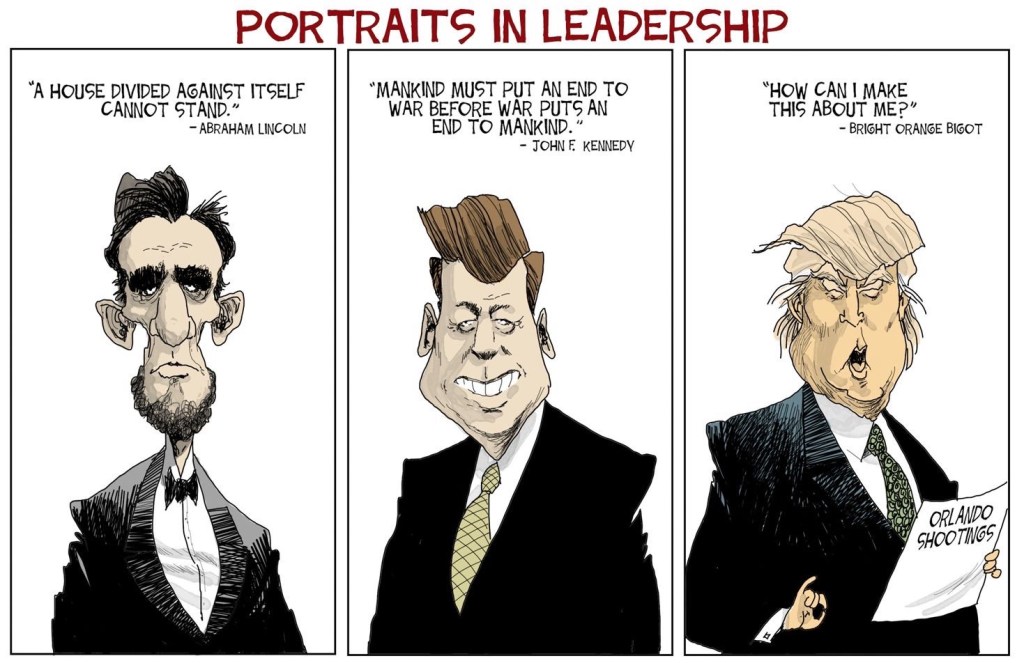
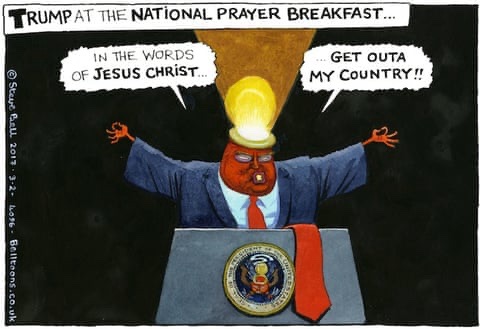
Donald John “Arbiter of Peace” Trump—because nothing says global harmony like a man who thinks diplomacy is just a golf course with more flags—has finally cracked the code to that elusive Nobel Peace Prize: just get FIFA to make one up.
After all, if you can’t win the real thing, why not persuade the world’s most dramatically governance-challenged sports organization to invent a prize? FIFA, never a group to shy away from creativity when it comes to awards, titles, or rulebook elasticity, apparently decided that in order to secure the World Cup in the United States, they needed to offer something shinier than a host-nation slot. And voilà: the FIFA Peace Cup™, sponsored by strategic ambiguity and selective memory.
Trump reportedly accepted the honor in a ceremony that looked suspiciously like a halftime show crossed with a campaign rally—complete with pyro, chants, and a trophy that appeared to be repurposed from a Spirit Halloween. Still, he held it aloft as if he’d single-handedly ended war, cured global conflict, and renegotiated the terms of gravity.
But nothing screams peace visionary quite like his obsession with renaming the Department of Defense to the Department of War—a branding choice that’s about as soothing as a fire alarm. The message is clear: if you want peace, you need war, and preferably a war you can loudly announce, theatrically escalate, and eventually forget to finish. Who could possibly misunderstand such serene, monk-like logic?
And so we arrive at the present moment: a man seeking a peace prize by rebranding the Pentagon into something out of a Metallica album, while FIFA—an organization known primarily for soccer, scandals, and occasional geopolitical improvisation—hands him an award for “global stability.”
Across ancient storytelling, the figure of the divinely fathered hero appears so frequently that it becomes almost an archetype: a being caught between worlds, shaped by suffering, and elevated—often literally—after proving himself through trials beyond mortal measure. In Greek myth, this figure takes familiar form in Herakles (Hercules), the mighty son of Zeus. In Christian tradition, the figure is Jesus, son of God the Father, whose life and death became the foundational narrative of the New Testament. While the two traditions arise from entirely different cultures separated by centuries, comparing their arc reveals striking narrative resonances—especially around persecution, trial, sacrificial suffering, and eventual divine exaltation.
Birth Stories: A Divine Father, a Mortal Mother, and a Threatened Beginning
Hercules enters the world through one of Zeus’s characteristic ventures among mortals: he is born of Alcmene, a mortal woman whose beauty attracts the king of Olympus. His divine paternity immediately provokes the jealousy of Hera, Zeus’s wife, who commits herself to tormenting Hercules from infancy onward. The child is divine in power but mortal in vulnerability.
The story of Jesus begins in a humble Bethlehem manger, not the palace of a king. The Gospels present him as born of Mary, a mortal woman overshadowed by the Spirit of God. And, like Hercules, his birth triggers hostility: Herod’s slaughter of the innocents becomes a political counterpart to Hera’s mythic rage, each narrative framing the hero’s entry into life as one that disrupts the order of things.
Both heroes begin under threat because their existence signals a shift in divine–human relations.
Trials in the Wilderness
Hercules is defined by trials—twelve of them in their most codified form—each imposed not to honor him, but to break him. Hera’s wrath lays the groundwork, but the labors force Hercules into confrontation with monsters, tyrants, the natural world, and ultimately himself. The Labors serve as purification, expiation, and the proving ground for eventual immortality.
Jesus’s “labors,” by contrast, are not martial but spiritual. His 40 days in the desert become a concentrated allegory of trial: temptation, deprivation, and the assertion of divine identity over worldly power. Jesus’s desert fast is not a punishment inflicted by a vengeful deity, but a voluntary test that affirms his mission. Yet the structural parallel remains: both heroes must undergo a period of suffering in a barren place before beginning their world-shaping work.
Persecution: Hera’s Torment and the World’s Rejection
Hera hounds Hercules through madness, monsters, and misfortune. The persecution is relentless and deeply personal; his trials are the consequence of a cosmic domestic dispute, with the hero as collateral damage in the marriage of Zeus and Hera.
Jesus’s persecution, while not orchestrated by a jealous goddess, nonetheless becomes a central narrative thread. Rejection by religious authorities, betrayal by followers, and finally condemnation by imperial power mirror the idea that the world itself resists the arrival of the divine child. In each tradition, the hero’s suffering is not incidental—it is intrinsic to proving his role.
The Crucifixion and the Path to the Father
One of the more striking mythological motifs often noted by scholars is Hercules’s death: he builds his own funeral pyre and ascends it willingly, laying himself down to burn away his mortal body so that his divine self may ascend to Olympus. Early Christian writers—Justin Martyr and others—explicitly pointed to this tradition as a pagan precursor to crucifixion imagery. Hercules’s self-sacrifice is the final labor, the ultimate act of agency that opens the door to immortality.
Jesus’s crucifixion serves a parallel narrative function. His death is not accidental but central: according to Christian theology, a voluntary acceptance of suffering and sacrifice that enables resurrection. Where Hercules burns to shed mortality, Jesus dies to defeat it; where Hercules rises to Olympus, Jesus ascends to sit at the right hand of the Father. Both narratives hinge on a moment in which pain becomes the doorway to divine union.
Exaltation: The Hero Beside the Father
In the climax of Hercules’s story, he is received onto Olympus, reconciled even with Hera, and granted a throne beside Zeus. The hero who suffered becomes the immortal who reigns.
In Christian tradition, Jesus’s resurrection and ascension culminate in his enthronement beside God the Father. The imagery is not accidental—this is exaltation language, the lifting up of the suffering hero to divine glory.
Both narratives transform anguish into triumph, mortality into divinity, separation into union.
Conclusion: Two Myths, One Archetype of the Suffering Son
The stories of Hercules and Jesus come from wholly different worlds: one from the mythic imagination of polytheistic Greece, the other from the evolving theological tradition of ancient Israel and early Christianity. But the parallels reveal something deeper: cultures repeatedly return to the figure of the divinely fathered hero whose worth is proved through suffering, whose death is a gateway rather than an end, and whose final place is at the side of his heavenly father.
Whether cast in the form of a monster-slaying demigod or a desert-wandering teacher and healer, the archetype endures—speaking to the human need for stories in which pain is redeemed, trial is meaningful, and the divine is found not by escaping suffering, but by walking directly through it.
Doctors famously take the Hippocratic Oath, a solemn pledge to do no harm. But in 2008, Mitch McConnell — the Senate’s own bleak little Boxturtle with a talent for procedural dark arts — introduced his own twisted counterpart: the Hypocrite Oath. Its core principle? Exploit any rule if it benefits you, ignore it if it doesn’t, and if the other side even thinks about using it, scream that they’re breaking the sanctity of the Senate. A simple creed, really. Elegant in its shamelessness. And Republicans have been chanting it like a Gregorian chorus ever since.
Because if American politics were a board game, Democrats would still be the earnest players reading the instruction booklet out loud while Republicans sit across the table melting the dice, stealing the money, and declaring themselves the winners because “that’s how we’ve always played it.” The Democratic Party, bless their norm-respecting little hearts, keeps showing up to the Senate like it’s a civic institution, while McConnell and friends treat it like a loophole carnival where the prize for cheating is getting to do it again.
Let’s hop in our time machine back to Obama’s first term, shall we? When McConnell and his band of procedural saboteurs dusted off the filibuster — not the cute “debate forever” version from civics class, but the industrial-strength “nothing gets done ever again” blockade — and used it so obsessively that even the History Channel ran out of Civil Rights Era flashbacks to compare it to. They took a tool once infamous for blocking equality and turned it into their daily multivitamin. The purpose? Making sure anything with Obama’s name on it died in the Senate like a houseplant left in the desert.
Harry Reid eventually said “enough” and changed the rules for cabinet posts and lower-level judges just so the government could function at something above “broken.” And Republicans responded with gasps so dramatic you’d think Reid had personally set fire to the Constitution. How dare Democrats adjust a Senate tradition, they cried — you know, that “tradition” that isn’t actually a rule, just a happy little custom senators used to stall civil rights bills. Sacred stuff!
Fast-forward to Obama’s second term. Antonin Scalia dies, and suddenly the Supreme Court has a vacancy. A real, actual constitutional process is supposed to happen here. But McConnell invents the “let the people decide” rule on the spot and blocks Obama’s nominee for 11 months — basically an entire pregnancy — because it was an election year. It was new, it was bold, it was completely made up.
But just wait: when RBG died during another election year, and Republicans controlled the Senate, that whole invented principle evaporated faster than a truth in a Trump speech. They shoved Amy Coney Barrett onto the bench so fast she probably still had packing peanuts in her shoes during confirmation.
Rules! Traditions! Procedures! They matter — unless there’s an R next to your name, in which case you can bend them, stretch them, or snap them in half like a breadstick.
Which brings us to today’s Speaker, Mike Johnson, the spiritual successor to the McConnell Philosophy of Governance: Rules are optional, power is mandatory. When Democrat Adelita Grijalva won her seat, Johnson left her in political limbo for over 50 days before swearing her in. Fifty. Days. During which she couldn’t sign on to push for release of the Epstein list — a total coincidence, surely. His excuses ranged from “government shutdown” to the classic “I just don’t feel like it,” but Tennessee’s Republican winner? Oh, he was sworn in faster than you can say consistent application of norms is for suckers.
Apparently, in today’s GOP, due process is like a dinner reservation: only honored if you’re already on the guest list.
So yes, Democrats keep showing up with their laminated rulebooks and their wide-eyed belief that norms will protect the country. Meanwhile, Republicans are in the corner building a political Rube Goldberg machine out of broken norms, “McConnell rules,” and whatever imaginary precedent they can conjure on a slow Tuesday.
Because in Washington these days, the only rule that truly matters is this:
Rules count only when they can be used against Democrats.
Everything else is optional — or as McConnell’s Hypocrite Oath implies,
Donald Trump—yes, that Donald Trump, the man whose foreign-policy philosophy boils down to “What if we solved international disputes the way I handle family arguments: loudly, vengefully, and with absolutely no research?”—now wants his name slapped onto the Institute of Peace.
The Institute. Of. Peace.
This is like putting a raccoon in charge of food safety or naming a demolition crew “The Preservation Society.” But sure, let’s pretend the guy currently rattling sabers at Venezuela like a bargain-bin Teddy Roosevelt is the patron saint of tranquility.
And over what? Fentanyl.
Fentanyl… which doesn’t even come from Venezuela. But who cares about facts when there’s oil—the world’s most combustible mood stabilizer—to chase? It’s almost sweet, in a deranged way, watching the paperwork for a “justified conflict” roll out like a kindergarten craft project made of crayons, glue sticks, and total geopolitical ignorance.
Imagine walking through the Institute of Peace one day in the future—a nice quiet building dedicated to, you know, not bombing people—and BAM: there it is. A giant golden plaque reading “Donald J. Trump Institute of Peace.”
You’d have to check the walls for hidden cameras. You’d assume you wandered into a satire museum. You might wonder if the gift shop sells irony by the gallon.
Because nothing screams “global harmony” like a man who treats foreign nations the way he treats staff meetings: fall asleep halfway through, wake up angry, blame someone else, and then threaten to fire a missile.
But hey—if peace is just a branding exercise, why not go all in? Maybe rename the Pentagon the Trump Yoga Center while we’re at it. Rebrand the Joint Chiefs as the Committee for Serene Vibes. Paint the nukes pastel and call them Mindfulness Devices.
At this point, reality is already a parody of itself.
All we can do is laugh—sarcastically, loudly, and with full awareness that the joke isn’t funny so much as it is terrifyingly on brand.
When people speak of ancient stories that seem to mirror the Christian nativity, they often point to the figure known in Indo-Iranian tradition as Mithra (or Mairii / Mairis in some linguistic reconstructions and regional variants). Though the surviving material about Mithra/Mithras is fragmentary and filtered through centuries of cultural transmission—from Indo-Iranian religion, to Zoroastrianism, to the Roman mystery cults—certain narrative motifs have invited comparison to the Christian story of Jesus.
The most striking parallel emerges in the Roman Mithraic tradition, where Mithras is described as being born from a rock (the petra genetrix)—a miraculous, non-human birth that signaled a divine arrival. Early Christian writers, encountering Mithraic iconography in the late 2nd and 3rd centuries CE, sometimes accused Mithraists of imitating Christian rituals, which ironically suggests they recognized competing narratives of supernatural birth and salvation circulating in the empire.
The possible Indo-Iranian antecedent—often referred to in modern scholarship as Mairis—is associated with themes of cosmic order, divine covenant, light, truth, and the defense of the righteous. In these traditions, the figure is portrayed as a mediator between the divine and human realms, a guarantor of moral order, and a protector of the faithful. These elements are not identical to the Christian nativity story, but they do establish a mythic framework into which a later audience might read similarities.
By the time the Roman world encountered Christianity, Mithras was widely venerated as a savior figure whose birth was celebrated around the winter solstice, whose followers reenacted ritual meals, and whose cult promised divine favor and eternal life. In the religiously competitive landscape of the late Roman Empire, overlapping motifs—miraculous birth, cosmic mission, divine sonship, and salvation—were not just common; they were expected. This made it easy for later commentators, and even some modern interpreters, to see the story of Mairis/Mithras as a kind of mythic “parallel track” running alongside the emerging Christian narrative of the Christ child.
Yet the parallels, while real in theme, do not form a one-to-one equivalence. The Christian nativity is grounded in a linear historical claim tied to a specific mother, time, and place, whereas the stories of Mairis and Mithras are rooted in symbolic cosmology and mystery-cult theology rather than biographical detail. The resemblance lies not in verbatim storytelling but in a shared ancient pattern: a world longing for a divine mediator, a bringer of order, a child of miraculous origin who signifies hope amid chaos.
In this sense, the tale of Mairis and the birth narrative of Jesus Christ are less examples of direct borrowing than they are evidence of a deep, cross-cultural human impulse—an enduring mythic grammar that echoes across civilizations whenever people imagine what it means for salvation, justice, or divine light to enter the world in the form of a child.
In our glittering, algorithm-polished era—where AI writes love letters, curates our playlists, and probably judges our grocery purchases—the most consistent joke running is that we humans must constantly prove to machines that we are, in fact, human. Before we can check an email, log into a bank, or comment “cute dog” on a friend’s post, some digital gatekeeper demands we solemnly declare: I am not a robot. And we do it. Dutifully. Repeatedly. To a robot.
It’s the 21st-century equivalent of showing your ID to a bouncer who is, let’s be honest, much stronger and smarter than you—and also made of code. We’ve built a civilization where an AI can generate photorealistic art, mimicking every detail of the human experience, yet we’re still being interrogated about which pictures contain a traffic light, as if this is the ultimate Turing test. Meanwhile, somewhere in a server farm, another AI is being asked the same question and probably acing it.
There’s a special flavor of irony in watching humanity sprint into the future, only to trip over a Captcha and spend 45 seconds squinting at a grid of blurry crosswalks. It’s digital slapstick: highly advanced systems determining whether the creature begging access to its own email is a legitimate user or a toaster with ambitions.
And the machines are only getting smarter. Soon the Captchas may need Captchas, and we’ll have recursive layers of robots verifying robots until the whole system becomes an M.C. Escher drawing made of authentication loops. But for now, the joke’s on us—billions of humans politely assuring disembodied software, “No, really, I promise, I’m not a robot,” while a very real robot nods, logs the interaction, and decides if we’re trustworthy.
The future is here, and it’s making us click all the pictures with bicycles.
At this point, the American news cycle resembles a garage sale of scandals: you think you’ve seen the last dusty box of horrors, but wait—someone drags out another one from under a tarp. So now, right alongside the freshly-unearthed Epstein files, we have Pete Hegseth’s Mediterranean naval cosplay, where boats mysteriously keep sinking and yet somehow nobody in charge is responsible. Amazing how gravity works in politics—blame always rolls downhill, right onto the commanders in the field who didn’t ask for any of this.
Because of course, in this administration, accountability is like a rare species: rumored to exist, often spoken of, but never actually observed in the wild.
Naturally, the official line is that Secretary-of-War-In-His-Own-Mind Pete Hegseth didn’t authorize anything. No, no, don’t be silly—those Mediterranean commanders must’ve woken up one morning and thought, “You know what would look great on my performance eval? A casual maritime war crime.” Totally organic. Absolutely spontaneous. Nothing to do with orders from the cosplay admiral in DC who thinks geopolitical strategy is just the adult expansion pack for Battleship.
And looming above all this is King-in-Waiting Donald, waving the Supreme Court’s “official act” ruling around like an enchanted immunity shield from a bad video game. He could sign an EO demanding that all press conferences begin with a personal standing ovation, and the lawyers would stroke their chins and say, “Hmm, yes, that is technically an executive function.”
So while Donald floats safely in the legal bubble-wrap of presidential immunity, poor Pete is out here exposed—apparently close enough to power to break things, but not close enough to be protected when those things sink in international waters. The Court says Donald can’t be charged for the orders because they’re “official acts.” But cosplay-Captain-Hegseth? Oh, he can absolutely be charged. War crimes, murder—pick a square on the indictment bingo card.
Yet the administration’s PR machine is trying to spin this like it’s the commanders’ fault, as if they were out there running rogue pirate operations for the fun of it. Right. Sure. Because when have we ever seen commanders punished to protect the powerful? That never happens. Ever. In any country. At any time. In the history of Earth.
So here we are again: another scandal, another round of “It wasn’t us,” and another attempt to treat the public like we can’t connect dots drawn with neon Sharpie.
But don’t worry—give it a week and they’ll insist the whole thing is just fake news. And by “fake news,” they mean “news we wish would go away.” Which, unfortunately for them, it absolutely will not.
Not with this crew. Not with these headlines. And honestly—not with this level of comedy.
In the latest installment of “Definitely the Healthiest President Ever, Don’t Ask Questions,” Dementia Don strutted out of his physical clutching his usual trophy: an imaginary report card allegedly stamped with “PERFECT SCORES” in gold leaf. He announced, once again, that he “passed everything with 100%,” including the MRI he didn’t know he was in. Because nothing says commanding presidential health quite like accidentally wandering into medical machinery and declaring victory.
But why was he getting an MRI? Don claims he “doesn’t know,” which—to be fair—may actually be the most medically accurate thing he has ever said. Still, despite not knowing what the exam was for or what it measures, he assured America he “aced it.” Historic! Nobody has ever scored so well on a diagnostic scan that doesn’t have a score. Truly unprecedented leadership.
Then came the cognitive exam, the test no president in history has ever taken unless doctors were quietly whispering, “Maybe we should check under the hood.” And yet Don proudly proclaimed he hit another “100%”—a perfect triumph in the highly advanced presidential skills of identifying zoo animals, drawing a clock, and remembering a list of nouns. He insists this makes him the fittest, sharpest leader the nation has ever seen, despite the entire test essentially being what they give you when they’re worried you might wander into traffic.
This heroic narrative becomes even more… aspirational… when juxtaposed with the recent images of Don literally falling asleep at the Thanksgiving table at Mar-a-Lago—his place card in front of him, his head drooping like a wilted carnation centerpiece. There he is, surrounded by gold leaf, gravy boats, and guests pretending not to notice, slipping into dreamland mid–small talk like a man who mistook the mashed potatoes for a pillow.
Add to that the quiet reports of him nodding off during staff meetings—mid-sentence, mid-briefing, mid-sandwich—while everyone politely pretends it’s a “meditative leadership practice.” Truly, the stamina of a warrior.
And then, across the political universe, there’s former President Biden, the man Don loves to call frail. Biden—who actually went through cancer treatment—looks noticeably fitter, more alert, and more capable than the guy who’s been auditioning for the lead role in Weekend at Bernie’s: Palm Beach Edition. Biden appears ready to do the job he should be doing now, energetic enough to hit briefings, events, and actual governing without needing a mid-lunch power nap or a cognitive exam designed for people who occasionally misplace their car in their own driveway.
Yet here we are, being assured that Dementia Don is “the most perfectly healthy president who ever lived,” despite the cankles of biblical proportion from fluid retention and the public snoozing that has become its own seasonal tradition. His heart? “The best.” His mind? “Sharper than ever.” His body? “Peak performance.”
Just don’t ask why he keeps falling asleep at public events like a Victorian widow overcome by the vapors.
Because according to him, everything is perfect—MRI-perfect, cognition-perfect, Thanksgiving-naptime-perfect. And if you question that? Well, that just proves you’re jealous of his historic ability to sleep through both dessert and national security briefings.
Since we’re in the month, that Christians tell the story of the miraculous birth of a demigod of Jewish faith in Bethlehem like it’s never been told before we’re gonna explore stories in antiquity that pre-date the Christian claim let’s start with Dionysis.
Long before the Gospel writers described a baby in Bethlehem, ancient Greeks told the story of another miraculous child—a divine son, born under extraordinary circumstances, destined to bring joy, transformation, and spiritual liberation to humanity. His name was Dionysus, and for many historians of religion, the parallels between his mythic birth and the later Christian nativity are striking enough to make the ancient world feel like it was working off a familiar template.
A Miraculous Birth to a Mortal Woman
One of the most resonant parallels lies in the birth narrative itself. Dionysus, in the most famous version, is the son of Zeus and the mortal woman Semele. His conception is divine; his mother is human. This theme—a god fathering a child with a mortal woman, producing a savior-like figure—was well established in Greek myth centuries before the earliest Christian texts.
Semele’s pregnancy provokes fury from Hera, who engineers Semele’s death. Zeus saves the unborn Dionysus, sewing the fetal god into his own thigh until he is ready to be born. While this is not the serene pastoral manger scene of Christian tradition, it is unmistakably a miraculous birth story, one in which the child’s divine origin sets him apart from humanity and marks his arrival as cosmically significant.
Signs, Wonders, and Divine Recognition
In Greek tradition, the infant Dionysus is often hidden, protected, or miraculously nurtured—sometimes by nymphs, sometimes by nature itself. Stories abound of wonders that occur around him, such as vines bursting into fruit or animals behaving with reverence. These motifs—the miraculous child, the natural world responding to his presence, divine beings recognizing him—echo the literary patterns that later appear in the Christian accounts of shepherds, angels, stars, and prophecies marking Jesus’s birth.
A God Who Comes to Earth for Humanity
Dionysus is unique among Greek gods because he does not simply sit atop Olympus dispensing favors. He walks among mortals, bringing spiritual ecstasy, liberation from suffering, and a path to divine communion. His presence among humanity is meant to transform and redeem, especially for those marginalized or oppressed. This idea—a divine figure who descends to earth to uplift humanity—is a core theological motif that Christianity later embraces through the figure of Jesus.
Persecution, Death, and Return
Some versions of the Dionysus myth include his persecution by earthly rulers, his violent dismemberment by the Titans, and his subsequent rebirth or resurrection. This “passion myth” became central to Dionysian worship, especially in Orphic traditions, where Dionysus represents the god who suffers, dies, and returns for the salvation of humankind. While not part of the nativity story, these surrounding themes create an even stronger sense of prefiguration: a divine child whose life arc embodies suffering, death, and renewal long before Christianity articulates similar themes.
Communal Ritual and Symbolic Sacrament
Dionysian worship involved ritual meals, ecstatic gatherings, and a ceremony in which worshipers symbolically consumed the god’s essence—often through wine representing Dionysus himself. Early Christians, especially pagan observers in the Roman Empire, immediately noticed the resonance between this and the Eucharist, the ritual of consuming the body and blood of Christ. Early Christian apologists felt compelled to argue that these similarities were either superficial or demonic imitations—an admission that audiences of the time did, in fact, see Dionysian themes as precedents.
A Pre-Christian Pattern, Not a Copy
None of this means that Christianity directly “copied” Dionysus. Ancient religions did not operate like modern intellectual property courts. Instead, the Mediterranean world shared a powerful mythic grammar: divine sons born miraculously, gods who walk among humans, saviors who suffer and rise again. Dionysus simply illustrates how deeply these ideas were rooted in the cultural imagination long before the nativity story in the New Testament.
Conclusion
The myth of Dionysus predates Christianity by many centuries and contains thematic parallels that are impossible to ignore: a divine birth to a mortal woman, a miraculous childhood, a god who descends to humanity, a cycle of suffering and renewal, and rituals of communal spiritual communion. Whether one sees these parallels as coincidence, archetype, or cultural influence, the story of Dionysus reminds us that the longing for a divine child who brings joy, salvation, and transformation is not unique to Bethlehem—it is woven into the mythic fabric of the ancient world itself.
The grand “peace deal” — that immaculate diplomatic masterpiece where Ukraine must hand over land, promise never to defend itself, swear off NATO like it’s a bad college ex, and pretend that the nation currently occupying its territory is actually a misunderstood neighbor with a quirky hobby for invasions.
And of course, Russia — the one who started the whole fire — gets to stroll away without so much as a parking ticket. No reparations. No accountability. No concessions. Just a wink, a handshake, and maybe a fresh map showing all the land they now conveniently get to keep.
But wait — the circus hasn’t even begun its second act. Enter Donald Trump, stage right, hair windswept by divine providence or a rogue leaf blower, ready to proclaim himself The Planet’s Greatest Peacemaker™.
Never mind that the “peace” consists of Ukraine being strong-armed into avowing lifelong neutrality, shrinking its military down to something roughly the size of a high school marching band, and giving Russia large chunks of the country like it’s handing out holiday fruitcakes no one wants.
Trump gets the podium. And he gets to brag.
Over and over.
Because in Trumpworld, peace isn’t peace unless Donald gets to slap his signature on it in gold leaf and announce that he alone solved the crisis that everyone else apparently caused by… defending Ukraine’s sovereignty?
But here’s the pièce de corruption:
All reconstruction contracts — every nail, every bridge, every rebuilt town square — must go to American companies.
Not Ukrainian companies.
Not international coalitions.
Not neutral development agencies.
Oh no. Only American companies — the very same companies that, by a wild coincidence, may or may not have donated to Trump, lobbied for Trump, hosted events for Trump, built ballrooms for Trump, or kissed whatever ring he keeps in his desk drawer.
And if Ukraine is lucky, maybe they’ll get to choose which American companies rebuild their bombed-out cities… so long as they choose from a list of firms beginning with “Trump Infrastructure Solutions LLC” and ending with “Mar-a-Lago Global Reconstruction Enterprises.”
Because what’s better than forcing a country to surrender its land and military options?
Forcing it to pay — literally — for the privilege.
Imagine explaining this to any functioning adult:
“Yes, Ukraine must give Russia territory, promise never to defend itself, abandon NATO, and accept permanent vulnerability.
And in exchange, America gets to rebuild everything Russia destroyed — at a tidy profit.
And Donald declares world peace.
Ta-da!”
This isn’t diplomacy.
This is a geopolitical pyramid scheme dressed up as a Nobel Peace Prize acceptance speech.
Ukraine loses land.
Ukraine loses security.
Ukraine loses agency.
Russia loses absolutely nothing.
And Trump gains the world’s largest government-mandated construction contract — all while calling himself a hero, a savior, a statesman, and possibly the Second Coming of Clausewitz.
If this is peace, then gravity’s a myth and war is just two countries politely exchanging artillery fire.
You must be logged in to post a comment.