For decades, the GOP has been perfecting the art of bending, breaking, and outright rewriting the rules to keep themselves in power—especially when the voters don’t naturally line up in their favor. Their strategy is simple: if the will of the people threatens their grip, change the system so the people’s will doesn’t matter. And nowhere is this clearer than in the way they manipulate representation at both the state and federal level.
Take Texas. The state has 38 U.S. House seats, yet only 13 are held by Democrats. This lopsided imbalance doesn’t reflect the actual political makeup of Texas, which is far more evenly divided than Republicans want you to believe. Through aggressive gerrymandering, they’ve carved up districts so that Democratic-leaning urban centers—especially those with high concentrations of Black and Latino voters—are diluted and divided, ensuring Republicans hold more seats than their vote share would ever justify. This isn’t a quirk of politics; it’s a deliberate suppression of voices they’d rather not hear, particularly outspoken representatives like Jasmine Crockett, who refuses to play quiet in the corner.
Georgia is another example. The state has 14 U.S. House seats, with only five held by Democrats, despite the fact that Georgia’s voters have shown a willingness to elect Democrats statewide—twice, in the case of their U.S. Senators, Raphael Warnock and Jon Ossoff. Clearly, the popular will leans more Democratic than the congressional map suggests. Yet the GOP keeps the House delegation skewed heavily Republican through maps that pack minority voters into as few districts as possible, silencing their influence elsewhere.
When Republicans pull these stunts, they treat it as perfectly legal and even noble—a “defense of election integrity” or “protecting fair representation,” as they like to say. But when the shoe is on the other foot, their fainting couches get a workout. If a state like California, Illinois, or New York—where Democrats dominate—were to redraw districts mid-decade to squeeze out more Democratic seats, the GOP would howl about “unconstitutional power grabs” and “attacks on democracy.” The hypocrisy is almost impressive in its consistency.
The truth is, the GOP’s rule-changing habit extends beyond gerrymandering. They’ve backed voter ID laws designed to disproportionately impact Black, Latino, and low-income voters, purged voter rolls with suspicious accuracy in heavily Democratic areas, and shortened early voting periods where Democratic turnout is highest. Their fear isn’t that the system is broken—it’s that it might actually work as intended, giving equal weight to every vote.
By keeping districts carved in their favor and silencing dissenting voices, Republicans have managed to hold onto power even in states where demographic shifts should be moving the political balance. They don’t want a level playing field; they want a field they own, referee, and occasionally move the goalposts on mid-game.
The GOP doesn’t win by convincing the majority—they win by making the majority irrelevant. And until those tactics are dismantled, they’ll keep playing the same game, clutching their pearls when challenged, while quietly rewriting the rules to ensure that their minority rule remains the law of the land.
In the grand theater of American politics, there’s a curious double standard that plays out whenever executive orders are involved. If a Democratic president dares to sign an executive order, the right immediately cries “Tyranny!”—as though the ink on the paper itself threatens to dismantle the Constitution, set the Capitol aflame, and personally confiscate every backyard barbecue grill in the country. The talking heads on conservative media go into overdrive, declaring that this single signature marks the end of American freedom as we know it. Suddenly, it’s all about “overreach,” “dictatorship,” and “unelected power grabs,” even though, by definition, the president is… elected.
Now, contrast this with the reaction when a Republican president signs an executive order. In that case, it’s not tyranny—it’s “strong leadership.” It’s not “executive overreach”—it’s “cutting through Washington red tape.” And it’s certainly not something to challenge in court—no, no—this is the kind of decisive action that should be instantly enshrined as permanent law, preferably written into the Constitution in gold ink with a bald eagle standing guard. Suddenly, the same folks who once fretted about “presidents behaving like kings” are applauding like it’s the Super Bowl halftime show.
This hypocrisy isn’t accidental—it’s baked into the political playbook. Republicans have spent decades framing themselves as defenders of liberty while conveniently overlooking that executive orders are used by every president, regardless of party, and have been since George Washington. The real issue isn’t the executive orders themselves—it’s who’s holding the pen. If it’s their guy, they trust the pen as a divine instrument of justice. If it’s the other party’s guy, that pen might as well be a dagger aimed at the heart of the republic.
It gets even more absurd when you look at the content of these orders. A Democratic president issues an EO to protect the environment? That’s “job-killing socialist nonsense.” A Republican president issues one to loosen environmental protections? Well, that’s “restoring American competitiveness.” A Democrat signs an order expanding healthcare coverage? “Government takeover of medicine!” A Republican signs one cutting healthcare access? “Returning healthcare decisions to the people.”
In the end, this isn’t about executive power—it’s about partisan power. The very same act—signing an executive order—magically transforms from tyranny to heroism depending entirely on the political jersey of the signer. And the audience, primed by decades of partisan conditioning, cheers or boos on cue, never noticing that the rules of the game change not by principle, but by party.
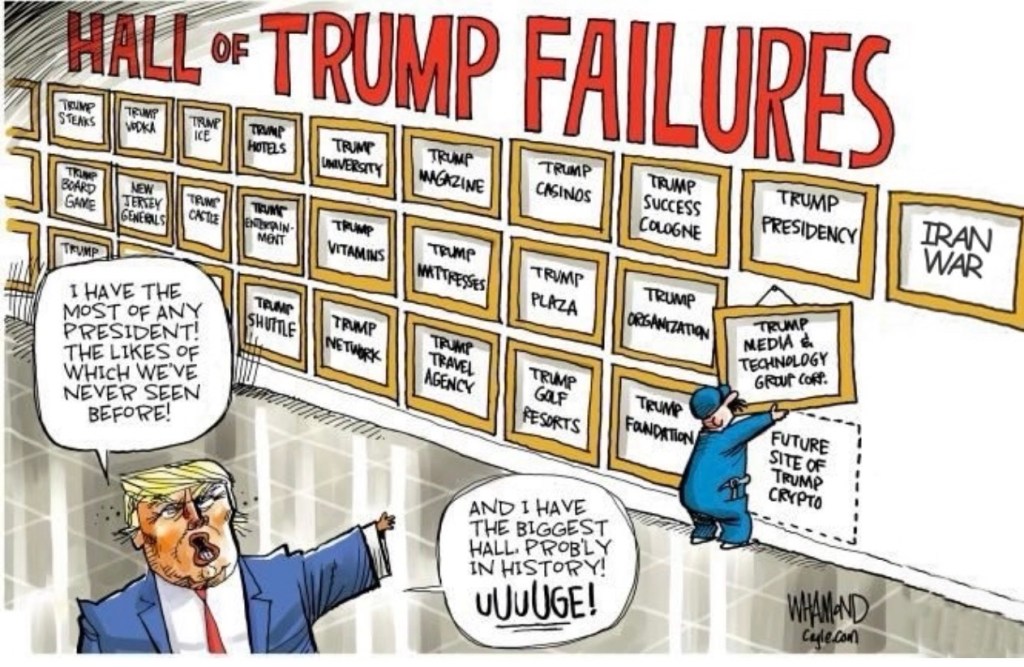
Donald Trump’s presidency has offered a masterclass in how to stretch the limits of executive orders for personal and political gain. While every president uses EOs, Trump wielded them as a primary tool of governance, often bypassing Congress entirely—not because gridlock made it necessary, but because compromise was never in his vocabulary. From attempting sweeping immigration bans without legislative backing, to unilaterally diverting military funds to build his border wall after Congress explicitly refused, Trump treated executive orders as personal decrees rather than constitutional instruments.
Perhaps most telling was his tendency to announce major policy changes via EO or memorandum with little forethought, often catching his own agencies by surprise. Environmental protections were gutted, civil rights safeguards were rolled back, and foreign policy decisions were made in tweet-to-EO pipelines. Each time, the GOP—once champions of “limited government”—remained silent or even applauded.
The same party that railed against “Obama’s abuse” of executive authority suddenly found “broad presidential powers” to be not only acceptable, but admirable. This wasn’t principle; it was pure partisanship. As long as the pen was in Trump’s hand, the checks and balances they once demanded were left in the drawer, unused and forgotten.
Here’s how a history book written in 2125 might portray the Trump administration:
The Trump Presidency (2017–2021): A Pivotal Strain on American Democracy
Historians of the early 22nd century generally regard Donald J. Trump’s presidency as one of the most disruptive and controversial in United States history. His tenure, which began with a populist surge promising to “drain the swamp” and return power to the people, became marked by unprecedented challenges to democratic norms, a deepening of partisan divides, and a redefinition of presidential conduct in the modern media age.
Trump’s approach to governance was characterized by a highly personal and confrontational style. He often bypassed traditional communication channels, relying heavily on social media—particularly Twitter—to announce policy decisions, attack political opponents, and shape public discourse. This direct-to-public method allowed him to energize a loyal base but also inflamed tensions, eroded trust in institutions, and contributed to a highly polarized political environment.
Key moments of his administration included sweeping tax cuts that favored corporations and the wealthy, a hardline immigration policy that included family separations at the U.S.-Mexico border, and the withdrawal from several international agreements such as the Paris Climate Accord and the Iran nuclear deal. While supporters hailed these moves as a restoration of American sovereignty, critics argued they diminished the country’s global influence and moral authority.
The administration was marred by a near-constant turnover of high-ranking officials, creating instability within the executive branch. Trump’s frequent dismissals of cabinet members and agency heads—sometimes announced on social media—were unprecedented in scope. His strained relationship with the intelligence community, the press, and even members of his own party further underscored his combative approach.
The impeachment proceedings of 2019, centered on allegations of abuse of power and obstruction of Congress in relation to Ukraine, marked only the third time in history that a U.S. president faced such charges. Though acquitted by the Senate, the process deepened partisan rifts and set new precedents for executive accountability.
Perhaps most defining was Trump’s handling of the COVID-19 pandemic, which historians now view as a critical turning point. His administration’s inconsistent messaging, clashes with scientific advisors, and resistance to certain public health measures were widely criticized as exacerbating the crisis. Nonetheless, the rapid development of vaccines under “Operation Warp Speed” remains one of the administration’s notable achievements.
The 2020 election, which Trump falsely claimed was “stolen,” culminated in the January 6th Capitol attack—a violent attempt to disrupt the certification of electoral votes. This event is now regarded as one of the most severe assaults on the U.S. democratic process in modern times and led to Trump’s second impeachment.
In retrospect, historians often frame the Trump years as both a symptom and an accelerant of deeper societal fractures. His presidency forced the nation to confront fundamental questions about truth, governance, and the resilience of democratic institutions. While some view him as a populist champion who disrupted a stagnant political order, the dominant historical consensus sees his era as a cautionary tale about the fragility of democracy when norms are sacrificed for personal power.
January–June 2025: The Opening Salvo of Trump 2.0
When Donald J. Trump began his second term on January 20, 2025, historians note that he arrived far better prepared than in 2017—armed with a detailed playbook of executive actions and institutional reform plans that reflected lessons learned from previous missteps .
Aggressive Executive Orders and National Sovereignty
Within hours of his inauguration, Trump issued sweeping executive orders that reverberated globally. He withdrew the U.S. once again from the Paris Agreement and the World Health Organization, slashed billions from USAID, and reaffirmed America’s rejection of multilateralism .
Immigration Crackdown and Citizenship Redefined
Concurrently, the administration invoked emergency powers at the southern border, ordering an intensification of physical barriers, military deployment, and surveillance upgrades . The Laken Riley Act followed shortly, mandating detention for undocumented immigrants accused of certain crimes and enabling states to sue the federal government over enforcement failures . On citizenship policy, Trump issued an order redefining birthright citizenship, seeking to exclude children born to non-resident parents—a move promptly halted by court injunctions .
Economic Warfare and Industrial Realignment
On trade and industry, Trump reignited his tariff-driven economic nationalism. He imposed startlingly high duties—going as far as a universal 100% tariff on imported computer chips, with exemptions tied to domestic investment. Apple received a notable exemption after promising $600 billion in U.S. investment . Additionally, he installed Stephen Miran to the Federal Reserve Board, a signal of his intent to reshape monetary policy by championing aggressive rate cuts and centralizing economic control .
High-Tech Rush: AI Unleashed
In July 2025, Trump unveiled an ambitious Artificial Intelligence Action Plan, dismantling Biden-era AI regulations and appointing a czar to lead a rapid-scale investment in AI infrastructure, data centers, and chip manufacturing. The strategy prioritized deregulation and exportation of U.S. AI models, while ordering assessments to prevent “woke” or DEI (diversity, equity, inclusion) influences in newly produced systems .
Mounting Backlash and Historical Judgments
At the time, observers described these moves as audacious—fueling speculation that Trump intended to consolidate executive power, erode institutional norms, and redefine America’s global role. Critics labeled his approach as “caudillo capitalism,” noting its reliance on whim over analysis and its potential to destabilize both markets and democratic norms .
In retrospect, historians might characterize those six months as a concentrated display of Trump’s unapologetic vision: hyper-nationalist economic policy, tightened immigration control, measured dismantling of international alliances, and an unfettered pursuit of technological dominance. It was an era defined less by legislation and more by executive fiat—a dramatic recalibration of power, ideology, and America’s place in the world.
If humanity stopped producing atmospheric CO₂ today—every coal plant shut down, every gas car parked, every factory and airplane silenced—would it be too late to stop global warming? Unfortunately, the short answer is: it’s too late to avoid all warming, but not too late to stop it from getting much worse.
Here’s why.
The CO₂ already in our atmosphere acts like a thick blanket, trapping heat. Even if we never added another molecule, the climate system would still be warmer than it was before the Industrial Revolution, and much of that extra heat would remain for centuries. That’s because CO₂ is stubborn. While natural systems—oceans, forests, and soils—start absorbing some of it right away, a significant fraction lingers for hundreds to thousands of years. Scientists estimate that about 20–35% of today’s excess CO₂ will still be in the air long after our great-great-grandchildren are gone.
Stopping emissions immediately would halt the rise in CO₂ levels, and temperatures would likely stabilize within years to a few decades. That’s the good news: the climate wouldn’t keep getting hotter and hotter. But stabilizing is not the same as reversing. The heat we’ve already locked in means melting glaciers, rising seas, altered rainfall patterns, and stressed ecosystems will continue for decades, even without new emissions. Some effects, like sea-level rise from thermal expansion and ice melt, will play out over centuries.
In practical terms, this means we’ve missed the window to keep global temperatures at pre-industrial levels without geoengineering or massive CO₂ removal. Even if we stopped all emissions today, we would still live in a permanently altered climate—one with more extreme weather, disrupted agriculture, and shifting habitats. The Earth won’t “go back” on its own in our lifetimes.
However, “too late” doesn’t mean “pointless.” Every fraction of a degree matters. The difference between 1.6°C and 2.0°C of warming could be the difference between coral reefs surviving or vanishing, between manageable droughts and catastrophic ones, between millions displaced and tens of millions. If we stop emissions now, we stop digging the hole deeper. That’s not defeat—that’s damage control on a planetary scale.
So, yes: it’s too late to avoid all the consequences of global warming. But it’s not too late to decide how bad those consequences will be. The climate’s future is still partly in our hands. What we do—or don’t do—now will determine whether the next generations inherit a wounded planet… or a dying one.
When Parker Brothers first introduced Monopoly to the public in 1935, it was meant as a game — a way to pass the time during the Great Depression, offering people the fantasy of buying up property, collecting rent, and ultimately dominating the board. Yet, for nearly 90 years, this “game” has served as a subtle but constant cultural lesson for generations of Americans: the only way to win is to own everything. There’s no prize for cooperation, no reward for modest success, no satisfaction in simply doing well — victory requires crushing your opponents into bankruptcy and controlling every possible square.
This message, while seemingly harmless in a family game night setting, has seeped into the American consciousness far deeper than most people realize. The Monopoly mindset — that your worth is measured by accumulation and your success by domination — has shaped how we approach business, politics, and even personal ambition. We’ve raised generation after generation to equate “winning” with taking as much as possible, regardless of who loses. It’s not hard to see how this translates into the corporate boardrooms, housing markets, and political systems we have today.
In many ways, America’s economic culture has become a real-life Monopoly board. The billionaires who own vast swaths of industry aren’t all that different from the player who snags Boardwalk and Park Place early in the game. Ordinary people — the ones stuck with Mediterranean Avenue and low-value properties — are left paying rents they can’t afford, with no chance of catching up unless the big players allow it. And just like in the game, the end result isn’t an even distribution of resources; it’s one person, or one small group, owning everything while everyone else is wiped out.
Globally, this has colored how the world views Americans. To many, we’re not seen as collaborators or partners — we’re viewed as relentless competitors, unwilling to share, always angling for the deal that benefits us most. Our national psyche, steeped in the idea that domination is the only true success, has fostered an image of the U.S. as a country obsessed with winning at all costs. That doesn’t just hurt our reputation; it undermines global trust and cooperation.
Perhaps it’s time we rethink the lesson we’ve been teaching since 1935. Winning shouldn’t mean having it all — it should mean making sure everyone has enough. Otherwise, we’re just playing the same game over and over, and the rest of the world is watching us gloat over a board they never wanted to be part of.
Oh, welcome, America, to The Apprentice: Federal Government Edition, starring none other than Felon 47 himself — a man who somehow took the sacred machinery of governance and turned it into a reality show, complete with bad lighting, worse acting, and the catchphrase nobody asked for: “You’re fired!”
From day one, the casting call was clear: if you were loyal enough to the big orange brand, you got a spot in the Cabinet. Qualifications? Overrated. Competence? Boring. A burning desire to say “Yes, sir” while nodding like a bobblehead? Now that would get you in the room. And if you dared to bring inconvenient truths — like accurate jobs numbers or reports that didn’t read like campaign ads — congratulations, you just won a one-way ticket back to civilian life. No gold watch, no thank you, just the warm glow of being publicly humiliated on Twitter at 3 a.m.
In the Trumpiverse, the federal government wasn’t an institution built over centuries — it was a bloated set that needed tearing down, brick by brick, so it could be replaced with something leaner, meaner, and staffed entirely by people who owed their careers to one man. Why preserve nonpartisan agencies like the Bureau of Labor Statistics when you can turn them into a personal PR firm? Why keep seasoned diplomats when you can hire your golf buddy’s cousin who once watched Fox & Friends?
And let’s not forget the special episodes dedicated to entire groups of people. The transgender military ban? That wasn’t a policy decision — that was a “shocking midseason twist” designed to keep the audience (read: his base) on the edge of their seats. Who needs decades of military readiness planning when you can drop a discriminatory bombshell in a tweet and watch the chaos unfold? Bonus points if it forces decorated service members out before they can collect retirement benefits. Ratings gold.
What Felon 47 understood — in the way only a man whose moral compass spins like a broken ceiling fan can — is that government can be fun if you treat it like a game show where the stakes are democracy itself. Every firing, every dismantled agency, every act of sabotage wasn’t incompetence. Oh no. It was entertainment. The White House wasn’t an office; it was a soundstage. The Constitution wasn’t a guiding document; it was a prop. And the American people? We were just the live studio audience, forced to watch as the contestants — our institutions — got picked off one by one.
Because in the end, it’s not about governing. It’s about winning the only prize that matters in Trump’s world: the spotlight.
OK, I know I’ve rented about this before, but it seems to be an ongoing saga so we’re gonna talk about it again and how tariffs are supposed to work who gets to impose tariffs and how the current malignant mango moron in the White House is currently using tariffs.
Tariffs are basically taxes on goods that come from other countries. Let’s say a company in China makes TVs and sells them in the United States. If the U.S. government puts a tariff on those TVs, it means the Chinese company has to pay extra money (a tax) when bringing the TVs into the country. This makes the foreign product more expensive. The idea is to encourage people in the U.S. to buy American-made TVs instead because they might be cheaper after the tax is added to the imported ones.
Tariffs are supposed to do two main things:
Protect American businesses and workers from cheaper foreign products. Raise money for the government.
In the U.S., Congress (the House and Senate) has the power to impose tariffs. It’s written in the Constitution. But over the years, Congress has given some of that power to the president, especially in cases where the president claims there’s a national emergency or that another country is being unfair.
Now, enter Donald Trump.
Trump doesn’t use tariffs the way they’re supposed to be used. He slaps them on any country or product he feels like, often without a real plan or clear reason. He says it’s to punish countries like China or Mexico or even allies like Canada and Germany. He claims these countries are “ripping us off,” and he uses tariffs like a hammer to try and make them change how they trade with the U.S.
But here’s the truth: tariffs are not paid by foreign governments. They are paid by the companies that import goods – and those companies are usually American. When a U.S. company pays more for an imported product because of a tariff, they don’t just eat the cost. They raise their prices. So, you, the everyday consumer, end up paying more.
For example, if Trump puts a 25% tariff on steel from China, U.S. companies that buy Chinese steel now have to pay 25% more. If they make cars, appliances, or buildings with that steel, they charge more to cover the extra cost. So cars, appliances, and buildings all get more expensive.
Trump says the tariffs will help American companies by making foreign goods more expensive. But what actually happens is that American businesses that rely on foreign parts or materials suffer. Farmers also get hurt when countries hit back with their own tariffs on American goods. For example, China placed tariffs on American soybeans, hurting U.S. farmers who export crops.
In the end, the American people – regular shoppers, workers, and businesses – are the ones who pay the price.
Tariffs can be a useful tool when used wisely and with a clear plan. But when used recklessly, like Trump does, they cause confusion, hurt the economy, and start trade wars that nobody wins.
So when Trump brags about putting tariffs on everything from electronics to beer, remember: it’s not China or Mexico paying for it. It’s you.
Oh absolutely, according to the ever-reliable fever dreams of far-right conspiracy circles, Democrats are somehow simultaneously orchestrating a massive pedophile ring and aborting every child in sight. That makes perfect sense—yes, the same people who want to increase childcare access, expand education, and fight poverty apparently just can’t decide if they want to eat children, traffick them, or make sure they’re never born. It’s a logistical nightmare for these imaginary villains.
Meanwhile, back in actual reality, the Republican Party has had more members investigated, indicted, or arrested for sex crimes involving minors than they’d ever care to admit. But sure—keep shouting about Hunter Biden’s laptop while another one of your “family values” Congressmen gets caught texting 15-year-olds or grooming interns.
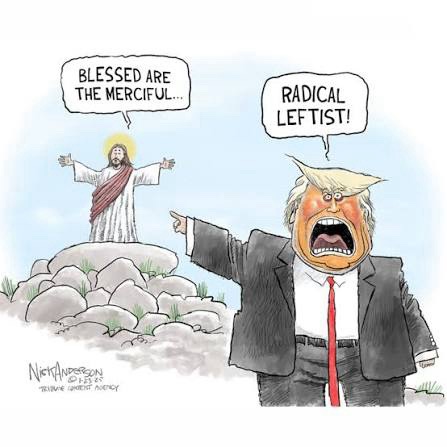
And let’s talk about their “pro-life” stance—because the second that baby is born? Poof! That moral compass vanishes faster than a check to a mega-donor. No healthcare. No parental leave. No decent public education. But hey, at least they forced the birth, right? They’re not pro-life, they’re pro-birth. Once the baby takes its first breath, it’s suddenly a welfare leech, a drag on society, or an excuse to slash social programs. Compassion!
Republicans love to scream about protecting children while banning books, cutting school lunches, and cheering for the elimination of child labor laws. You know, real “Christian” values. But sure, keep clutching your pearls over drag queens reading The Very Hungry Caterpillar at the library while ignoring the child predator in your own caucus. Priorities.
In the twisted brain of Donald J. Trump, the world operates on a single principle: if it doesn’t serve to glorify him, it must be rigged. This mindset has become a defining feature of his political and personal narrative, a convenient excuse for every loss, every criticism, and every measurable fact that doesn’t reflect the adoration he demands.
It started long before politics. Take the Emmys — when The Apprentice failed to win television’s most coveted award, Trump didn’t shrug and move on like a normal person. No, he declared the whole process rigged. In his mind, there was no way he could be passed over unless the system was corrupt. Never mind the quality of the show or the competition — the mere act of not honoring him became evidence of bias.
Fast forward to 2016: Trump won the presidency, but lost the popular vote by nearly 3 million. Most people might consider that a technical win and focus on the job at hand, but not Donald. Instead, he insisted — without a shred of credible evidence — that millions of people voted illegally. Why? Because the numbers dared to suggest not everyone loved him. So again, rigged.
Then came 2020. The loss was undeniable. Courts rejected his lawsuits. Recounts confirmed the results. State officials, including Republicans, stood by the count. But Trump didn’t lose — no, the election was stolen, rigged, manipulated. Why? Because his ego couldn’t process rejection. In Trump’s world, the idea that the American people might choose someone else is inconceivable.
Even when the economy falters or jobs numbers don’t shine a golden light on his legacy, he cries foul. The Bureau of Labor Statistics? Rigged. The media? Fake. The Fed? Disloyal. Truth itself is suspicious unless it flatters him.
What we’re left with is a man who views objective reality as a personal conspiracy. Data, institutions, and democratic norms are all subject to the same filter: Do they praise Donald? If yes, they are to be celebrated. If not, they are fraudulent. It’s not just delusion — it’s a dangerous, authoritarian trait that undermines trust in systems we all rely on. Because in Trump’s narcissistic brain, truth is not a fixed point — it’s a mirror. And if the reflection isn’t worshipful, the mirror must be broken.
You must be logged in to post a comment.