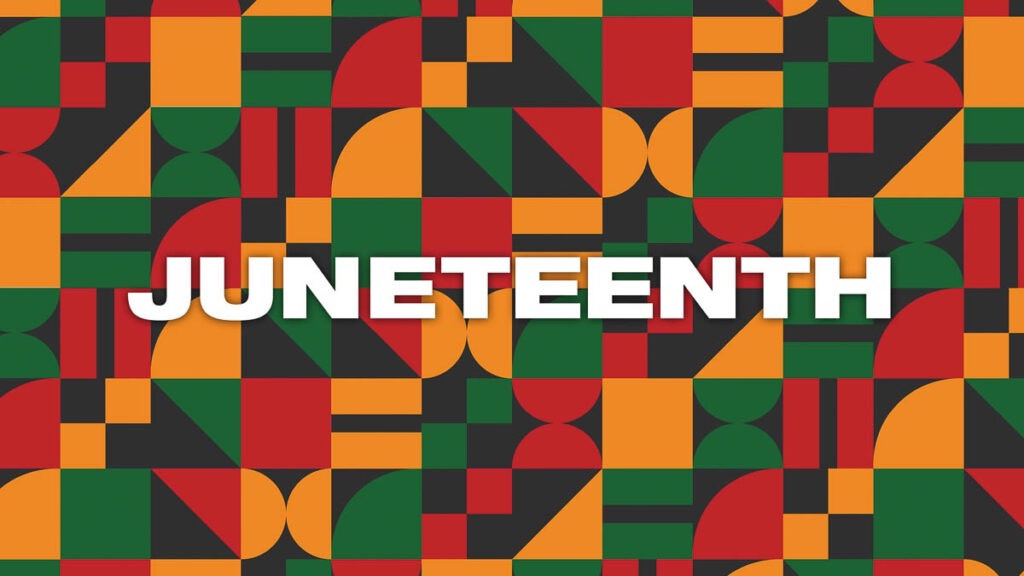
Juneteenth, celebrated on June 19th, marks the day in 1865 when enslaved African Americans in Galveston, Texas, finally learned they were free—two and a half years after President Abraham Lincoln’s Emancipation Proclamation had legally ended slavery. Union troops, led by Major General Gordon Granger, arrived in Texas and announced General Order No. 3, formally freeing the last remaining enslaved people in the United States. This moment represents the delayed promise of freedom and the ongoing struggle for justice.
Recognizing Juneteenth as a national holiday is important because it formally acknowledges a foundational part of American history that was long overlooked. It honors the resilience, culture, and contributions of Black Americans while confronting the painful legacy of slavery. Observing Juneteenth invites education, reflection, and meaningful conversation about systemic racism and the work still needed for equality. By celebrating this day, the U.S. takes a step toward national healing and demonstrates a commitment to truth and inclusion. Recognition also affirms the significance of Black freedom and resistance in shaping American democracy. It’s more than a holiday—it’s a long-overdue recognition of the past and a reminder of the continuing pursuit of justice and equity for all.
Political science research has shown that a committed minority—just 3.5% of the population—can create significant, lasting change, particularly when it comes to political movements and social reform. This concept gained prominence from studies like those by political scientist Erica Chenoweth, who analyzed hundreds of nonviolent protests over the past century. Her findings revealed that when just 3.5% of a population actively and nonviolently engages in sustained protest or advocacy, they have never failed to bring about meaningful political change.
This relatively small percentage can be powerful because of strategic organization, persistent visibility, and moral influence. When a highly motivated minority organizes consistently—through protests, civil disobedience, or even digital activism—they can sway public discourse, gain media attention, and force political leaders to respond. Movements like the U.S. Civil Rights Movement, the fall of apartheid in South Africa, and more recently, pro-democracy protests across the globe demonstrate how small, dedicated groups can alter the course of national policy.
In a democratic society, where public opinion and civic participation hold weight, this 3.5% can act as a catalyst for larger change. Their influence doesn’t necessarily come from numbers, but from dedication, clarity of message, and the ability to mobilize others. As their movement gains momentum, it often shifts the political “center,” prompting broader societal and institutional change. In effect, these movements challenge the status quo and redefine what is politically possible, even without majority support.
This is a deeply debated hypothetical, but we can make an informed assessment based on the available facts and expert analysis.
Background: The Iran Nuclear Deal (JCPOA)
The Joint Comprehensive Plan of Action (JCPOA) was agreed in 2015 between Iran and six world powers (U.S., UK, France, Germany, Russia, China), plus the EU. It imposed strict limits on Iran’s nuclear program in exchange for sanctions relief. Under the deal:
Iran reduced its stockpile of enriched uranium by 98%. It dismantled two-thirds of its centrifuges. It agreed to IAEA (International Atomic Energy Agency) monitoring. Its breakout time (time needed to build a bomb) was extended to about a year.
In May 2018, President Trump unilaterally withdrew the U.S. from the deal and reimposed sanctions, despite Iran being in compliance at the time (confirmed by the IAEA). In response, Iran gradually resumed and escalated its nuclear activities.
Would Iran Have Its Current Nuclear Capabilities if Trump Had Not Withdrawn?
Likely Not — and Here’s Why:
Iran Was Complying With the JCPOA Until 2019: The IAEA repeatedly confirmed that Iran adhered to the deal’s terms. Iran began violating those terms only after the U.S. exit and re-imposition of sanctions. Breakout Time Has Shrunk: Under the JCPOA: ~12 months. As of mid-2024: Estimated at a few weeks, with Iran having enriched uranium up to 60% purity, dangerously close to weapons-grade (90%). The Deal’s Inspections Would Likely Still Be in Place: The JCPOA gave the IAEA access to monitor Iran’s nuclear sites. That monitoring was curtailed after the U.S. left and tensions rose.
Counterarguments / Complicating Factors
Sunset Clauses: Critics of the JCPOA pointed out that some of its key restrictions were time-limited (e.g., centrifuge limits expiring after 10-15 years), meaning Iran could resume enrichment later — though still under IAEA safeguards. Regional Behavior: The deal didn’t address Iran’s ballistic missile program or regional activities, which opponents (including Trump) viewed as flaws. Iranian Intent: Some argue Iran always intended to develop a nuclear weapon eventually and would have done so regardless — though there’s no hard evidence to prove this definitively.
Conclusion
It is very likely that Iran would not have advanced its nuclear program to its current level if the JCPOA had remained in place.
The U.S. withdrawal in 2018 removed incentives for Iran to stay in compliance, collapsed international unity on sanctions, and led directly to Iran’s step-by-step violations.
That said, the JCPOA was never a permanent solution — but it did buy time and established strict monitoring, which has since been lost.
Yes, in many ways, AI is the future. It’s already transforming industries like healthcare, education, finance, transportation, and entertainment. From personalized medicine and predictive maintenance to autonomous vehicles and intelligent assistants, AI is helping us solve complex problems faster and often more efficiently than before.
Benefits include:
Automation of repetitive tasks Faster data analysis and decision-making Enhancements in scientific research Improved accessibility (like helping people with disabilities) Personalization of user experiences
But…
What About Skynet?
The fear of an AI apocalypse — like Skynet in The Terminator — reflects a real concern, but not one grounded in the current capabilities of AI. Skynet was a self-aware, fully autonomous, military-grade intelligence that decided humanity was a threat. That’s science fiction. Today’s AI:
Has no consciousness or goals of its own Is task-specific and lacks general understanding Requires massive human oversight Is prone to errors and bias
However, the concern isn’t completely irrational. The risks include:
Loss of control over powerful autonomous systems Weaponization of AI Bias and discrimination in AI decision-making Job displacement and economic inequality Misinformation at scale (deepfakes, AI-generated propaganda)
That’s why responsible development, regulation, and transparency in AI are essential. Organizations like OpenAI, governments, and researchers around the world are actively working on aligning AI with human values and ensuring it’s used safely.
Bottom Line:
AI isn’t Skynet — yet — and probably never will be if we stay proactive and careful. It’s a powerful tool, not a sentient force. But like any powerful technology, how we use it matters more than the tech itself.
Would you like an example of how AI is being used today in something you’re interested in?
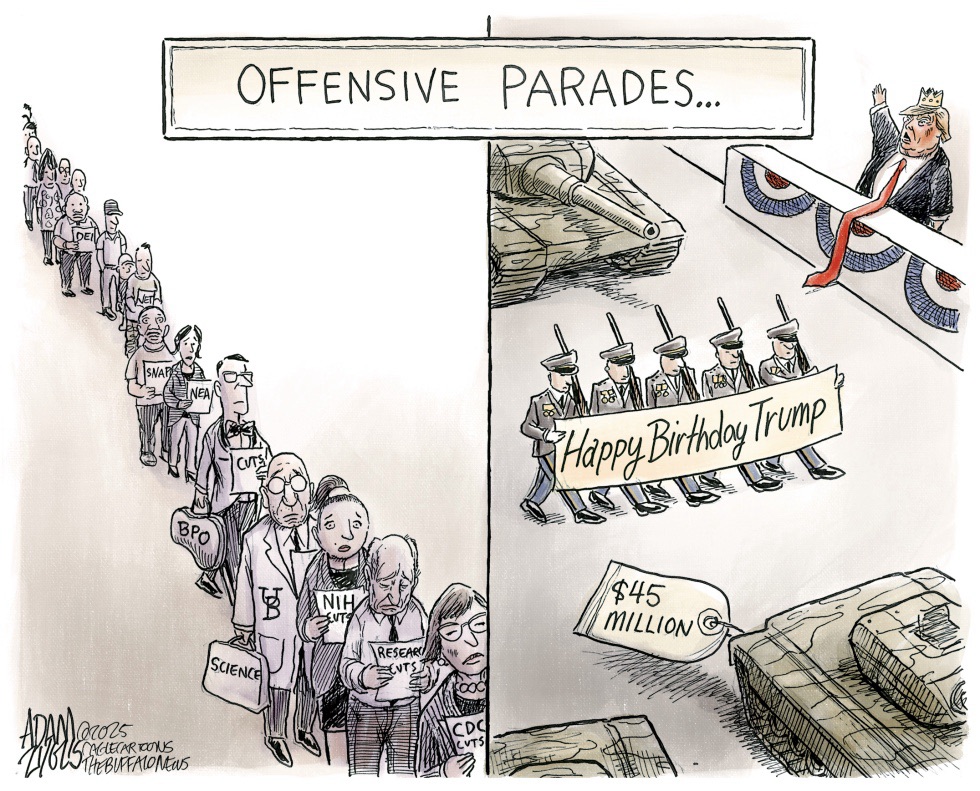
Wanna Be King Donald is a master of political spin, and if faced with a situation where his Washington, D.C. military parade drew a fraction of the attendance seen at nationwide “No Kings” rallies, he would quickly pivot the narrative. He’d likely frame the parade as a symbol of true patriotism, emphasizing strength, order, and American exceptionalism. In his telling, the military display would be portrayed not merely as a show of force, but as a tribute to veterans, service members, and the “real” America—those who, in his view, defend the flag rather than critique the system.
Trump would likely downplay the massive turnout for the “No Kings” rallies by questioning their motives, branding participants as “radical leftists,” “globalists,” or “anti-American agitators.” He might claim that their numbers were inflated by the media or orchestrated by political enemies. Meanwhile, he would paint his parade as a unifying event, a “love of country” spectacle that allegedly brought together “patriots from all walks of life.”
Expect heavy use of hyperbole—terms like “the most beautiful parade ever seen,” “a moment history will never forget,” or “more inspiring than any protest.” He would likely post edited crowd shots and clips from the event to create the impression of overwhelming support. In Trump’s narrative, the meaning of patriotism is not measured in turnout, but in loyalty, symbolism, and spectacle—and he’d position his parade as the ultimate proof of devotion to the nation, regardless of the actual numbers.
There are comparisons being drawn between Nixon, taking America off the gold standard and cryptocurrency, but in reality, they are very different.
Similarities Between Nixon Ending the Gold Standard and Cryptocurrency:
Detachment from Physical Backing: Gold Standard (pre-1971): U.S. dollars were backed by gold. You could theoretically exchange dollars for a fixed amount of gold. Post-Gold Standard (fiat money): After Nixon, the dollar became fiat — its value is based on trust in the government rather than a physical commodity. Cryptocurrency: Most cryptocurrencies, like Bitcoin, are also not backed by physical assets. Their value is based on market demand, scarcity, and trust in the code and decentralized system. Shifts in Trust: Both events reflect shifts in where people place trust: From gold to government (Nixon’s change). From governments to decentralized code or networks (crypto). Debates About “Real Value”: Critics of fiat money argue it’s “just paper.” Critics of crypto say it’s “just code” or speculative. In both cases, the question becomes: What gives money value? (Answer: collective belief and utility.)
Key Differences:
Control: Fiat Money: Controlled by governments and central banks. Cryptocurrency: Decentralized (in theory). No central authority. This is a major ideological split. Policy Motivation: Nixon’s move: Geopolitical and economic — mainly to stop gold outflows and inflation pressures from the Vietnam War. Crypto movement: Emerged from distrust in traditional financial systems, especially after the 2008 financial crisis. Legal Tender: U.S. Dollar post-gold standard: Still legal tender; everyone must accept it for debts. Cryptocurrency: Not legal tender in most places. Use is voluntary and subject to regulation. Adoption and Risk: Fiat currency, post-gold-standard, is widely accepted and stable (relatively). Cryptocurrency is still volatile and not universally accepted.
Bottom Line:
Nixon taking the U.S. off the gold standard and the emergence of crypto both represent major philosophical and structural shifts in what money is and how it’s valued. One moved us from commodity-backed to government-backed money; the other challenges that system by removing government backing entirely.
Let me know if you want a visual timeline or chart comparing them!
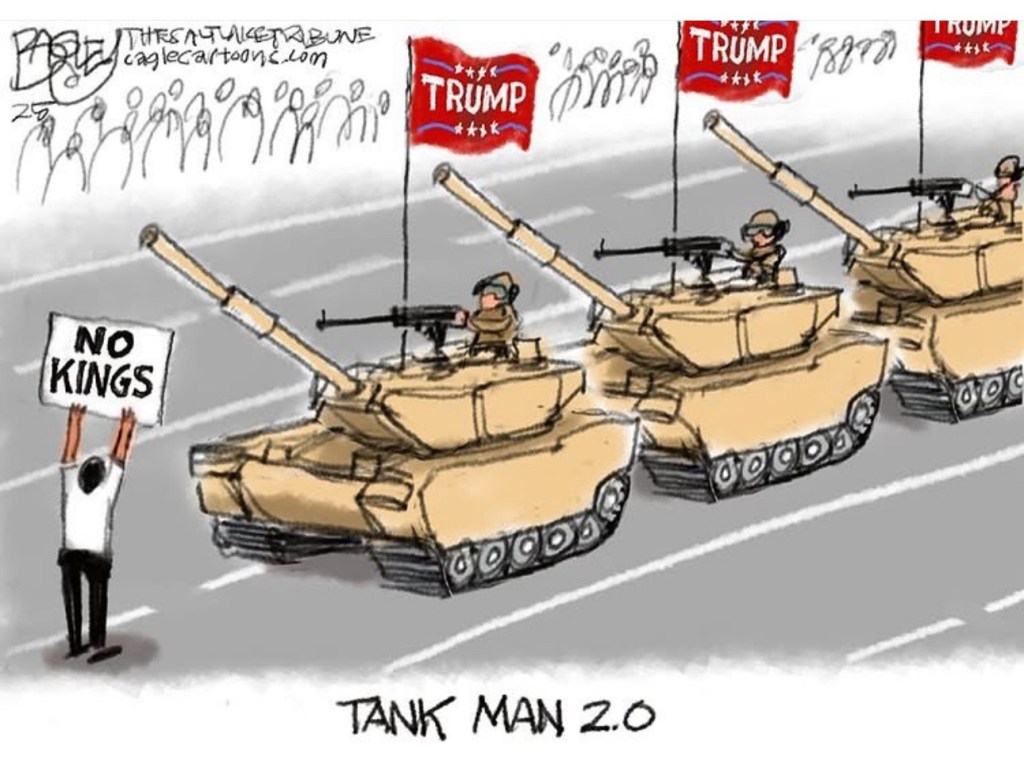
Short message to anyone who is going to participate in a No Kings rally tomorrow…
No Violence, they are looking for an excuse
Enjoy the camaraderie with those who feel the same way you do. Make a joyful make it a joke make the police and any other people wanting to disrupt a peaceful protest feel ridiculous.
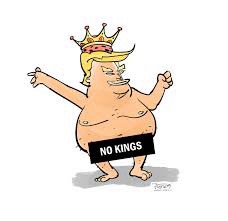
Reminder, we are a democracy we have no kings and Donald the king in waiting will never be our king.











 Esoteric Meandering Shouting Into the Void
You must be logged in to post a comment.