Astronomer Carl Sagan wrote in his 1980 book Cosmos that there were more stars in the universe than grains of sand on beaches on Earth — a statement that’s both wondrous and impossible to prove. But some scientists pondering similar ideas believe that there may be more trees on Earth than stars in the Milky Way galaxy. The theory stems from a 2015 study that attempted to determine how many living trees could be found on the planet, by estimating the number of trees living in different environments. Tropical and subtropical forests appear to have 43% of the world’s tree population, nearly double that of frosty boreal forests found in places such as Canada, Russia, and Norway. Other regions, including the temperate biome (central Europe and the U.S. Northeast), generally have the fewest number of trees. The combined estimates per zone lead some scientists to believe that Earth is home to roughly 3 trillion trees. Compared to NASA’s estimate of more than 100 billion stars in the Milky Way, it appears that trees far outnumber the Milky Way’s sparkling orbs.
However, the scientific community acknowledges that we’ll likely never know the true number of stars in the sky orhow many trees are rooted in the Earth, because there are too many factors at play. Astronomers can guess at the number of stars by observing how the galaxy rotates and calculating its mass, though not all stars are visible from Earth, and it’s impossible to count them individually to confirm the math. On Earth, humans cut down 15 billion trees annually but replace some, with an estimated 1.3 billion saplings produced in the U.S. each year in the hopes of balancing the count. After all, even if we have trillions of them, each tree on the planet is precious.
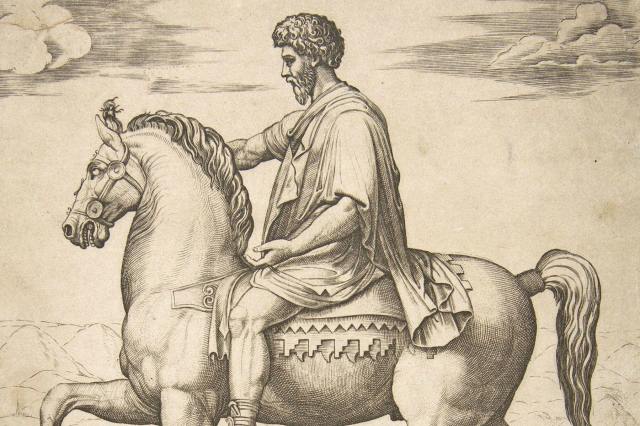
A devotee of Stoicism, a Hellenistic school of philosophy emphasizing the pursuit of virtue, Marcus Aurelius is best remembered for the collection of self-reflections that comprise his famed work Meditations. Ironically, Rome’s philosopher-king had little time to enjoy the inner peace he sought; his two-decade reign was marked by armed conflict with Parthians to the east and invading Germanic tribes from the north, as well as a devastating plague that wiped out millions of Roman citizens. Despite the hardships, Marcus Aurelius was largely successful at maintaining the prosperity forged by his predecessors. However, he also garners criticism from historians for passing the empire to his son Commodus, whose inept reign is considered to have brought an end to the Pax Romana.
Our diversity is part of what makes human beings special. Yet as far as our genes are concerned, we’re all fairly similar: Humans share 99.9%of their genes with one another. To put this into perspective, bonobos and chimpanzees — the closest relatives to humans in the animal kingdom — share approximately 98.8% of their genes with humans. Clearly, even small differences in genetic similarity can have a major impact.
That may be especially true when it comes to human health. According to the National Institutes of Health, nine of the 10 leading causes of death in the U.S. (barring accidental deaths) are influenced by our genetics, and variations among individuals can mean significantly varying health outcomes.
In the 21st century, advances in our understanding of the human genome — thanks to the completion of groundbreaking scientific studies including the Human Genome Project — have pushed medicine into the genetic frontier. Now doctors can screen newborns for genetic abnormalities and sometimes use gene-based therapies, while nutritionists are using genomics to tailor diets to specific genetic dispositions. According to some, the future of medicine is in our genes.
Like a lot of strange happenings, it was first noticed in the 1960s: a small seismic pulse, large enough to register on seismological instruments but small enough to go otherwise unnoticed, occurring every 26 seconds. Jack Oliver, a researcher at the Lamont-Doherty Geological Observatory, documented the “microseism” and sussed out that it was emanating from somewhere “in the southern or equatorial Atlantic Ocean.” Not until 2005 was it determined that the pulse’s true origin was in the Gulf of Guinea, just off Africa’s western coast, but to this day, scientists still don’t know something just as important — why it’s happening in the first place.
There are theories, of course, ranging from volcanic activity to waves, but still no consensus. There does happen to be a volcano on the island of São Tomé in the Gulf of Guinea near the pulse’s origin point, not to mention another microseism linked to the volcano Mount Aso in Japan, which has made that particular explanation more popular in recent years. Though there’s no way of knowing when (or even if) we’ll learn the why of this phenomenon, one thing’s for sure: better a microseism than a macroseism.
There are a few common misconceptions about killer whales, such as how they’re often seen as bloodthirsty creatures that hunt humans. (They don’t — killer whale attacks are incredibly rare.) But the biggest confusion about these black-and-white ocean dwellers is right in their name: They aren’t really whales. The Orcinus orca is actually the largest species in the Delphinidae (aka dolphin) family, weighing as much as 350 pounds at birth and growing up to 32 feet long during its 30- to 50-year lifespan. But in comparison to most whales — like the 100-foot blue whale, the largest animal on our planet — orcas are relatively small. Biologists also group killer whales with dolphins because of their aerodynamic body shape, which helps them reach speeds of up to 34 miles per hour, and their use of echolocation for hunting and navigation.
So why do we call them killer “whales”? The name stems fromsailors of old, who witnessed the massive dolphins hunting whales (and other large marine mammals) together, and originally called them “whale killers.” Over time, the name was reordered, giving orcas a reputation as fierce and dangerous predators. These oceanic dolphins are clever hunters, known for beaching themselves to feast on seals and sea birds, and for working in pods to take down larger prey like great white sharks. But they’re also extremely social marine animals that spend their lives in matriarchal groups with as many as 40 members. Killer whales are so focused on community building that pods often host “greeting ceremonies” to meet members of other groups or welcome new babies, and hold aquatic funerals to mourn podmates. And the most reputation-busting research shows they might just like belly rubs.
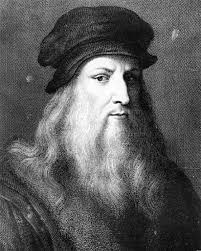
I f you’ve ever referred to Leonardo da Vinci as simply “da Vinci,” you weren’t actually using the Renaissance icon’s last name. In fact, he didn’t even have one in the traditional sense. The painter’s full name was Leonardo di ser Piero da Vinci, meaning “son of ser Piero from Vinci” — Piero being his father’s name and Vinci being the village where he was born. (For fictional equivalents, think of Helen of Troy or Anne of Green Gables.) Many other Renaissance artists, including the other three inspirations for the Teenage Mutant Ninja Turtles, are usually known mononymously even if they did have last names: Donatello’s full name was Donato di Niccolò di Betto Bardi, Raphael’s was Sanzio da Urbino, and Michelangelo’s was Michelangelo di Lodovico Buonarroti Simoni.
Though best known for works of art such as the “Mona Lisa,” “The Last Supper,” and “Salvator Mundi,” Leonardo was also a highly scientific thinker credited with numerous inventions. He designed a flying machine called an ornithopter, an armored fighting vehicle known as Leonardo’s tank, and an ideal city that’s been hailed for how forward-thinking it was, among many other innovations and ideas. For all that, he was not a prolific creator, and most of his pieces have been lost to time.
In addition to having one of the most remarkable post-White House lives of any president, Jimmy Carter had one of the most interesting trajectories toward the Oval Office. That includes not only being a peanut farmer but also reporting seeing a UFO in 1973, at which time he was governor of Georgia and three years away from being elected to the nation’s highest office. The actual sighting took place in 1969, while Carter was visiting the Lions Club in Leary, Georgia. In his report, he wrote that “a kind of green light appeared in the western sky. This was right after sundown. It got brighter and brighter. And then it eventually disappeared. It didn’t have any solid substance to it, it was just a very peculiar looking light. None of us could understand what it was.”
An amateur astronomer with a strong knowledge of physics stemming from his time in the U.S. Navy’s nuclear submarine program, Carter insisted that what he saw wasn’t Venus, as some skeptics suggested, and that 10 to 12 others witnessed it as well. He also vowed to encourage the government to release “every piece of information” about UFOs to the public if he were to become president, though he ultimately opted not to do so for fear that the information could have “defense implications” that might risk national security.
The plan for how to run the country if Trump is re-elected, 2025, is a total disaster for the majority of us. The control of everything including health matters, the removal of anything that looks like a benefit, handout to the republicans, will be done away with. The people behind this massive rape of the country are the ultra wealthy that got where they are because this country provided them the opportunity to become rich. Now they want to deny that opportunity to anyone and everyone else. They are supposedly all good christians, church goers and people of good moral conscience and yet they have collectively written a manifesto of ideas that speaks of control and punishment. Watch your neighbor, spy on their every move and report back if you believe they are doing things that are not approved, you will be rewarded. The places you better not watch and report on are the houses of the rich, they can do no wrong. Extreme ego and a feeling of self righteousness are driving this train. There is no reason for public support like social security, we the wealthy have plenty to take care of ourselves, you should have saved and you would have enough as well. Oh, you say you worked in my factory for 50 years and were never paid enough to have savings, well then die and reduce the surplus population. Sounds a bit like the Scrooge tale. These upstanding citizens want to turn the clock back at least a couple of hundred years. They do not want women to vote or have a voice in decisions especially when it comes to personal health and childbirth. They would like to readopt slavery and do away with voting rights for all but the very wealthy and of course you must be white. The campaign from the republican side has again descended into the calling of names and lies upon lies to convince everyone that their opponents are unfit, untrustworthy and just totally corrupt. This is the view they have looking in the mirror so why should it not be what they see looking at others. The burning question that is not being asked has to be Why did you as a party nominate a 34 count convicted criminal to represent you? This man put the country further in debt in one term than collectively all the administration in the previous 50 years had done. He lies to all of us and yet your party persists in their worship of him. He has already called for violence if he loses again. He has stated that if he wins this time around he will fix it so you never have to vote again and all will be good. He will have set up his empire and will expect that his sons will follow him as dictator forever, as long as they are Trump. If that future comes to be then all of you devoutly religious people will have nothing left but to sit on your butts and pray for assistance and read your book of fiction that was written by men that were just as screwed up and stupid as the one you electe
Things are looking positive Harris is a strong candidate for the White House even though Biden was and is still doing a stellar job as President. My warning is don’t get complacent, we assumed that the malignant narcists would not beat Clinton in 2016 but we all know what happened.
In 2016-2018-2020 the GOP didn’t have a defined plan, well at least not one that they had publicized but now they do and their blueprint is the demise of democracy, so in that vein I and going to post pieces of the 2025 Project so that maybe some of us will realize the threat is real.
How would Project 2025 impact troops and veterans?
Spencer Chretien, left, and Kristen Eichamer stand in the Project 2025 tent during the playing of the national anthem at the Iowa State Fair, Aug. 14, 2023, in Des Moines, Iowa. (Charlie Neibergall/AP)
Banning transgender troops from service, revoking the VA’s ability to provide abortion-related care and slashing the number of general officers in the ranks are just a few of the policy proposals laid out in a political playbook for what the next Republican administration could look like.
Known as Project 2025, the plan organizedby the conservative think thank The Heritage Foundation would make sizable changes to the lives of service members and veterans if implemented.
The lengthy guidebook that seeks to reform several facets of the federal government has taken the spotlight in the 2024 presidential race.
While Republican nominee and former President Donald Trump has distanced himself from Project 2025, Democrats have called the agenda a “dangerous blueprint” for what his second term could look like.
Project 2025 was authored by many officials who served in the first Trump administration.
“I know nothing about Project 2025,” Trump said in July on Truth Social. “I have no idea who is behind it. I disagree with some of the things they’re saying and some of the things they’re saying are absolutely ridiculous and abysmal. Anything they do, I wish them luck, but I have nothing to do with them.”
But Democrats are not ready to let him off the hook yet. Vice President Kamala Harris, who received an endorsement from President Joe Biden to serve as the next commander-in-chief after he dropped out from the presidential election this past weekend, warned in a social media video that Trump and his team intend to implement Project 2025.
What exactly is Project 2025?
The Project 2025 initiative includes a roughly 900-page policy agenda, a personnel database for those who could serve in the next Republican administration, a training for those individuals called the “Presidential Administration Academy” and also plans for a playbook of actions to be taken in the first 180 days of office.
The effort includes recommendations by former Acting Defense Secretary Christopher Miller, and has been led by other former Trump administration officials including Paul Dans, former chief of staff at the Office of Personnel Management, and Spencer Chretien, former special assistant to the president and associate director of presidential personnel.
Policy recommendations stretch across the executive branch, from the White House to the Department of Justice to independent regulatory agencies, each broadly seeking to reduce the size and scope of the federal government.
“Our goal is to assemble an army of aligned, vetted, trained, and prepared conservatives to go to work on Day One to deconstruct the Administrative State,” a prelude to the handbook states.
The “administrative state” refers to executive branch agencies exercising the power to create, enforce and adjudicate their own rules. Those who oppose such a setup, primarily Republicans, argue that unelected officials should not have such powers.
How would Project 2025 impact troops?
The policy chapter on remaking the Department of Defense includes reducing the number of generals and reinstituting policies barring transgender individuals from serving in the military.
“Our disastrous withdrawal from Afghanistan, our impossibly muddled China strategy, the growing involvement of senior military officers in the political arena, and deep confusion about the purpose of our military are clear signals of a disturbing decay and markers of a dangerous decline in our nation’s capabilities and will,” Miller wrote.
Some of the suggested personnel changes Miller put forth fall in line with conservative culture war arguments, including:
Eliminating “Marxist indoctrination and divisive critical race theory programs,” which the text does not provide examples of.
Other prescriptions include:
Suspending the use of the recently introduced Military Health System Genesis, where military applicants are medically examined before they can sign up.
Requiring completion of the Armed Services Vocational Aptitude Battery, the military entrance examination, by all students in schools that receive federal funding.
Increasing the Army force structure by 50,000.
Aligning the Marine Corps’ combat arms rank structure with the Army’s.
Maintaining between 28 and 31 larger amphibious warships as opposed to the what is specified in current Navy shipbuilding plans.
Ken Cuccinelli, a former DHS official from the Trump administration, who wrote that section of the guidebook, said the maritime service should instead be moved to the Department of Justice when not at war, or alternatively to DOD for all purposes.
The policy chapter on reforming the Department of Veterans Affairs involves rescinding VA’s ability to provide abortion services and revising hybrid and remote work options for the department’s employees.
“The VA must continually strive to be recognized as a ‘best in class,’ ‘Veteran-centric’ system with an organizational ethos inspired by and accountable to the needs and problems of veterans, not subservient to the parochial preferences of a bureaucracy,” Tucker said.
Reviewing in-person work options. Tucker cited that, specifically for VA staff in the nation’s capital, the remote work policy is “undermining the cohesiveness and competencies of some staff functions and diluting general organizational accountability and responsiveness.”
Requiring Veterans Health Administration facilities to increase the number of patients seen each day to equal the number seen by DOD medical facilities: approximately 19 patients per provider per day. Currently, Tucker said, VA facilities may be seeing as few as six patients per provider per day.
Not everyone however agreed with taking that approach.
“VHA healthcare providers need to spend more time with veterans during their appointments to effectively address their complex health needs,” Russell Lemle and Jasper Craven, from the Veterans Healthcare Policy Institute, wrote in a Task & Purpose op-ed. “By demanding that VHA facilities match the patient volume at DOD facilities, Project 2025 risks shortchanging veterans and compromising the quality of care they receive by treating them as if they are in the prime of their youth,” they added.
Other recommendations from Tucker included:
Embracing the expansion of Community Based Outpatient Clinics without “investing further in obsolete and unaffordable VA health care campuses.”
Revising disability rating awards for future claimants while “preserving them fully or partially for existing claimants.”
Establishing a veterans “bill of rights” so vets and VA staff know exactly what benefits veterans are entitled to receive.
Transferring all career Senior Executive Service individuals out of specific positions on the first day to “ensure political control of the VA.”
Michael Embrich, a former member of the Advisory Committee on the Readjustment of Veterans, shared in an op-ed for GovExec that following Project 2025′s plans to reshape the government workforce “would disproportionately affect veterans, many of whom rely on these positions not only for employment but also for a sense of purpose and community.”






:quality(70)/cloudfront-us-east-1.images.arcpublishing.com/archetype/UHRD3I66QRAL3AQMMUMT4OUSUI.jpg)
 Esoteric Meandering Shouting Into the Void
You must be logged in to post a comment.