Why Life Feels Faster the Older You Get
6m read
by Bennett Kleinman
Original photo by SERSOLL/ Shutterstock
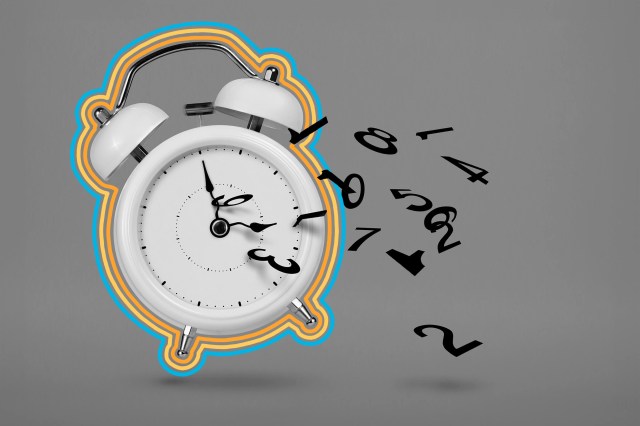
When we’re younger, time tends to feel as if it drags on forever. Think of those long, lazy summers that seemed never-ending, or how it could feel like an eternity watching the clock tick away and waiting for the final school bell to finally ring. But as we grow older, many of us feel like time is moving more quickly. This curious phenomenon has nothing to do with any change in the measurement of time, of course; a minute today is the same length it was 50 years ago. According to some scientific theories, this sensation actually has to do with how our brains process the experiences around us, which changes as we age, leading.
Experiments Have Revealed How We Perceive Time Differently
In the 1960s, psychologist Robert Ornstein conducted a series of experiments leading up to the publication of his 1969 work On the Experience of Time. Two tests were particularly notable: In the first experiment, Ornstein showed subjects two diagrams — one with a complicated design and another featuring a comparatively simple pattern. Subjects were presented with each image for an identical period of time, but when asked which one had appeared for longer, test subjects chose the more complex diagram.
Ornstein also conducted a second experimentwith audio files featuring clicking sounds and basic household noises. Some of the recordings were more intricate, containing more clicks produced at a quicker frequency. When Ornstein asked his subjects to tell him which audio file was longer, they chose the more complex one with the greater number of sounds.
Ornstein concluded that across the board, people’s perception of time appeared to slow down when they were presented with greater amounts of new and complex information. He posited that our brains require extra time to process unfamiliar experiences, resulting in a feeling of time essentially moving in slow-motion.
Childhood vs. Adulthood
So what do Ornstein’s experiments have to do with time slowing down as we age? Well, when we’re young, our days are filled with first-time experiences rife with complex and often novel information that our brains work hard to process. There are countless new lessons to learn, new locations to explore, and new sensations to feel. In the context of Ornstein’s experiments, these are akin to seeing the more complex diagrams or hearing those more detailed audio files.
When we’re younger, it takes time for our brains to take in and process all the sights and sounds we’ve never experienced before. This overwhelming flood of knowledge may contribute to the sensation of time moving more slowly. As we grow older, however, we often find ourselves falling into familiar routines. Days, weeks, or even months can pass in which our lives remain largely unchanged. Our brains aren’t working as hard on a daily basis to process and analyze new experiences, so time can feel to be moving faster.
This is all subjective, of course, as some older people may actively seek out stimulating activities that keep the brain active and therefore help “slow things down.” But generally speaking, time tends to blend together more and more as we age, when it isn’t broken up by fresh, original experiences as frequently as in our younger years.
 Esoteric Meandering Shouting Into the Void
One response to “Time its all Relative”
Yeah, I’m really feeling this lately.
LikeLiked by 2 people