Dwain Northey (Gen X)
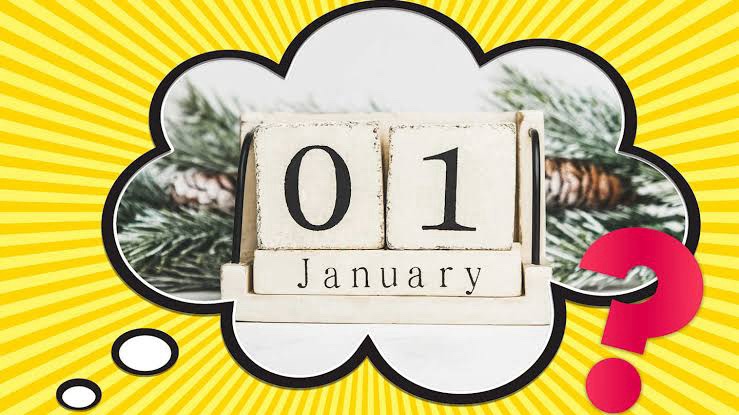
We gather every year on the coldest edge of the calendar and declare, with straight faces and champagne breath, that this—this dark, hungover, leafless moment—is the beginning. January 1. The New Year. As if time itself looked at winter’s bleakest stretch and said, “Yes. This feels right. Let’s start here.”
But it didn’t always. In fact, it makes almost no sense at all.
For most of human history, the new year began in spring, which is to say, when things actually began. The earliest Roman calendar started the year in March, a month named for Mars, the god of war, agriculture, and general forward motion. Crops were planted, armies marched, days got longer, and life reasserted itself after winter’s long, gray hostage situation. Even our months still bear the fossil evidence of this older logic: September means seventh month, October eighth, November ninth, December tenth—names that only make sense if March was once month number one.
So how did we end up celebrating renewal in the dead of winter?
Blame politics. And bureaucracy. And a deep human need to impose order even when nature is screaming, “This is a terrible idea.”
In 153 BCE, the Romans moved the start of the year to January so newly elected consuls could take office earlier and get to war faster. Nothing says “fresh start” like military scheduling. January was named after Janus, the two-faced god of doors, gates, and transitions—one face looking back, one looking forward. Symbolically elegant, yes, but still happening in a month where most people were just trying not to freeze.
Then came Julius Caesar, who in 46 BCE introduced the Julian calendar, officially locking January 1 in as New Year’s Day. The empire stamped it, enforced it, and exported it like everything else Rome did. Centuries later, when Pope Gregory XIII tweaked the calendar again in 1582 to fix astronomical drift, January 1 survived the edit. By then, tradition had hardened into dogma. We may have lost the plot, but we kept the date.
Of course, not everyone immediately agreed. Medieval Europe experimented wildly—some regions celebrated the new year on March 25, others on Easter, others at Christmas. Chaos reigned. Accountants suffered. Eventually, January 1 won not because it made sense, but because everyone was tired of arguing.
And so here we are.
Every year we stand in the darkest month, when trees are bare, the ground is frozen, and sunlight feels like a rumor, and we announce resolutions about growth, transformation, and becoming our “best selves.” We expect motivation to bloom while nature itself is in survival mode. We tell ourselves we’re starting over while our bodies are begging for rest and carbohydrates.
It’s a little absurd. A little defiant. Almost impressive.
January 1 isn’t a natural beginning—it’s a human one. A line drawn in the snow by ancient administrators who needed order more than poetry. Spring still feels like the real new year, and maybe it always will. But January is when we practice hope anyway. When we say, despite the cold and the darkness, “Something new is coming. Not yet—but soon.”
So perhaps that’s why we chose it after all. Not because it’s logical, but because it’s hard. Because declaring a beginning in the bleakest month is an act of stubborn optimism. A collective refusal to let winter have the last word.
Or maybe it was just the Romans.
It’s usually the Romans.

