Dwain Northey (Gen X)
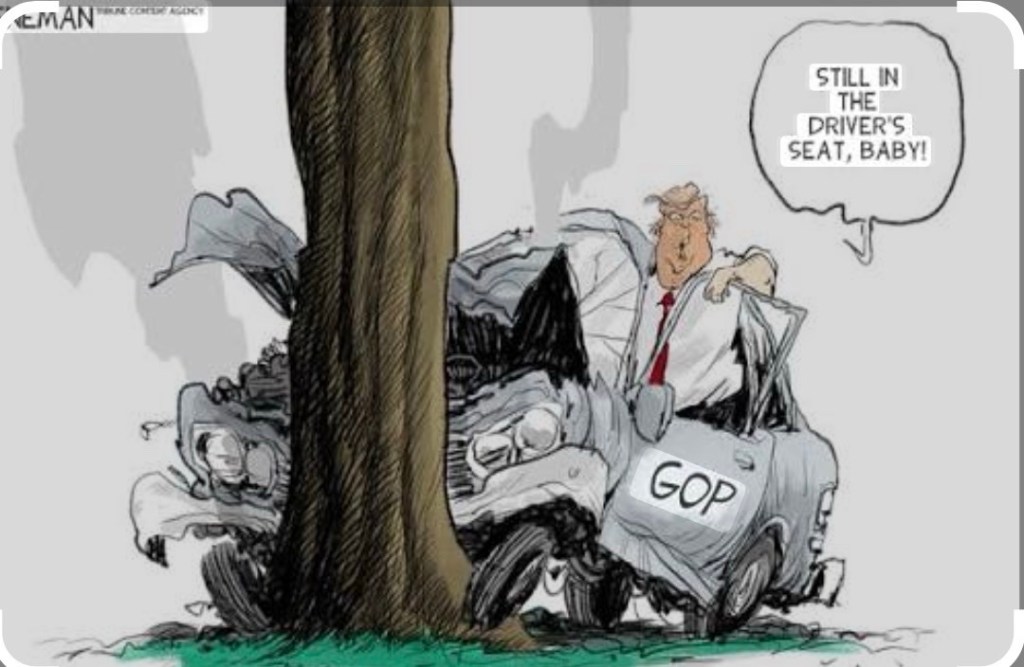
There is something almost poetic—if poetry were written entirely in press releases and selective amnesia—about the modern political art form perfected by Donald Trump and his loyal chorus in Congress: voting “no” with conviction, then cutting the ribbon with enthusiasm.
It’s governance as performance art. A bold new genre. Call it Oppose & Pose.
Take the sudden Republican enthusiasm for domestic semiconductor manufacturing. For years, legislation aimed at boosting chip production was treated like an unsolicited salad at a steakhouse—poked at, frowned upon, and ultimately rejected. Yet now, as gleaming new fabrication plants rise from the desert like monuments to industrial policy, the very same elected officials who voted against them are practically fighting each other for a hard hat and a photo op.
“Look what we did,” they say, standing in front of projects they tried to prevent.
It’s a bit like refusing to help build a house, then showing up at the housewarming party to take credit for the open floor plan.
And then, of course, there’s space—the final frontier of political rebranding. A successful moon launch occurs, the product of decades of research, planning, and the stubborn persistence of scientists and engineers at NASA. Naturally, this becomes an irresistible opportunity.
Cue the applause. Cue the statements. Cue Donald Trump stepping forward as if he personally tightened the bolts on the rocket.
Never mind that his administration proposed deep cuts to NASA’s budget—cuts that would have turned ambitious missions into PowerPoint presentations. Never mind that sustained investment, often bipartisan and frequently opposed by the very voices now celebrating, is what made the launch possible. Details, details. Why let reality interrupt a good victory lap?
In this version of events, gravity itself bends—not just for rockets, but for accountability.
The pattern is almost admirable in its consistency. Infrastructure projects? Opposed, then celebrated. Clean energy investments? Mocked, then rebranded as local job creators. Scientific achievements? Underfunded, then hailed as personal triumphs. It’s less about policy and more about narrative ownership: if something good happens on American soil, someone will step forward to claim it, whether they planted the seed or tried to salt the earth.
And the messaging is always delivered with the confidence of someone who knows that memory, in politics, is often shorter than a news cycle. Today’s opposition becomes tomorrow’s accomplishment, with just enough time in between for everyone to forget who stood where.
It raises an interesting philosophical question: if you vote against a bill, denounce it publicly, and attempt to derail it—but it passes anyway and succeeds—did you, in some metaphysical sense, support it all along?
In Washington, the answer appears to be yes. Enthusiastically. On camera.
So here we are, watching a government faction that has mastered the ability to be both the arsonist and the firefighter, the critic and the champion, the “no” vote and the victory speech. It’s a remarkable balancing act—one that requires equal parts confidence, timing, and a very flexible relationship with the past.
And perhaps that’s the real innovation. Not semiconductor manufacturing. Not lunar exploration. But the creation of a political reality where outcomes matter less than who gets to stand nearest the podium when they happen.
After all, why build the rocket when you can just take credit for the launch? 🚀

