Dwain Northey (Gen X)
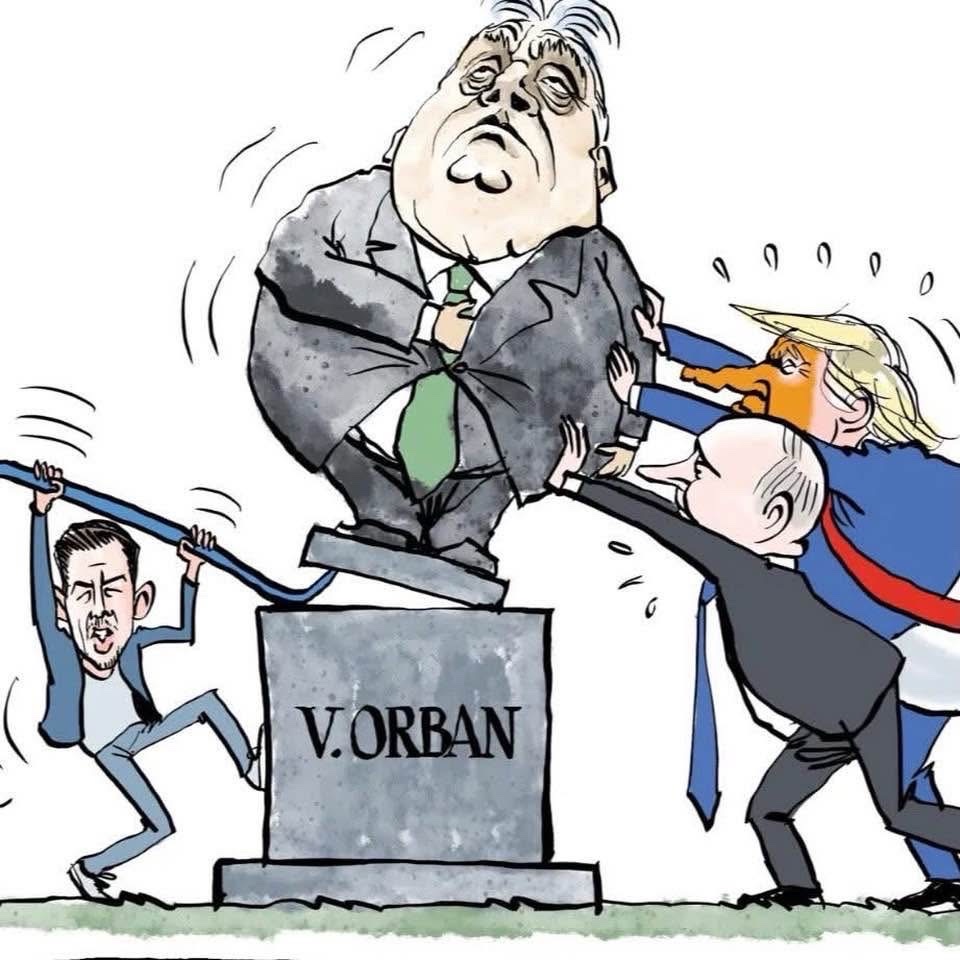
It’s a tough moment for the world’s most sensitive strongmen. With Viktor Orbán no longer playing his favorite role as the guy who could sit at the European Union table while kicking it from underneath, one has to wonder: who’s going to pass the notes now?
I imagine Donald Trump staring at a map of Europe like it’s a restaurant menu written in a language he doesn’t trust, asking where Hungary went—not geographically, but spiritually. And Vladimir Putin, somewhere in a long hallway with terrible lighting, is probably sighing the kind of sigh that echoes, the kind reserved for when one more “complicated ally” suddenly remembers it lives next door to NATO.
Because that’s the real tragedy here. Not that Hungary has a conservative leader—no, that part’s fine. It’s that inconvenient detail where this new leader seems to believe in alliances, treaties, and, you know… not actively poking the bear while insisting it’s just a misunderstood house pet. A conservative who thinks NATO isn’t a book club? Bold. Almost reckless.
There was a certain comfort, I imagine, in knowing that Viktor Orbán could be counted on to raise an eyebrow at Brussels, stall a vote, or at least create the kind of awkward silence that makes international cooperation feel like a bad family dinner. Now? Now there’s a risk of… cohesion. Of alignment. Of countries agreeing on things without needing a dramatic pause and a side-eye.
What are Donald Trump and Vladimir Putin supposed to do in a world where even the “difficult ones” start coloring inside the lines? Who fills the void of the strategic contrarian, the geopolitical speed bump, the guy who says, “Yes, but what if we didn’t?”
It’s unsettling. It’s unnatural. It’s almost like alliances are meant to function.
Don’t worry, though. If there’s one thing history has taught us, it’s that someone, somewhere, will step up to make things unnecessarily complicated again. Nature abhors a vacuum—and geopolitics abhors smooth cooperation even more.

