Dwain Northey (Gen X)
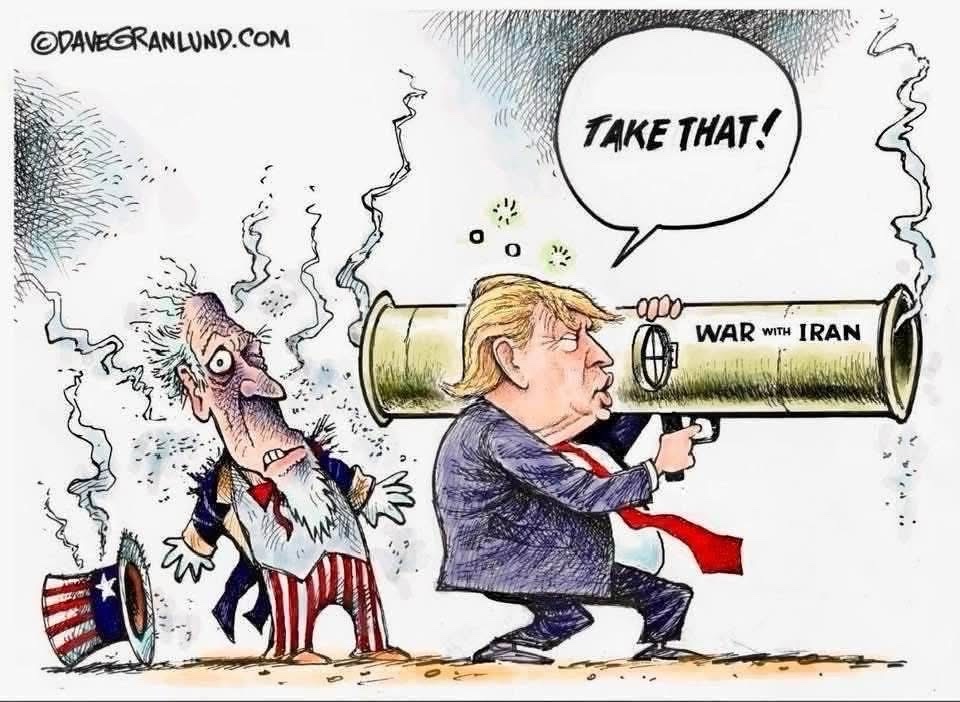
If you’re going to revive a theory that conveniently inflates presidential power, you’d think you’d at least be picky about who gets the crown.
Because let’s be honest: the Unitary Executive Theory didn’t just appear out of thin air last Tuesday. Republicans have been flirting with it since at least the Ronald Reagan era—nurturing it, polishing it, bringing it out whenever Congress got a little too… involved. Back then, it was framed as efficiency. Strength. Decisiveness. The executive branch as a finely tuned machine.
And now? Now that same machine has apparently been handed over to what can only be described as the political equivalent of a gas station snack aisle—specifically, the bag of trans fats you regret five minutes after opening.
That’s the part that really lands. It’s not just the quiet drift toward something that looks suspiciously like monarchy-lite; it’s the enthusiastic decision about who gets to embody it. Of all the potential stewards of expanded executive authority, the choice landed on Donald Trump—a man whose relationship with restraint, nuance, or constitutional guardrails has always been… interpretive at best.
But here’s where the logic really starts doing Olympic-level gymnastics.
Because the same voices championing a muscular, unconstrained executive suddenly rediscover their deep and abiding love for limits, guardrails, and strict constitutional interpretation the moment the Oval Office is occupied by a Democrat. When it’s Barack Obama, or Joe Biden, or Bill Clinton, the unitary executive theory doesn’t disappear—it just… takes a nap. A long one. Possibly medicated.
Suddenly, executive orders are tyranny. Agency authority is overreach. Any hint of unilateral action becomes a five-alarm constitutional fire. The very people who argued for decades that the presidency should be powerful enough to act decisively now insist it should be carefully restrained, thoroughly checked, and preferably tied down with procedural rope and a few well-placed court challenges.
It’s less a consistent philosophy and more a toggle switch: expansive power when “our guy” is in charge, strict limitations when he’s not. The theory isn’t abandoned—it’s selectively applied, like sunscreen in winter.
So the long game finally arrives. Decades of arguing for a stronger presidency. Decades of pushing the idea that one branch should have broader authority. And when the moment comes, the principle doesn’t hold—it flexes. A lot. Enough to make the United States Constitution feel less like a guiding framework and more like a prop that gets rearranged depending on who’s standing at the podium.
Meanwhile, the “No More Kings” crowds keep growing, clinging to the outdated notion that maybe power should be constrained regardless of party. That maybe the warnings of King George III weren’t meant to be taken as a “what if we tried this again, but domestically?” experiment.
At this point, the irony isn’t subtle anymore. It’s not even trying to hide. It’s standing in the town square, wearing a crown, holding a pocket Constitution in one hand—and a very selective memory in the other.

