Dwain Northey (Gen X)
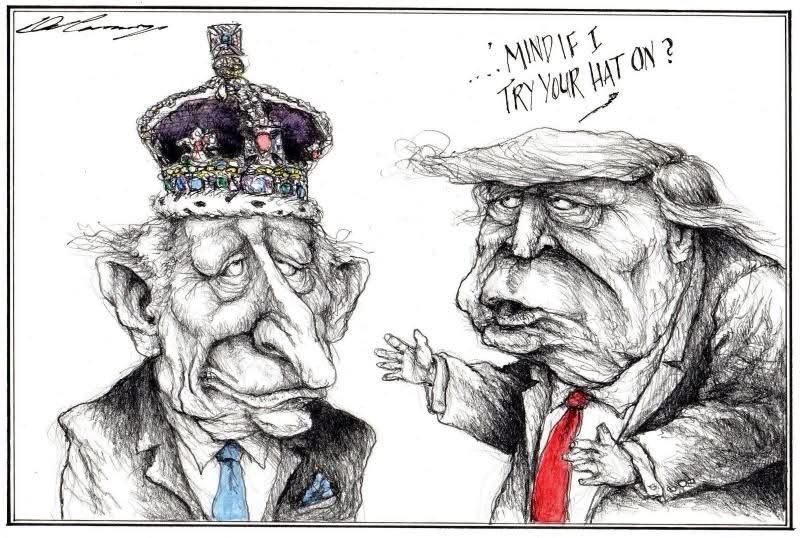
There’s something almost performance-art level perfect about King Charles III visiting Washington and immediately being drafted into the world’s most awkward receiving line—one that somehow manages to revolve entirely around Donald Trump. Because of course it does. Why wouldn’t a ceremonial moment involving a literal king become a one-man show about a man who has spent years behaving like one without the inconvenience of a crown?
Picture it: dignitaries lined up, history unfolding, cameras clicking—and right there in the middle of it all, Donald plants himself like a human traffic cone. Not quite royalty, not quite host, but absolutely determined to be the main character. It’s less “state visit” and more “impromptu campaign stop with a confused monarch in the background.”
And then, as if the choreography wasn’t strange enough, we get the commentary. Charles, a man who has spent decades perfecting polite, dry humor, makes a light remark about the ballroom—because apparently even he can’t resist acknowledging the ongoing obsession. One can only imagine the internal monologue: I’ve waited my entire life to be king, crossed an ocean for diplomacy, and somehow we’re talking about a function hall.
Meanwhile, Donald hears “ballroom” and treats it like a policy briefing. Suddenly it’s not just a room—it’s a vision, a legacy project, a symbol of greatness that absolutely must be discussed right now, in front of a visiting head of state. Because nothing says “strong international relations” like cornering a monarch to workshop interior design.
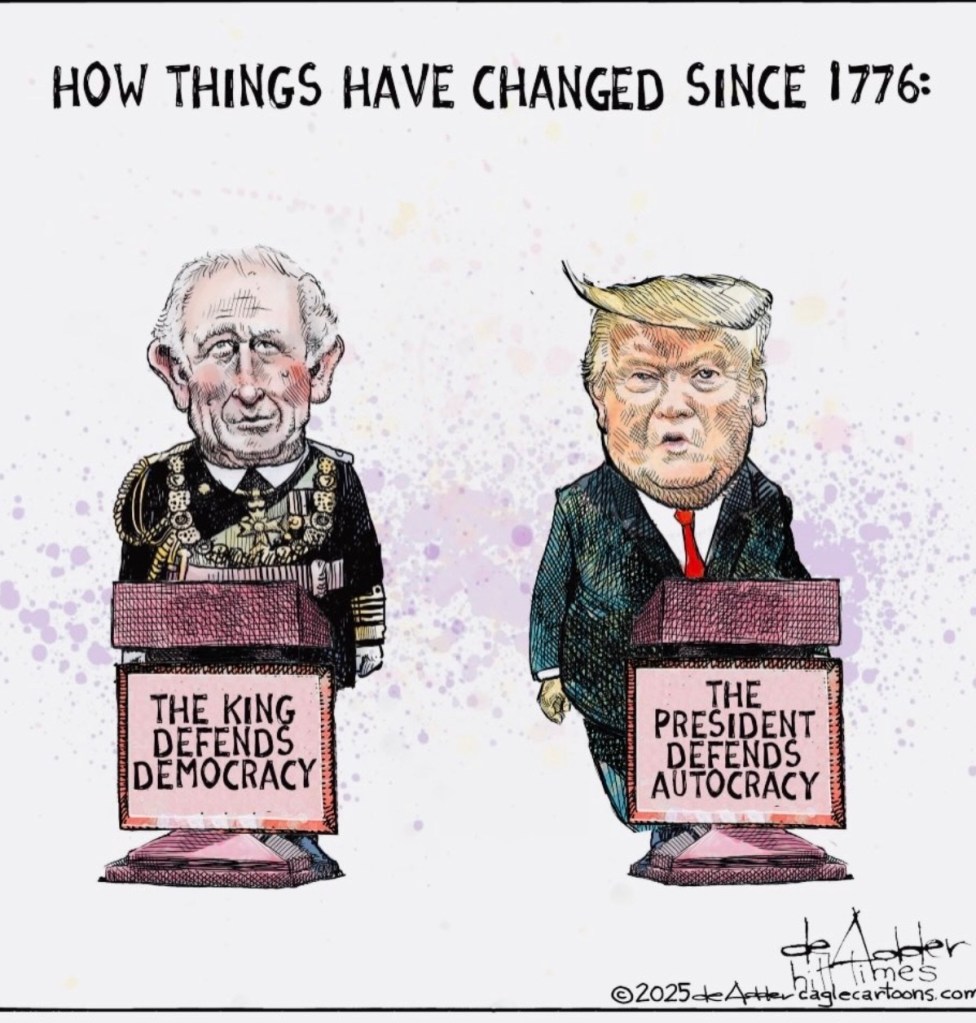
But the real masterpiece comes when King Charles, King of England—actual, hereditary monarch—finds himself talking about democracy. Democracy. In America. To Americans. While standing next to a man who has never met a democratic norm he didn’t try to bend, break, or redecorate.
You couldn’t script it better.
Here’s Charles, representing an institution that quite literally defines unelected power, gently offering reflections on democratic values. And somehow, it lands with more credibility than the surrounding commentary. That’s the twist. The king sounds like the adult in the room, while the elected official is busy treating the moment like an episode of Extreme Makeover: West Wing Edition.
It’s the kind of irony that would make historians blink twice. The British monarchy—once the very thing America rebelled against—is now calmly explaining democratic principles, while an American political figure is busy blocking the receiving line and pitching renovations.
Somewhere, the ghosts of the American Revolution are just shaking their heads.
And maybe that’s the takeaway. Not the speeches, not the optics, not even the ballroom. Just the quiet realization that in this particular moment, the king acted less like a monarch than the guy who couldn’t stop talking about drapes.
Long live the irony.