Dwain Northey (Gen X)
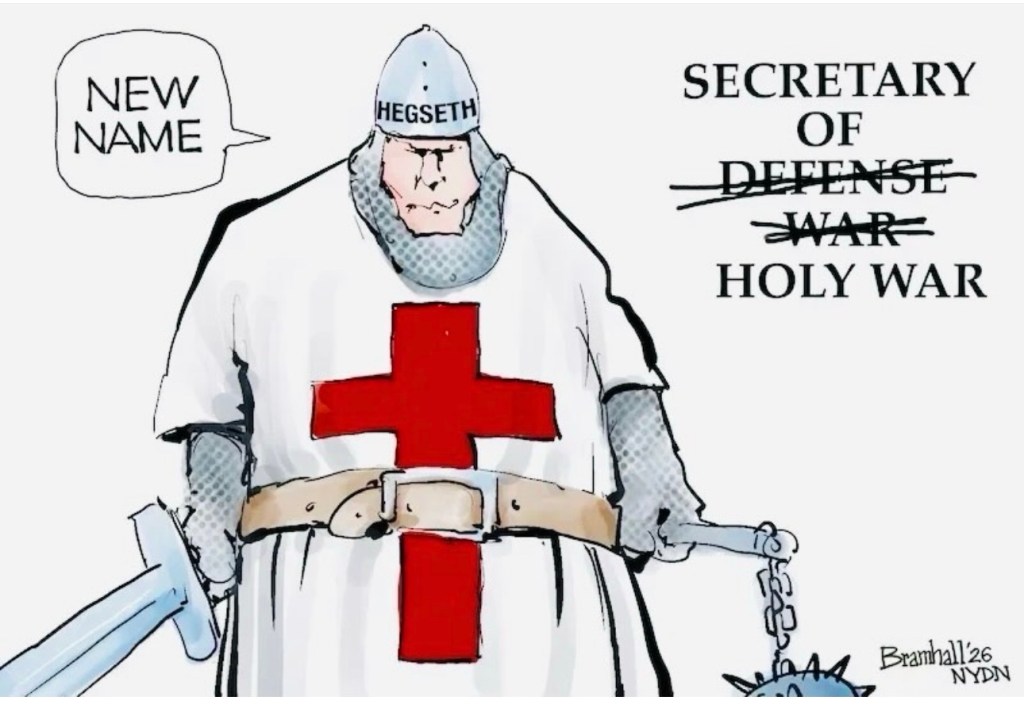
There’s something almost admirable—if you squint hard enough and abandon all standards—about the audacity of watching a cast of political understudies, opportunists, and professional grievance merchants try to drape themselves in the robes of divine purpose. Apparently, we are now meant to believe that this collection of moral minimalists, led by Donald Trump, is not merely governing, but crusading. Not stumbling through policy, but waging a holy war.
Yes, a holy war. Because nothing says spiritual enlightenment quite like late-night social media tirades, grift-adjacent fundraising emails, and a revolving door of scandals that would make even historically corrupt regimes blush. If this is sanctity, then perhaps irony has finally achieved sentience.
The pitch, as best as one can decipher through the fog of contradictions, is that they are righteous warriors locked in an existential battle for the soul of the nation. This would carry more weight if their definition of “soul” didn’t seem to fluctuate depending on polling data and donor enthusiasm. One minute it’s about faith and values; the next, it’s about settling scores, relitigating personal slights, and ensuring that loyalty to the “God king” remains the highest commandment.
And let’s talk about that framing for a moment—this near-mythical elevation of leadership into something bordering on divine right. Historically, that sort of thing hasn’t exactly ended in peaceful hymnals and moral clarity. It tends to produce… well, the exact opposite of what most religions spend their time preaching. Humility is replaced with bravado, compassion with cruelty, and truth with whatever happens to trend well in the outrage economy that day.
Yet here we are, watching the spectacle unfold. A group that treats ethics like a loose suggestion now insists it is the last line of defense for righteousness itself. It’s a bit like watching arsonists lecture on fire safety—technically possible, but difficult to take seriously while everything is still smoldering behind them.
In the end, the “holy war” branding says less about any genuine spiritual mission and more about the timeless political strategy of wrapping ambition in something that sounds nobler than it is. Because if you can convince people you’re chosen, you don’t have to convince them you’re competent.
And that, perhaps, is the most revealing part of all.
 Esoteric Meandering Shouting Into the Void