Dwain Northey (Gen X)
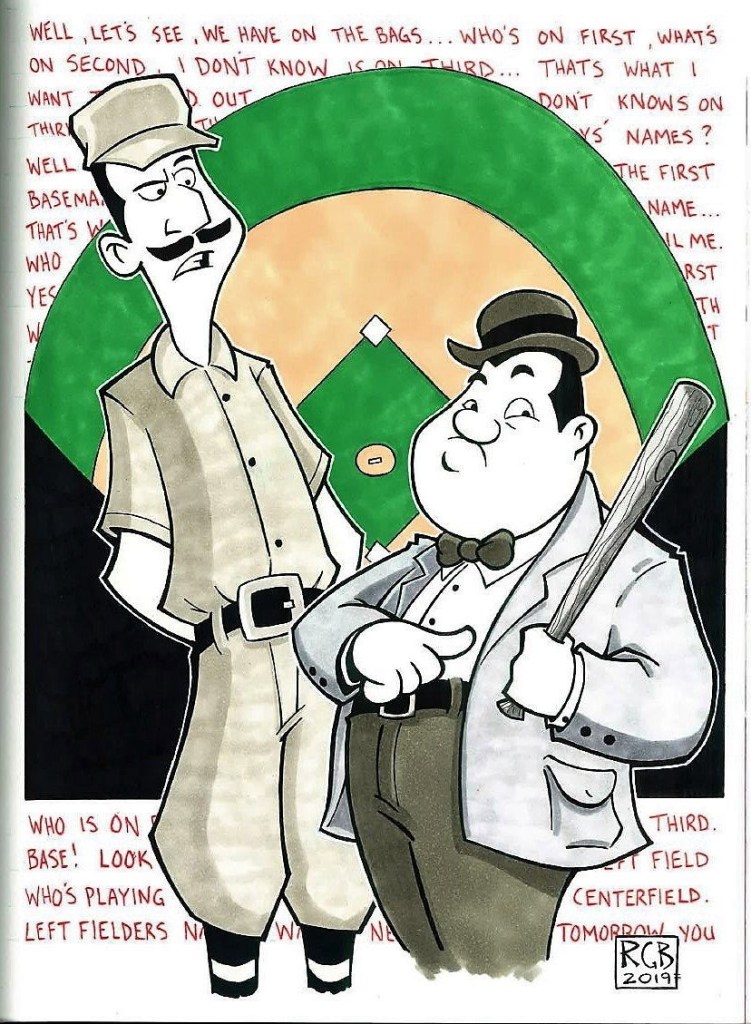
There are days when watching the modern Republican playbook feels less like civic engagement and more like sitting through a never-ending rerun of Who’s on First?—except nobody’s laughing, and the punchline keeps rewriting the Constitution.
I mean, follow the logic here. If legislation gets stalled in Congress—messy debates, pesky voters, all that democratic inconvenience—no problem. Just send it over to “third base.” Not the legislative branch, not the will of the people, but the judicial bullpen, where the robes are pressed, the lifetime appointments are secure, and the strike zone is, shall we say, flexible.
“Who’s making policy?”
“Third base.”
“The Supreme Court?”
“Exactly.”
“Oh, I thought they just interpreted law.”
“That’s cute.”
Take abortion rights. For decades, it was framed as settled law, debated, protested, legislated around—but ultimately grounded in precedent. Then suddenly, who’s on first doesn’t matter anymore, because third base stepped in, waved everyone home, and declared the game had different rules all along. No messy congressional compromise required—just a clean judicial swing.
And once you’ve discovered that shortcut, why stop there? If one major societal issue can be rerouted through the courts, then naturally the next ones line up like batters waiting for their turn at the plate. Gay marriage? Voting rights? Pick your favorite long-settled question and send it down the line. After all, when you’ve built a 6–3 majority, you’re not just playing the game—you’re redesigning the field mid-inning.
Of course, the official explanation is always about “originalism” or “constitutional fidelity,” which somehow always seems to land in the exact same political neighborhood. It’s an impressive coincidence, really. Almost artistic. Like abstract expressionism, but with legal briefs.
Meanwhile, Congress—the branch actually designed to write laws—has been reduced to a kind of ceremonial dugout. Lots of posturing, plenty of yelling, occasional dramatic gestures, but when it comes to scoring runs? Don’t worry, third base has it covered.
And the beauty of it, from a purely strategic standpoint, is the plausible deniability. If voters get upset, well, we didn’t pass a law, they can say. The Court decided. It’s governance by outsourcing, democracy by technicality. A kind of political shell game where the pea is always under the robe.
So here we are, stuck in a national routine where the lines blur, the roles swap, and the audience is left squinting at the field trying to figure out who’s actually in charge. Is it Congress? The Court? The voters? Or just whoever can deliver the next punchline with a straight face?
And honestly, the strategy shouldn’t surprise anyone. It tracks perfectly with the broader philosophy of leadership on display—particularly from Donald Trump, a man who seems to embody that old saying about being born on third base and insisting he hit a triple. When that’s the mindset at the top, of course the rest of the team is going to treat shortcuts like earned victories, call in favors like they’re home runs, and celebrate outcomes without acknowledging how they got there.
Because in this version of the game, it’s not about how you round the bases—it’s about declaring you already did, then letting third base handle the details.

