Dwain Northey (Gen X)
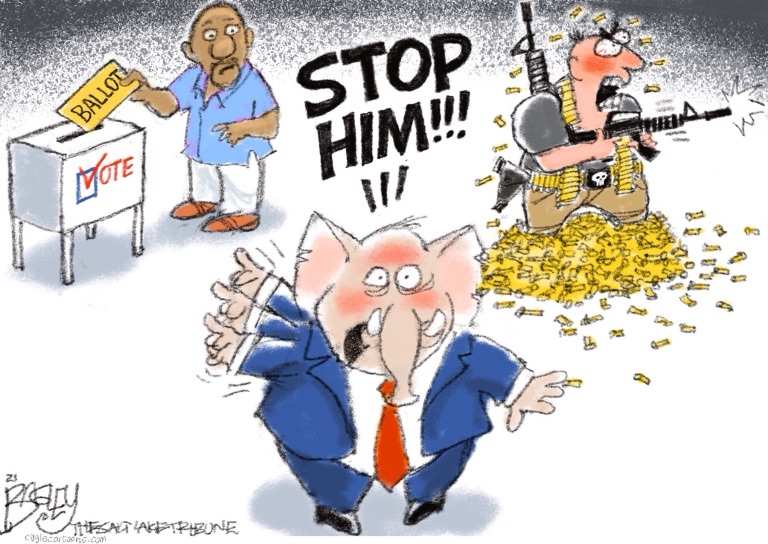
I’ve been informed—usually with a reassuring pat on the shoulder—that I shouldn’t be all that worked up about voting rights. After all, I’m a 59-year-old white guy. Statistically speaking, I’m the VIP section of the electorate. The velvet rope practically parts itself when I show up. So why, I’m asked, would I care if other people are having their access to the ballot box chipped away?
And I have to admit, it’s a compelling argument—if you ignore, well, history, basic fairness, and the entire premise of democracy.
Because here’s the thing that seems to get lost in these conversations: efforts to restrict voting don’t start by targeting the people in the center of power. They start at the edges. They always start at the edges. It’s like a slow-moving storm you can see forming on the horizon—easy to ignore if you’re still standing in the sunshine, right up until it rolls directly over you.
So when I see the Supreme Court taking a hatchet—no, let’s call it a “surgically precise legal instrument,” because that sounds nicer—to key provisions of the Voting Rights Act, I don’t exactly feel reassured. I don’t think, “Well, that’s fine, I’ll be unaffected.” I think, “Oh, good, we’re loosening the bolts on the guardrails that kept elections at least somewhat fair.”
And I get it—some folks genuinely believe this is about preventing fraud. The ever-elusive, Bigfoot-level voter fraud that somehow justifies making it harder for actual, real, living people to vote. Because obviously, the real threat to democracy is not fewer people participating—it’s the terrifying possibility that more of them might.
Now, I happen to vote Democratic. Which, if you’ve been paying attention, increasingly places me in a category that some would prefer had a slightly more… “streamlined” voting experience. You know, fewer polling places, longer lines, maybe a fun little scavenger hunt for acceptable ID. Nothing says civic engagement like needing three forms of documentation and a half day off work just to exercise a constitutional right.
But even if that weren’t the case—even if my vote were completely insulated—I’d still care. Because the idea that voting rights should depend on whether I personally benefit is, frankly, ridiculous. That’s not how rights are supposed to work. They’re not a loyalty program where you rack up points based on how closely you align with whoever’s in charge.
I believe everyone should have the right to vote. Full stop. Even if they vote for candidates I wouldn’t trust to water my plants, let alone run a country. That’s the deal. That’s democracy. It’s messy, it’s frustrating, and sometimes it makes you question your fellow citizens’ life choices—but it’s supposed to be inclusive.
What worries me is that not everyone sees it that way anymore. There’s this growing comfort with the idea that some votes matter more than others—or that some people should have to jump through more hoops to be heard. And that’s where the “you shouldn’t care” argument really falls apart.
Because if you’re okay with someone else’s rights being trimmed down today, you’re essentially betting that yours won’t be tomorrow. And historically, that’s not a great bet.
So no, I’m not going to shrug this off just because I’m not the first target. I’ve seen enough to know how this story tends to go. It doesn’t stop at the edges. It never does.
And besides, if we reach a point where the only votes that are easy to cast are the ones that agree with the people in power, then we haven’t protected democracy—we’ve just politely escorted it out the back door and hoped nobody notices.

