Dwain Northey (Gen X)
For a party that never shuts up about “the will of the people,” it’s remarkable how often the policies they attack are the exact policies that made ordinary people’s lives survivable.
At some point, it becomes difficult not to notice the pattern.
When Franklin D. Roosevelt came into office during the Great Depression, the country was economically face-planted into the pavement. Banks were collapsing, people were starving, retirees were wiped out, and corporations had spent years treating workers like disposable machine parts with hats on. So FDR created programs like Social Security, labor protections, and the broader New Deal framework to establish the radical concept that maybe elderly people shouldn’t die because the stock market had a bad week.
And conservatives lost their minds.
Not because Social Security failed. Quite the opposite. It worked so well that Republicans have spent nearly a century trying to dismantle it while simultaneously being terrified to actually touch it because voters would riot in the streets carrying AARP cards like medieval torches.
Then came Lyndon B. Johnson and the Civil Rights era. The Civil Rights Act and Voting Rights Act were not exactly subtle statements. They essentially declared that Black Americans were, in fact, citizens entitled to equal treatment under the law, which apparently was controversial enough to rearrange American politics for generations.
And again, look who opposed it.
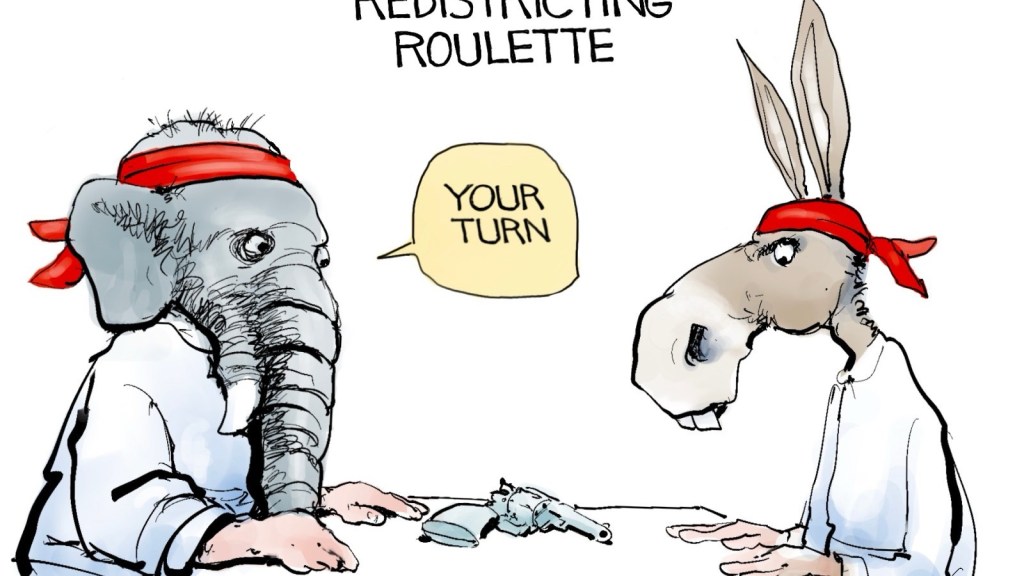
Not all Republicans, historically speaking, because reality is more complicated than bumper stickers. But the modern GOP has spent decades slowly sanding away at voting protections, district maps, and civil rights enforcement while insisting every attempt to expand access to voting is somehow “cheating.” It’s a fascinating argument: democracy is only legitimate if fewer people participate in it.
Then you get to Barack Obama and the Affordable Care Act. The ACA was not universal healthcare. It wasn’t even particularly revolutionary by developed-world standards. It was basically a market-friendly compromise built around private insurance companies. Mitt Romney practically test-drove the prototype in Massachusetts.
And Republicans still treated it like Obama had personally nationalized every hospital and replaced the bald eagle with Karl Marx.
Why? Because despite all its flaws, the ACA helped people. Millions of people. Preexisting condition protections meant insurance companies couldn’t just look at someone with diabetes and say, “Well, good luck with your inevitable bankruptcy.” Young adults could stay on their parents’ insurance longer. Medicaid expansion saved lives.
And corporate interests hated the idea that healthcare should prioritize patients over quarterly profits.
That’s the throughline people notice. Every major Democratic reform that materially improved life for ordinary Americans gets treated by conservatives and their donors like an act of economic terrorism.
Social Security? “Socialism.”
Civil Rights? “Federal overreach.”
Healthcare reform? “Government takeover.”
Meanwhile, tax cuts for billionaires are presented as the sacred healing waters of capitalism, despite decades of evidence showing that “trickle-down economics” mostly results in yacht dealerships having a fantastic quarter while everyone else debates whether eggs should now qualify as luxury items.
And this is where the frustration comes from for many voters: the rhetoric never matches the policy outcomes.
The GOP brands itself as the party of the working class while routinely backing policies that benefit corporations, deregulation, and concentrated wealth. They talk endlessly about freedom, but when average citizens gain economic freedom through healthcare, retirement security, labor rights, or voting access, suddenly freedom becomes suspiciously unaffordable.
It creates the impression—not unfairly—that large portions of modern conservative politics are less about empowering citizens and more about protecting existing power structures.
Because if people have healthcare independent of employers, retirement independent of Wall Street, and voting access independent of political gatekeepers, then corporations and entrenched political interests lose leverage.
And leverage, more than democracy, increasingly feels like the real currency of modern American politics.
That’s why these programs endure despite nonstop attacks. Because once Americans experience policies that actually help them, they tend to become very attached to them. Republicans can spend decades demonizing Social Security, Medicare, Medicaid, the ACA, labor laws, and voting protections, but the second anyone proposes actually eliminating them outright, voters react like someone threatened their grandmother with a folding chair.
Turns out people generally enjoy not starving, not being denied healthcare, and occasionally being allowed to vote.
Who knew.

