Dwain Northey (Gen X)
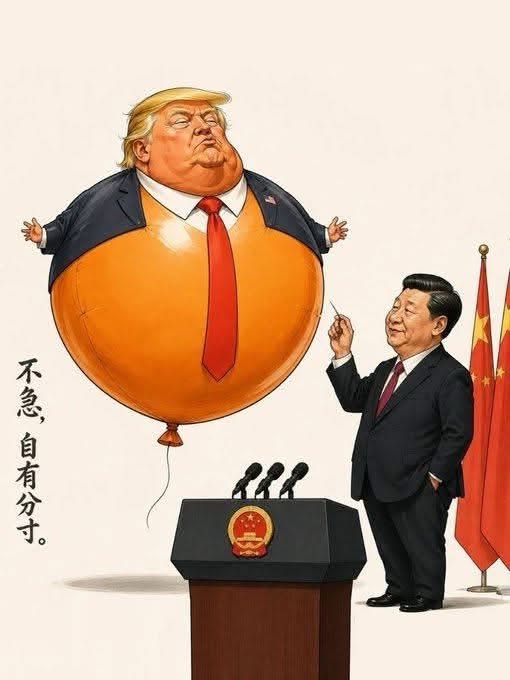
There’s always something magical about a Donald Trump foreign trip. Not “magical” in the diplomatic sense. More like the kind of magic show where a guy in a gold jacket distracts the audience with jazz hands while the assistant quietly steals your wallet.
Donald returns from China proclaiming the trip was “historic,” “tremendous,” “the best trade mission ever conducted by a human being,” and apparently somewhere between the moon landing and the invention of fire in terms of global significance. According to him, America made “many deals,” billions and billions of dollars are supposedly flowing in, and President Xi was probably moments away from naming a panda after him.
And somehow, after nearly a decade of this routine, there are still people nodding along like, “Yes, this sounds entirely legitimate.”
Because if there’s one thing Donald Trump has always been known for, it’s complete honesty about business deals. Certainly not exaggeration. Certainly not announcing projects that never materialize. Certainly not slapping his name on half-finished promises and declaring victory before the concrete dries.
The funniest part is that every one of these trips sounds exactly the same. He lands. There’s pomp. There’s a red carpet. There are oversized flags and dramatic music. He tells reporters the foreign leaders respect him more than any president in history. Then vague announcements appear about “frameworks,” “understandings,” “future investments,” and “major partnerships.” Nobody can explain precisely what any of it means, but the cable news graphics look impressive, so mission accomplished.
Meanwhile, China is sitting there treating the whole thing like a Costco sample table.
“Oh, yes, Mr. Trump, very impressive. Tell us more about how tariffs work. Tell us more about which industries your donors care about. Tell us more about how easily flattery bypasses national security concerns.”
Because let’s stop pretending Beijing approaches these meetings emotionally. They don’t. China approaches diplomacy like a 5,000-year-old chess player watching a drunk guy challenge him to checkers at a casino buffet.
To them, Trump is probably the geopolitical equivalent of one of those old infomercial contestants trying to grab money inside the hurricane cash machine. They just stand there patiently while he shouts about winning.
And honestly, what exactly are these “great deals” we’re supposed to believe in this time? We’ve heard this story before.
Remember the “amazing” trade deals that were going to revive American manufacturing overnight? The deals where China would supposedly buy impossible amounts of American agricultural products? The deals that somehow always ended with American taxpayers subsidizing farmers because the trade wars backfired spectacularly?
It’s like watching someone brag that they won a poker tournament while their house is actively being repossessed behind them.
But Donald loves the spectacle because the spectacle is the point. Substance has never really mattered. The headlines matter. The photo ops matter. The ability to walk into a ballroom, point at giant numbers on a banner, and say “Nobody’s ever seen numbers like these” matters.
And China understands this perfectly.
That’s the truly terrifying part. They know exactly who they’re dealing with. They know flattery works. They know praise works. They know giant ceremonies work. They know if you make him feel important enough, he’ll practically negotiate against himself.
At this point, every trip feels less like diplomacy and more like an international casting call for “How to Manipulate a Narcissist: Master Class Edition.”
And somewhere in Beijing there’s probably a room full of analysts whose entire job is simply figuring out what compliments generate the best policy concessions.
“Did the giant portrait help?”
“Yes, but next time try adding gold trim and tell him he looks thinner.”
“Excellent. Prepare the tariff discussions.”
Meanwhile, his supporters will spend weeks insisting this was a masterstroke of strategic genius. They’ll say he’s “playing 4D chess,” despite the fact that most of the time it looks like he’s eating the chess pieces while insisting he invented the game.
The reality is that successful diplomacy usually involves boring things: details, preparation, policy expertise, consistency, coalition building, and understanding long-term consequences. Trump approaches it like a casino owner comping drinks to high rollers while claiming the chandelier means the business is thriving.
And China? China plays the long game.
America changes presidents every four or eight years. China thinks in fifty-year increments. They probably view Trump the same way a professional investor views a meme-stock trader screaming on TikTok: entertaining, useful, volatile, and ultimately exploitable.
But sure. We’re supposed to believe this trip changed everything because Donald said so at a podium with ten flags behind him.
Of course it did. And Mexico paid for the wall. And infrastructure week is finally coming next Tuesday.

