Dwain Northey (Gen X)
People love the myth of the lone political savior or lone political villain. One guy walks into office, waves a magic wand, and suddenly everything is fixed or destroyed entirely because of one human being. That’s how campaign ads work. That’s how cable news works. That’s how social media works. It’s simple, clean, and completely ignores how government actually functions.
Take New York City for example. People will say, “Mayor so-and-so balanced the budget,” or “Mayor so-and-so saved the city financially.” Maybe they helped steer the direction, sure, but mayors do not govern alone. A mayor without a city council is basically a guy screaming ideas into the void. Every budget, every zoning change, every infrastructure package, every public service investment has to go through layers of negotiation, votes, compromises, and political horse trading. If a mayor succeeds, it usually means there was at least some level of cooperation between the executive office and the legislative body.
The same thing applies in Los Angeles. The mayor gets either all the credit or all the blame depending on who’s yelling on Twitter that day, but the reality is more complicated. When policies moved forward with support from the city council, Los Angeles saw meaningful improvements in transportation, housing initiatives, public works, and local development. When there was resistance or obstruction, progress slowed down or stalled entirely. That’s not weakness. That’s democracy. Democracy is messy because it requires consensus, compromise, and negotiation between people who don’t always agree.
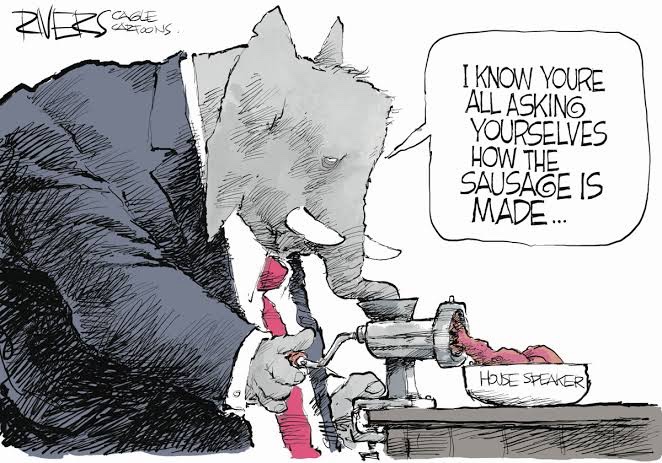
And that’s where the contrast becomes glaring when you look at modern Republican governance, especially under Donald Trump. A huge amount of the damage people associate with Trump didn’t even come from legislation. It came from executive orders, unilateral decisions, regulatory destruction, and a political party that increasingly abandoned the idea of being a legislative body and instead became a cheering section. Congress is supposed to debate policy, shape legislation, provide oversight, and act as a co-equal branch of government. Instead, large chunks of the GOP behaved like their primary responsibility was protecting one man politically at all costs.
That’s the fundamental difference people miss. Democrats often move slowly because they tend to work through coalitions, committees, public debate, and negotiation with legislatures. It can be frustratingly slow. Sometimes painfully slow. But that’s because they’re usually trying to get buy-in from multiple groups and operate within institutional frameworks.
Republicans in many states increasingly operate under a “we have power, so we do it now” philosophy.
Look at California. Voters wanted independent redistricting commissions to reduce partisan gerrymandering, so the issue was put before the public and passed democratically through ballot initiatives. Virginia moved in a similar direction through reforms supported by voters. Whether someone agrees with every outcome or not, the process involved public participation and voter approval.
Then you look at states like Georgia, Alabama, Florida, and Texas where legislatures often ram through heavily partisan district maps designed to predetermine outcomes before a single vote is cast. Courts object, legislatures ignore them, and somehow the conversation always circles back to “election integrity” while districts are drawn like someone spilled spaghetti across a map.
And then comes the irony of all ironies: the same people who scream the loudest about “freedom” and “small government” are often the quickest to centralize power when it benefits them politically. They override local governments, punish cities that disagree with state leadership, remove elected officials they don’t like, and pass laws specifically designed to weaken opposition voting blocs. That’s not grassroots democracy. That’s top-down power projection.
Democracy is supposed to involve friction. It’s supposed to involve arguments, debate, compromise, and sometimes painfully incremental progress. The fact that Democrats often need consensus to get things done is treated as weakness, while Republicans bulldozing policies through with brute-force majorities is somehow framed as strength.
But there’s a reason one approach feels slower. Building things takes time. Maintaining institutions takes effort. Governing responsibly requires cooperation.
Breaking things is easy.
You can wreck decades of policy with a signature on an executive order. You can gut agencies, undermine public trust, slash regulations, and inflame division almost overnight. Destruction is fast. Construction is slow.
So no, politicians do not operate in isolation. The mayor who succeeds usually had a council working with them. The president who passes landmark legislation usually had congressional support. The governors who accomplish lasting reforms usually built coalitions.
But when one party increasingly treats compromise as betrayal and governance as domination, you stop getting democratic cooperation and start getting political strong-arming masquerading as leadership.
And that distinction matters more now than ever.

