Dwain Northey (Gen X)
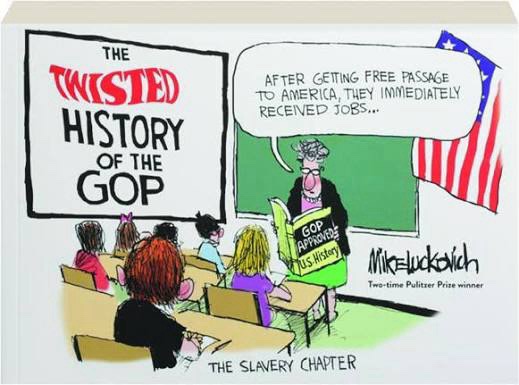
The history of the Republican Party is one of the strangest political evolutions in American history because the party that began as the party of union, federal power, and moral responsibility has, in many ways, transformed into something even its greatest Republican presidents would barely recognize. If you dropped Abraham Lincoln or Theodore Roosevelt into today’s political climate, modern Republicans would probably accuse both men of being dangerous radicals.
The Republican Party was born in the 1850s out of opposition to the expansion of slavery. Lincoln’s central mission was preserving the Union. That was his obsession, his defining cause. But unlike many politicians of his time, Lincoln’s view of the Union was inseparable from a basic belief in human dignity. He believed slavery was morally wrong. He believed people should not be property. He believed labor had value beyond the profit it generated for wealthy men. His Republican Party was not anti-government. In fact, it believed government had a responsibility to build the nation through infrastructure, industry, railroads, education, and national unity.
Lincoln’s Republicans were nationalists in the truest sense. They believed the federal government should actively shape the country. Today’s cries that “government is the problem” would have sounded bizarre to the party that literally fought a civil war to preserve federal authority.
But after Lincoln’s assassination, the party began drifting toward the interests of industrial capital. America exploded economically during the Gilded Age, and with that explosion came men like John D. Rockefeller and Andrew Carnegie. Industry created immense wealth, but also immense corruption. Railroads, oil monopolies, steel empires, and banking interests began exerting enormous control over American politics. Republicans increasingly became associated not with protecting workers or defending the public good, but with protecting commerce and industrial expansion at nearly any cost.
Money had always mattered in politics. But during the Gilded Age, money stopped merely influencing politics and began dominating it outright.
Workers were crushed under brutal labor conditions. Child labor was rampant. Monopolies strangled competition. Political machines sold influence openly. The federal government often acted less like a protector of the people and more like private security for industrial titans.
And then came Theodore Roosevelt.
Roosevelt was one of history’s great contradictions. He was born wealthy, educated among elites, and came from privilege most Americans could barely imagine. Yet he developed a worldview that wealth carried obligation. Much of that came from his father, whom Roosevelt idolized. He believed power demanded responsibility. To Roosevelt, being rich was not permission to exploit society; it was a duty to contribute to it.
The Republican establishment never fully trusted him.
As governor of New York, Roosevelt became a nightmare for entrenched corporate interests because he actually believed government should regulate abuse. Party bosses hated his independence. The old Republican machine tried to sideline him by pushing him onto the vice presidential ticket under William McKinley. The vice presidency at the time was largely ceremonial political exile. The calculation was simple: put Roosevelt somewhere harmless where he could stop causing trouble.
Then history intervened.
McKinley was assassinated in 1901, and suddenly Roosevelt became president.
Corporate America panicked.
Roosevelt immediately began using federal power aggressively. He attacked monopolies with antitrust lawsuits. He confronted railroad barons. He pushed consumer protections, food safety regulations, environmental conservation, and labor reforms. He wasn’t anti-capitalist. Far from it. Roosevelt believed capitalism was necessary and productive. But he also believed unchecked corporate power would eventually destroy democracy itself.
That is the key distinction.
Roosevelt believed corporations existed within the nation. Modern corporate politics often behaves as though the nation exists to serve corporations.
Roosevelt’s “Square Deal” philosophy was built around balance: labor, business, and the public all had interests government was obligated to protect. To modern hyper-corporate politics, that philosophy almost sounds socialist, which would have amused Roosevelt enormously considering he was a fiercely patriotic capitalist.
After leaving office, Roosevelt grew increasingly disgusted with the Republican establishment. He believed the party was abandoning reform and surrendering completely to corporate conservatism. When he attempted to return to power in 1912, the Republican machine blocked him in favor of William Howard Taft. Roosevelt responded by launching the Progressive Party — the famous Bull Moose Party.
That split the Republican vote and helped elect Woodrow Wilson.
But the important part historically is this: Roosevelt’s movement showed there was already a civil war inside Republicanism more than a century ago. One side believed government should restrain concentrated wealth for the good of society. The other believed protecting capital itself was the highest political priority.
That fight never really ended.
Over the decades, the corporate side largely won.
The Republican Party of Dwight D. Eisenhower still retained some remnants of Roosevelt-style governance. Eisenhower expanded infrastructure massively with the interstate highway system and accepted much of the New Deal framework. Even Richard Nixon created the EPA and supported forms of federal regulation that would be denounced as tyranny today.
But beginning in the late twentieth century, especially after Ronald Reagan, the Republican Party increasingly fused free-market absolutism with cultural grievance politics. Government became the enemy unless it benefited military expansion or corporate interests. Regulations became evil. Labor unions became targets. Taxes on wealth became treated almost as moral crimes.
And eventually that evolution culminated in the modern Trump-era Republican Party.
The irony is staggering.
Lincoln believed government existed to preserve democracy and human liberty. Theodore Roosevelt believed government existed to prevent wealth from consuming democracy entirely. Both men believed concentrated power was dangerous whether it came from slaveholders or monopolists.
Today’s Republican Party often treats concentrated wealth as virtue itself.
The modern doctrine that “corporations are people” would have horrified both Lincoln and Roosevelt, albeit for different reasons. Lincoln believed labor was superior to capital because labor created capital in the first place. Roosevelt believed corporations were tools, not sovereign entities entitled to dominate public life.
Neither man would likely survive politically inside the current Republican coalition. Roosevelt would be attacked as anti-business. Lincoln would probably be called a federal tyrant. Both would be accused of believing government has too much responsibility toward ordinary people.
And that may be the clearest evidence of how dramatically the Republican Party has changed.
The party that once fought a civil war to preserve the Union and later battled monopolies to preserve democracy increasingly defines freedom almost entirely through the lens of wealth, deregulation, and corporate influence. What began as a movement centered on national purpose and civic responsibility has, over generations, become a party where money is often treated not simply as influence, but as the measure of virtue itself.
Lincoln and Theodore Roosevelt believed America was a nation first and an economy second.
Modern Republicanism often sounds like it believes the exact opposite.

