Dwain Northey (Gen X)
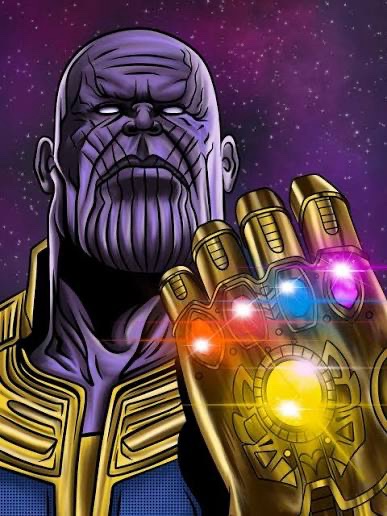
There’s something deeply disturbing about the modern oligarch mindset, and what makes it more unsettling is how casually it hides behind the language of “efficiency,” “innovation,” and “saving humanity.” They stand on stages beneath giant LED screens talking about overpopulation, resource scarcity, climate collapse, automation, and “the burden of unsustainable consumption,” as if they’re philosopher kings reluctantly tasked with making hard decisions for the good of civilization. But the more you listen, the more it starts sounding less like noble sacrifice and more like a billionaire remix of comic book villain monologues.
It feels as though they watched Avengers: Infinity War and somehow walked away thinking the problem with Thanos wasn’t the genocide part. No, the issue was apparently branding. Maybe the Infinity Gauntlet needed a sleeker logo. Maybe mass elimination needed a TED Talk and a subscription service.
And to be fair, in Thanos’ twisted logic, at least there was a warped consistency. The Mad Titan didn’t say, “Half of all life must go… except me and my yacht collection.” He wasn’t hoarding twelve beachfront compounds while lecturing peasants about carbon footprints. In his own monstrous mind, he believed he was part of the sacrifice. That’s what made the character compelling. Horrifying, yes, but internally consistent.
Today’s oligarch class doesn’t even bother with consistency anymore.
Their philosophy feels far closer to Kingsman: The Secret Service and Richmond Valentine — the billionaire tech visionary who decides the planet would be perfect if only the masses would violently remove themselves while the wealthy retreat to luxury bunkers stocked with wine cellars and private chefs. Samuel L. Jackson’s character wasn’t subtle about it. Humanity was the virus. The elites were the cure. Everybody else? Disposable background noise.
And that fictional satire starts feeling uncomfortable when you look at reality.
Because listen carefully to modern elite panic and you’ll notice something fascinating: the sacrifices are almost never aimed upward.
Regular people are told:
Drive less.
Eat less.
Own less.
Travel less.
Expect less.
Retire later.
Work harder.
Live in smaller spaces.
Compete for dwindling scraps.
Accept automation replacing your job because “the future is inevitable.”
Meanwhile the billionaire class expands into fleets of private jets, megayachts large enough to qualify as small nations, underground compounds in New Zealand, and vanity space programs because apparently Earth is too crowded but Mars somehow has room for a cocktail lounge.
That’s the part that always gives away the game.
The rich endlessly discuss reducing consumption while consuming more resources individually than entire towns. They talk about “shared sacrifice” the way medieval kings probably discussed famine while eating roasted swan under gold chandeliers.
And culturally, something even darker has emerged: the normalization of social fragmentation as entertainment.
Keep everyone angry.
Keep everyone divided.
Keep workers blaming other workers.
Keep the poor fighting the poor.
Keep the middle class terrified of falling downward.
Keep everyone screaming at each other online while wealth quietly consolidates upward at speeds that would make the robber barons of the Gilded Age blush.
Because if people are exhausted fighting culture wars and algorithm-fed outrage battles twenty-four hours a day, they’re not looking too closely at who owns the algorithms, the platforms, the housing, the media pipelines, the pharmaceutical chains, the food distribution systems, or increasingly, the governments themselves.
That’s what makes the comparison to Richmond Valentine feel so eerily appropriate. Not because there’s literally an app making people attack each other, but because outrage itself has become industrialized. Rage is profitable. Fear is profitable. Isolation is profitable. Despair is profitable. Social collapse can be monetized now.
The internet was sold as humanity’s great connector. Instead, huge sections of it became a digital coliseum where ordinary people are encouraged to tear each other apart while advertisers run commercials overhead and tech executives cash stock options.
And through it all, the oligarch class wraps itself in the language of humanitarianism.
“We must save democracy.”
“We must save civilization.”
“We must save the planet.”
“We must prepare for instability.”
But somehow the “saving” always seems to end with them owning more and everyone else owning less.
That’s the real irony. The wealthiest people in history behave as though they are the endangered species. Every policy discussion somehow circles back to protecting capital, stabilizing markets, preserving investor confidence, and ensuring billionaires continue functioning as a permanent aristocracy beyond accountability.
They speak about the public the way ancient nobility once spoke about peasants: necessary when useful, dangerous when organized, expendable when inconvenient.
And maybe that’s why so many people feel this growing unease they can’t quite articulate. It’s not simply wealth inequality. Humanity has always had rich people. It’s the sense that parts of the ruling class no longer see themselves as belonging to the same civilization as everyone else.
Different schools.
Different healthcare.
Different transportation.
Different laws.
Different realities.
Different futures.
Almost like they’ve mentally exited society already and are now managing the rest of us as a containment problem.
That’s why the obsession with bunkers, private security, surveillance systems, AI policing, predictive algorithms, and automated labor feels symbolic. It’s not the behavior of people trying to build a thriving shared future. It’s the behavior of people preparing for siege conditions while still hosting conferences about “global unity.”
And perhaps the darkest comedy in all of this is that history keeps warning them how these stories end.
Extreme inequality eventually destabilizes societies.
Concentrated wealth eventually breeds unrest.
Arrogant ruling classes eventually convince themselves they are untouchable right before discovering they absolutely are not.
Empires collapse when elites stop viewing the public as human beings and start viewing them as variables to manage.
That lesson is older than Rome.
But every generation of oligarchs seems convinced they’ll be the first to outrun history with enough money, enough technology, enough walls, and enough private guards.
Comic book villains always think the same thing right before the third act.

