Dwain Northey (Gen X)
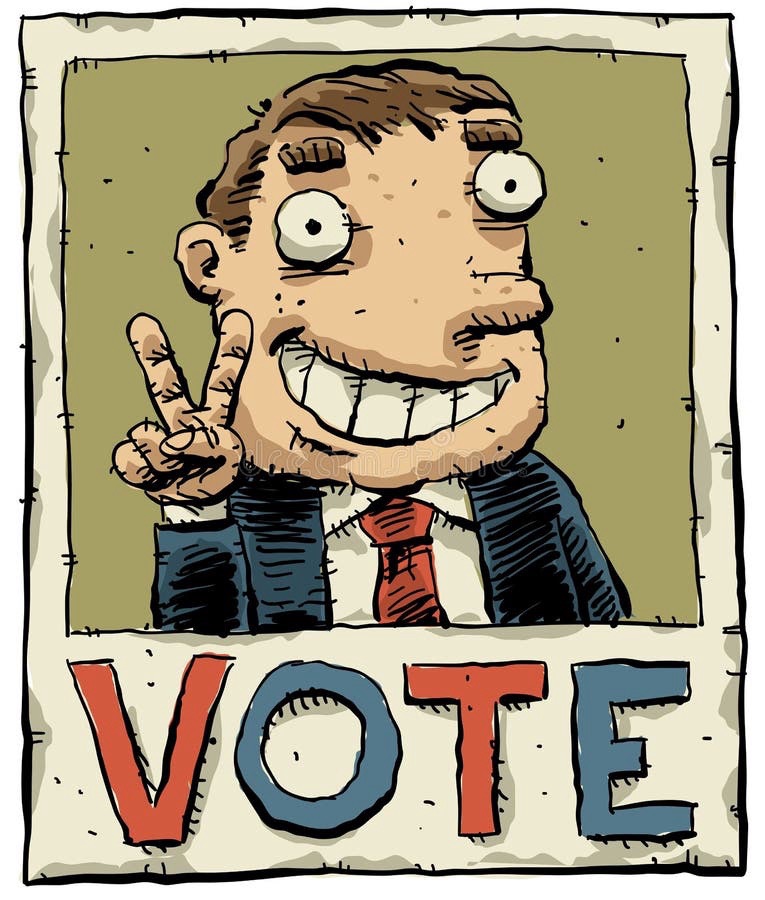
Imagine a fictional election cycle.
A candidate runs for office with campaign signs that are simple and direct. Some feature a bright red background with white lettering. Others use a white background with red lettering. Every sign carries the same message:
Military Veteran. Supports a Balanced Budget. Supports Law Enforcement.
That’s it.
No party label. No donkey. No elephant. No mention of Democrat or Republican. Just three statements describing the candidate and his positions.
Every statement is true.
The candidate served in the military. He genuinely supports balanced budgets. He supports police departments and public safety. There are no false claims, no misleading credentials, and no hidden meanings.
Election Day arrives, and he wins.
Then comes the surprise.
The candidate is a Democrat.
Almost immediately, some voters begin claiming they were deceived. They say the candidate was dishonest. They argue that he intentionally misled the public.
But what exactly was the lie?
The signs never claimed he was a Republican.
The signs never claimed he was a conservative.
The signs never mentioned a party affiliation at all.
What happened is not that voters were deceived. What happened is that voters made assumptions.
The red-and-white color scheme probably helped those assumptions along. For years, Americans have been conditioned to associate red with Republicans and blue with Democrats. Many voters would see red campaign signs talking about military service, balanced budgets, and support for law enforcement and automatically conclude they knew what party the candidate belonged to.
The candidate never said it.
The voters said it to themselves.
That distinction matters.
Over the last several decades, American politics has become increasingly tribal. Certain values and issues have been branded so successfully by one party that many people forget those positions are not exclusive to that party.
Military service is assumed to be Republican.
Support for law enforcement is assumed to be Republican.
Balanced budgets are assumed to be Republican.
Yet none of those positions belong exclusively to Republicans.
There are Democrats who have served in the military. There are Democrats who support police departments. There are Democrats who believe government should live within its means.
In fact, the balanced budget issue may be the most revealing assumption of all.
Republicans have spent decades marketing themselves as the party of fiscal responsibility. The phrase “balanced budget” has become part of the brand. But branding and reality are not always the same thing.
If voters looked only at campaign rhetoric, they might conclude Republicans are the only people concerned about deficits and government debt. If they looked at the historical record, they might discover a far more complicated story.
Recent history is filled with examples of Republican politicians campaigning on fiscal restraint while supporting tax cuts, spending increases, or both. At the same time, several Democratic administrations have presided over periods of deficit reduction and, in some cases, budget surpluses.
That does not mean every Democrat is fiscally responsible or every Republican is fiscally reckless. Reality is rarely that simple. But it does challenge the assumption that concern for balanced budgets belongs to only one political party.
The fictional candidate’s sign did not say, “I support a balanced budget because I’m a Republican.”
It simply said he supports a balanced budget.
The voters supplied the rest of the sentence.
What makes this thought experiment interesting is the reaction after the election. Rather than questioning their assumptions, many people would likely direct their anger at the candidate. They would claim the absence of a party label was deceptive.
But is a candidate responsible for assumptions voters make on their own?
If a restaurant advertises that it serves steak, customers cannot later complain that nobody informed them of the owner’s political affiliation. The information presented was accurate. The assumptions belonged to the customer.
The same principle applies here.
The candidate never lied.
He never hid his military service.
He never hid his support for law enforcement.
He never hid his support for balanced budgets.
The only thing he didn’t provide was a team jersey.
And perhaps that is why the hypothetical causes such discomfort.
Many Americans claim they vote based on policies, qualifications, and ideas. Yet this scenario suggests that a surprising number of voters may be relying on political branding instead. They see a color. They hear a familiar phrase. They recognize a stereotype. Then they assign a party affiliation before ever examining the candidate himself.
When the election is over and they discover the candidate is a Democrat, they feel betrayed—not because he lied, but because their assumptions turned out to be wrong.
The most revealing question isn’t whether the candidate was deceptive.
The most revealing question is why so many people automatically assumed that military service, support for public safety, and concern about balanced budgets could only belong to one political party.
The candidate never lied.
The assumptions did all the work.
And in today’s political climate, that may be the biggest truth of all.

