Dwain Northey (Gen X)
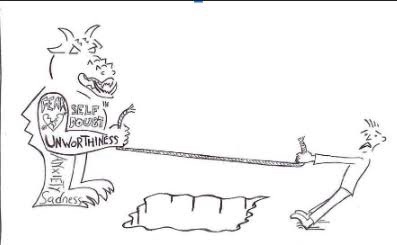
The Things We Carry That Were Never Ours to Carry
We live in a world that seems determined to keep us stressed twenty-four hours a day, seven days a week. The news never stops. Social media never stops. Political arguments never stop. Economic worries never stop. There is always another crisis, another outrage, another prediction of doom waiting for us the moment we pick up our phones.
The problem is that our minds and bodies were never designed to live under a constant state of alarm.
Stress is not just an emotional burden. It raises blood pressure. It disrupts sleep. It affects digestion. It contributes to anxiety, depression, headaches, and a long list of other health problems. Yet many of us spend enormous amounts of energy worrying about things that are completely beyond our ability to influence.
At some point, for the sake of our own health, we have to become selective about what deserves our emotional investment.
Over the years, I have developed two simple questions that help me determine whether something is worth carrying around in my head.
The first is: Is there any action I can take right now that will make this situation better or change the outcome?
If the answer is yes, then perhaps the stress is serving a purpose. Maybe there is a phone call to make, a problem to solve, a conversation to have, or a task to complete. Action can be productive.
But if the answer is no, then what exactly is the stress accomplishing?
If I cannot fix the problem, influence the outcome, or take meaningful action, then all I am doing is sacrificing my own peace of mind. I am paying an emotional price for something over which I have no control.
The second question is even simpler:
If this doesn’t turn out the way I hope, will my day be different tomorrow?
Sometimes the answer is yes. Some situations genuinely matter. They affect our families, our livelihoods, our health, or our futures.
But many things fail this test.
Take a child’s music recital.
Of course you want them to do well. Of course you want them to enjoy themselves and feel successful. But if they miss a note, forget a line, or have a rough performance, what happens tomorrow?
Nothing catastrophic.
They learn. They grow. They gain experience. They discover that mistakes are survivable.
In fact, those moments are often more valuable than flawless performances. The recital belongs to them, not to the parent sitting nervously in the audience treating every note like a life-or-death event.
The same principle applies to countless frustrations we encounter every day.
A stranger cuts you off in traffic.
Someone honks.
Someone flips you off.
Someone is rude.
So what?
Why should a ten-second interaction with a person you will likely never see again have the power to ruin an entire day?
That person is carrying their own baggage, their own frustrations, their own problems. Their behavior belongs to them. It doesn’t have to become yours.
Yet so often we allow these brief encounters to occupy hours of mental real estate. We replay them in our minds, relive them, and give them importance they never deserved.
Perhaps the greatest source of stress today comes from events happening far beyond our immediate lives.
Wars.
Political conflicts.
Economic uncertainty.
Global crises.
These are real issues, and it is natural to care about them. Being informed and engaged is part of being a responsible citizen.
If attending a protest helps you feel heard, go.
If writing letters to elected officials helps advance a cause you believe in, do it.
If volunteering, donating, or organizing creates positive change, participate.
But it is also important to recognize the limits of your individual control.
You can contribute your voice.
You can contribute your effort.
You can contribute your vote.
What you cannot do is personally carry the weight of the entire world on your shoulders.
Many people spend hours every day consuming bad news and absorbing anxiety from events they have no realistic ability to influence. They mistake worrying for action. They mistake emotional suffering for engagement.
But stress itself is not a contribution.
Stress is not a solution.
Stress is not a strategy.
Holding onto that anxiety day after day does not change the outcome of a war, an election, an economic trend, or an international dispute. It only changes what is happening inside your own body.
It raises your blood pressure.
It steals your sleep.
It drains your energy.
It shortens your patience with the people who actually matter in your life.
There is a difference between caring and carrying.
Caring means paying attention, staying informed, and acting where you can.
Carrying means hauling around emotional weight that was never yours to bear.
The older I get, the more I realize that peace of mind is not achieved by pretending problems don’t exist. It comes from honestly recognizing which problems belong to us and which do not.
Not every battle requires our participation.
Not every insult requires a response.
Not every setback requires panic.
Not every crisis requires us to sacrifice our own well-being.
Sometimes the healthiest thing we can say is, “I wish this were different, but I cannot fix it.”
And once we accept that truth, we can put down burdens that were never helping anyone in the first place.
In a world constantly demanding our attention, our outrage, and our anxiety, perhaps one of the most important forms of self-care is learning to reserve our stress for the things we can actually influence and the people we can actually help.
Everything else is just weight we were never meant to carry.

