Dwain Northey (Gen X)
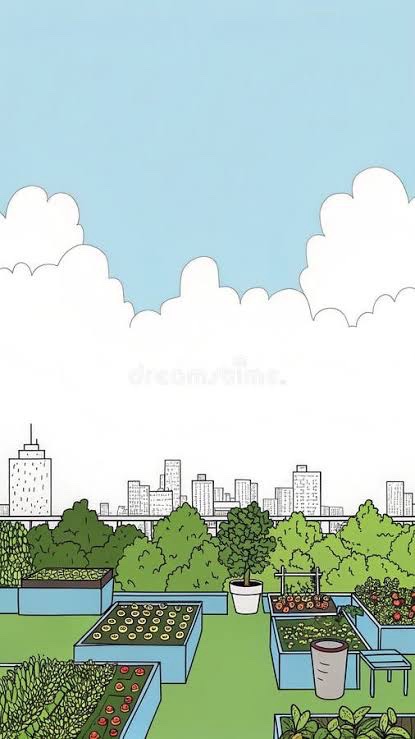
Growing the Future: How Community Gardens and Local Farming Can Transform a Solarpunk Society
When people imagine the future, they often picture towering skyscrapers, flying vehicles, and increasingly advanced technology. The solarpunk vision offers a different possibility. Rather than seeing humanity separated from nature by concrete, steel, and endless consumption, solarpunk imagines a future where technology and ecology work together. It is a future filled with renewable energy, green architecture, walkable communities, and an economy that values sustainability as much as growth. One of the most powerful and achievable steps toward that future may be something surprisingly simple: growing food close to where people live.
Community gardens, urban farms, rooftop agriculture, and neighborhood food forests have the potential to transform communities in ways that go far beyond providing fresh vegetables. They can reshape how people interact with one another, strengthen local economies, improve environmental health, and reconnect people to the natural systems that sustain life.
In many modern cities, food often travels hundreds or even thousands of miles before reaching a grocery store shelf. This transportation requires fuel, refrigeration, packaging, and extensive infrastructure, all of which contribute to pollution and waste. A solarpunk future seeks to shorten these supply chains. Local farming allows food to be grown near the people who consume it, reducing transportation emissions while increasing resilience against disruptions caused by climate change, economic instability, or global crises.
Community gardens represent perhaps the most accessible form of local agriculture. An empty lot that once collected trash can become a vibrant space filled with vegetables, fruit trees, pollinator plants, and people working together. These gardens transform neglected land into productive ecosystems. Bees, butterflies, and birds return. Soil health improves. Rainwater is absorbed rather than running off into storm drains. The garden becomes not only a source of food but also a source of ecological restoration.
The social benefits can be even more significant. Modern society often isolates people from their neighbors. Many individuals can live on the same street for years without ever learning each other’s names. Community gardens create opportunities for cooperation and shared purpose. People from different backgrounds work side by side planting, watering, harvesting, and learning from one another. The garden becomes a gathering place where knowledge is exchanged across generations. Elder gardeners share decades of experience while younger participants bring new ideas and energy.
A solarpunk future also embraces creativity in food production. Vertical gardens can transform the walls of apartment buildings into living ecosystems. Rooftops can host greenhouses powered by solar energy. Public parks can incorporate edible landscapes filled with fruit and nut trees instead of purely ornamental plants. Schools can maintain educational gardens where children learn biology, ecology, and nutrition through direct experience. Even small spaces such as balconies and patios can contribute to local food production through container gardening and hydroponic systems.
Food forests represent another exciting possibility. Unlike traditional agriculture, food forests mimic the structure of natural ecosystems. Layers of trees, shrubs, vines, herbs, and ground-cover plants work together to create self-sustaining environments that require less maintenance over time. A neighborhood food forest can provide fruit, nuts, berries, herbs, and habitat for wildlife while simultaneously cooling urban areas and capturing carbon from the atmosphere. Such spaces blur the line between park and farm, creating beautiful landscapes that nourish both people and ecosystems.
The economic impacts of localized agriculture are equally important. Money spent at local farms and community-supported agriculture programs tends to remain within the community rather than flowing to distant corporations. Small-scale agriculture can create local jobs while encouraging entrepreneurship. Neighborhood markets, cooperative food networks, and community kitchens can all emerge around local food production. This creates a more resilient economy that depends less on distant supply chains and more on local relationships.
Perhaps most importantly, community gardening and local farming help cultivate a different mindset. They remind people that food does not originate on grocery store shelves. They reconnect communities to the seasons, the weather, the soil, and the countless living systems that make human life possible. In a world increasingly dominated by screens and digital experiences, gardening offers something tangible and grounding. It teaches patience, stewardship, and an appreciation for long-term thinking.
The solarpunk future is not merely about replacing fossil fuels with solar panels. It is about reimagining humanity’s relationship with the natural world. Community gardens and local farming embody this philosophy perfectly. They combine practical sustainability with social connection, environmental restoration, and economic resilience. They transform vacant spaces into living landscapes and strangers into neighbors.
In the end, the path toward a greener future may not begin with some revolutionary technology. It may begin with a seed planted in a shared garden, cared for by a community that understands that the future grows best when people grow it together.

