Dwain Northey (Gen X)
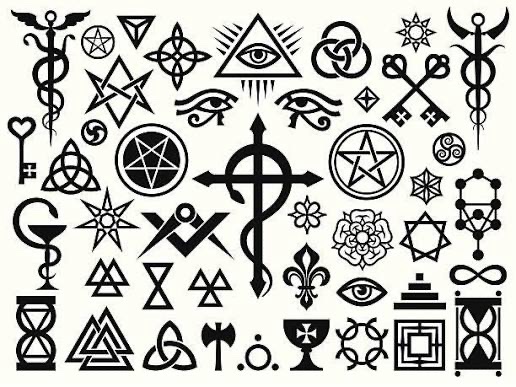
Symbols, History, and the Meanings We Inherit
One of the strangest things about being human is our obsession with symbols. We carve them into stone, paint them on cave walls, stitch them onto flags, tattoo them onto our skin, and spend centuries arguing about what they mean. Yet symbols themselves are neither good nor evil. They are marks, shapes, and patterns. The meaning comes later, assigned by people, cultures, religions, governments, and sometimes by history itself.
Walk through the ruins of an ancient temple anywhere in the world and you’ll find symbols whose original meanings have been lost to time. Some represented fertility, some prosperity, some the sun, some the cycle of life and death. Ancient people used symbols to explain a world they didn’t fully understand. They weren’t creating political slogans. They weren’t designing logos for future hate movements. They were trying to make sense of existence.
The problem is that symbols don’t stay frozen in time.
Perhaps the most famous example is the swastika. Long before the twentieth century, it appeared in Hinduism, Buddhism, Jainism, and numerous ancient cultures across Europe and Asia. For thousands of years it represented good fortune, spirituality, eternity, or the movement of the sun. Then the Nazi Party appropriated it and transformed one of humanity’s oldest symbols into one of its most hated. Today, for much of the Western world, the symbol is inseparable from genocide and fascism.
But history is full of similar examples. Runes, eagles, sun wheels, and various geometric patterns existed for centuries before extremist groups adopted them. A symbol can spend two thousand years representing one thing and fifty years representing something else, yet the more recent meaning often overwhelms the older one in public memory.
This creates a difficult question: how much intent matters?
Suppose someone has a symbol tattooed on their chest. Maybe they got it when they were eighteen. Maybe they thought it looked interesting. Maybe it came from a video game, a history book, a motorcycle club, or a vague fascination with ancient cultures. Maybe they never researched its origins. Maybe they only learned years later that someone else had attached a darker meaning to it.
Can we automatically convict them of beliefs they may not hold?
Intent matters. Context matters. Knowledge matters.
That doesn’t mean symbols are harmless. A person displaying a symbol associated with hate should understand why others react strongly to it. Historical trauma is real. People don’t experience symbols in a vacuum. They experience them through the lens of history and memory.
At the same time, assuming we know someone’s entire worldview because of a single image can be dangerous. Human beings are messy. Ignorance exists. Ambiguity exists. People make mistakes. Meanings change across cultures and generations.
Dan Brown explored this idea in The Da Vinci Code and his other writings about symbolism. Much of the mystery wasn’t about the symbols themselves but about how people interpreted them. The same symbol could be viewed as sacred by one person, sinister by another, and completely meaningless by a third. The conflict often came not from the mark itself but from the stories attached to it.
Perhaps that’s the real lesson of symbols.
Ancient civilizations created many of these images as representations of nature, spirituality, mathematics, astronomy, or human experience. Most were never intended to divide people. They certainly weren’t designed to become banners for modern political movements thousands of years later.
History, however, has a habit of rewriting meanings.
A symbol may begin as a prayer, become a decoration, evolve into a political emblem, and eventually become a warning. None of those meanings completely erase the others, but they do accumulate, layer upon layer, until interpretation becomes complicated.
Maybe the challenge is learning to hold two truths at once. A symbol can have ancient origins that were peaceful and meaningful. It can also carry modern associations that are painful and destructive. Recognizing one truth doesn’t require denying the other.
The ruins of the ancient world remind us that symbols often outlive the people who created them. Long after empires fall and languages disappear, the marks remain carved in stone. What changes is the story we tell about them. Sometimes that story honors the original meaning. Sometimes it distorts it. And sometimes it tells us more about ourselves than it does about the people who first carved the symbol into the rock thousands of years ago.

