Dwain Northey (Gen X)
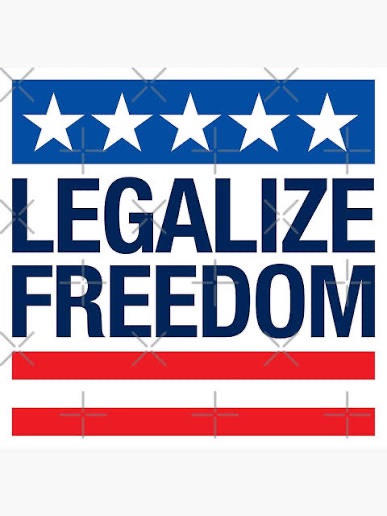
Legalize Freedom
I was driving the other day and passed one of those giant billboards planted squarely in Trump Country.
The message was simple:
“Legalize Freedom.”
Now, maybe it’s because I’m Gen X and my brain immediately goes to the sarcastic setting before it reaches neutral, but my first thought wasn’t agreement. It was a question.
Freedom for who?
Because that’s become the real question in modern America.
Everybody loves freedom when they’re talking about themselves.
Freedom to say what they want.
Freedom to own what they want.
Freedom to worship how they want.
Freedom to live how they want.
No argument there. That’s the whole point of freedom.
But somewhere along the way, a lot of people stopped at that sentence and never read the next chapter.
Because the moment someone else’s freedom enters the conversation, suddenly there are conditions.
Freedom for them, but not for those people.
Freedom for my religion, but not yours.
Freedom for my speech, but not your speech.
Freedom for my lifestyle, but not your lifestyle.
Freedom for my opinion, but if you disagree with me you’re a communist, socialist, Marxist, groomer, traitor, globalist, or whatever insult happens to be trending this week.
The loudest self-proclaimed defenders of freedom often seem remarkably uncomfortable with the idea that freedom applies equally.
What they really mean is freedom from consequences, freedom from criticism, and freedom to remain the dominant voice in the room.
That’s not freedom.
That’s privilege wearing a freedom costume.
I keep hearing people scream about freedom while simultaneously demanding book bans, restricting what teachers can discuss, deciding who can marry whom, determining which religions belong in public spaces, regulating medical decisions, and telling private companies what speech they should permit.
Apparently freedom is sacred right up until somebody uses it differently than you would.
The irony is almost impressive.
America’s founders argued, fought, and eventually built a system around the radical notion that people would disagree. Freedom wasn’t designed for unanimous opinions. Freedom is easy when everyone agrees with you.
The test comes when they don’t.
The real measure of whether someone believes in freedom isn’t how they treat people who think exactly like them.
It’s how they treat people they can’t stand.
Do they still defend their rights?
Do they still support their ability to speak?
Do they still recognize their humanity?
Or do they immediately try to shove them outside the circle?
That’s the part that keeps bothering me.
Because increasingly, “freedom” has become less about individual liberty and more about tribal membership.
If you’re inside the tribe, you’re free.
If you’re outside the tribe, you’re a threat.
And once you’re labeled a threat, suddenly all those lofty principles become negotiable.
So when I drove past that billboard proclaiming “Legalize Freedom,” I found myself agreeing with it.
Absolutely.
Let’s legalize freedom.
For everyone.
Not just Christians. Not just atheists.
Not just conservatives. Not just liberals.
Not just white people. Not just minorities.
Not just men. Not just women.
Not just people we agree with.
Everyone.
Because freedom that only applies to people who think like you isn’t freedom at all.
It’s just another form of control with better marketing.

