Dwain Northey (Gen X)
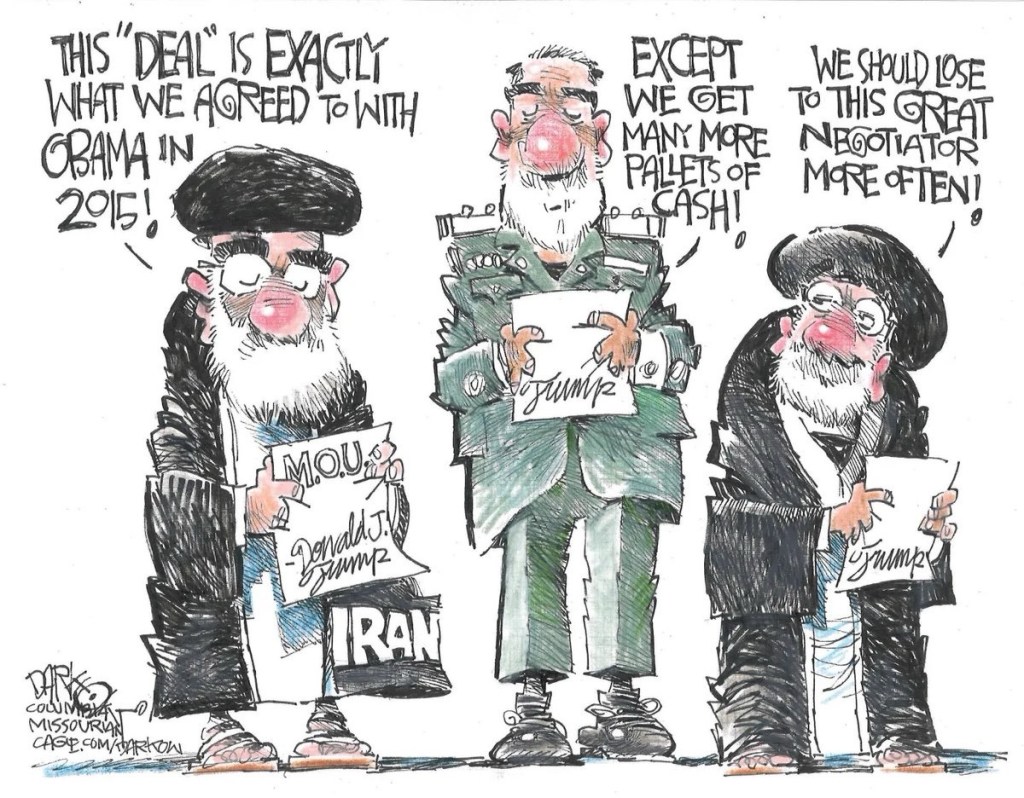
The Art of the Deal, the Memorandum of Understanding, and Other Fairy Tales
Donald Trump loves to tell us he’s a master negotiator. The Art of the Deal. The ultimate dealmaker. The guy who can walk into a room, stare down world leaders, and emerge victorious carrying a signed agreement and a photo op.
The problem is that many of these so-called deals increasingly resemble something less like diplomacy and more like an abusive husband standing in the kitchen saying, “Look, sweetheart, I won’t punch you in the face this week if you just remember to do the dishes.”
That’s not a deal.
That’s extortion with better branding.
The latest Memorandum of Understanding, or MOU, being hailed as some great diplomatic achievement appears to follow the same basic formula. We agree not to do something harmful that we shouldn’t be doing in the first place, and in return the other party agrees to make concessions. Then everyone gathers around and applauds because civilization has apparently reached the point where basic decency is now considered a negotiating tactic.
Imagine your neighbor standing on your lawn holding a gas can.
“Nice house you’ve got there. Sign this memorandum and I probably won’t set it on fire.”
You wouldn’t call that a successful negotiation. You’d call the police.
Yet somehow when it happens between governments, corporations, or powerful individuals, we’re supposed to marvel at the strategic genius involved.
Of course, this approach shouldn’t surprise anyone familiar with Trump’s business history. Contractors have been telling versions of the same story for decades.
“Do the work.”
“Will I get paid?”
“Maybe.”
“Do you have a contract?”
“Sure.”
“Will you honor it?”
“We’ll see.”
For countless small businesses, plumbers, painters, electricians, and construction companies, that was reportedly the Trump version of an MOU. You perform the work, then spend months or years fighting to get compensated. If you’re lucky, you settle for pennies on the dollar because you can’t afford an army of lawyers.
That’s not the Art of the Deal.
That’s the Art of Being Bigger Than the Other Guy.
And now we see the same playbook elevated to international politics. Threaten tariffs. Threaten sanctions. Threaten retaliation. Threaten economic pain. Then offer to temporarily stop threatening people if they give you something in return.
The headlines call it leverage.
Most normal people would call it bullying.
The truly absurd part is that supporters often point to the existence of the agreement itself as proof of success. Never mind what’s actually in it. Never mind whether it solves anything. Never mind whether both parties walk away equally satisfied.
There’s paper.
There are signatures.
There are cameras.
Mission accomplished.
It’s the diplomatic equivalent of putting a “Mission Accomplished” banner over a leaky roof.
The older I get, the more I realize that genuine negotiation usually involves compromise. Both sides give a little. Both sides get a little. Nobody gets everything they want.
But that’s not flashy enough for reality television politics.
Reality television requires winners and losers.
Heroes and villains.
Deals that can be marketed like steak knives at two in the morning.
So every MOU becomes the greatest agreement ever signed. Every handshake becomes a historic victory. Every temporary ceasefire in hostilities becomes evidence of unparalleled genius.
And yet somehow we’re constantly back at the negotiating table, facing the same problems that were supposedly solved by the last historic agreement.
Maybe that’s because a real deal creates stability.
A shakedown creates compliance—at least until the other party gets tired of being shaken down.
The Art of the Deal was always sold as a blueprint for success. Increasingly it looks more like a manual for turning every relationship into a protection racket.
“Nice economy you’ve got there.”
“Nice trade agreement.”
“Nice alliance.”
“Be a shame if something happened to it.”
And somehow we’re supposed to applaud the guy who threatened the damage when he agrees not to cause it for another six months.

