Dwain Northey (Gen X)
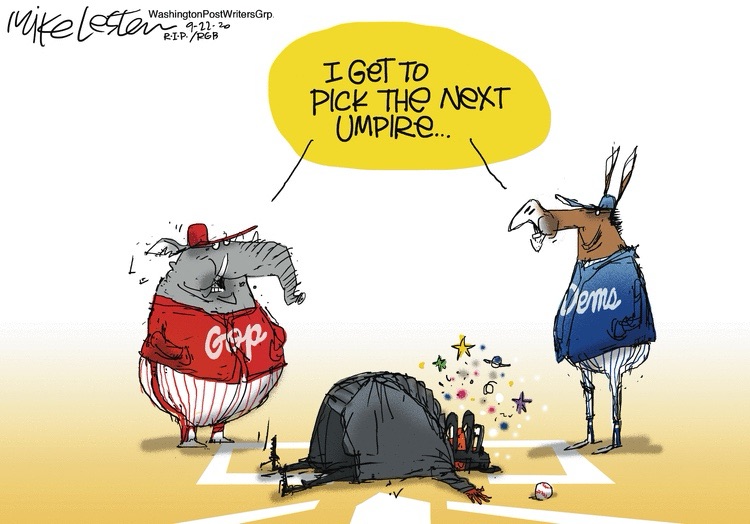
Maybe It’s Time to Reimagine Elections
Every election cycle, we’re told that America has the greatest democracy in the world. Then we spend the next two years watching candidates raise billions of dollars, flood our screens with attack ads, and campaign nonstop for offices they already hold.
At some point, you have to ask whether we’re running a democracy or a never-ending reality show.
I’m not necessarily arguing that we should scrap everything and adopt a parliamentary system. In a country with multiple viable parties and coalition governments, there are certainly things worth admiring. More viewpoints get represented. More parties get a seat at the table. But that’s not the country we have. We have a two-party system that behaves like two rival sports franchises, and our election system should at least acknowledge reality.
What we have now is madness.
Take California’s jungle primary. The idea was to encourage moderation and give voters more choices. Instead, you sometimes end up with two candidates from the same party advancing while millions of voters feel like they have no meaningful option in the general election. It solves some problems and creates others.
Ranked-choice voting, however, is something that deserves serious consideration. Instead of forcing voters into a binary choice between Candidate A and Candidate B, voters can rank their preferences. If their first choice doesn’t have enough support, their vote isn’t simply thrown away. It moves to their next preference. The result is often candidates who appeal to a broader range of voters instead of just the loudest faction of their party.
Then there’s the giant elephant sitting in every campaign headquarters: money.
No matter which party you support, it is difficult to argue that the current system makes any sense. Candidates spend staggering amounts of time fundraising. Members of Congress practically start dialing for dollars the day after they’re sworn into office. We elect people to write legislation, oversee government agencies, and solve problems. Instead, many spend a significant portion of their careers chasing campaign contributions.
Imagine hiring a plumber to fix your pipes and then discovering he spends half his workday asking for tips so he can afford to come back next year.
That’s essentially our system.
Campaigns should be publicly funded or funded through small individual donations with strict limits. Corporate money, Super PAC money, dark money, billionaire money—whatever label we want to put on it—has become so intertwined with politics that it’s difficult for ordinary citizens to believe their voices carry the same weight.
And while we’re at it, let’s shorten campaign seasons.
Most modern democracies somehow manage to conduct elections in a matter of weeks or months. In America, presidential campaigns feel like they last longer than some wars.
Limit federal campaigns to 180 days. Six months. That’s it.
If you can’t explain your vision for the country in half a year, maybe the problem isn’t the campaign calendar.
Think about how much governing could actually get done if legislators weren’t permanently running for reelection. Members of the House begin fundraising almost immediately after taking office because the next election is always around the corner. Senators get a little more breathing room, but even they spend years positioning themselves for the next campaign.
We’ve created incentives that reward fundraising, outrage, and constant self-promotion. Then we act surprised when politics becomes a circus.
Maybe democracy isn’t supposed to feel like a never-ending marketing campaign.
Maybe elected officials should spend more time governing than fundraising.
Maybe voters should have more choices than two candidates screaming at each other through television ads.
And maybe, just maybe, a healthy democracy is one where ideas compete more than bank accounts.
That’s not a radical idea. It’s just a recognition that a system designed for the 18th century might need a tune-up before we head deeper into the 21st.
Because if Congress spends all its time campaigning, who’s actually doing the job we hired them to do?

