Dwain Northey (Gen X
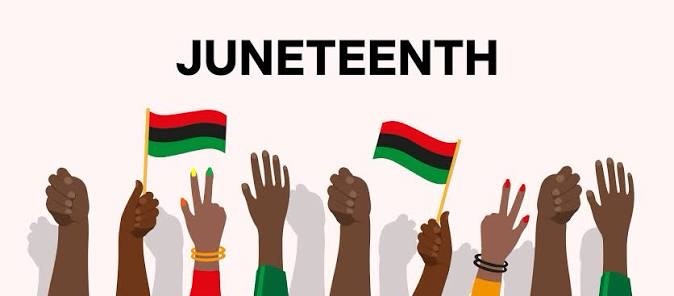
Juneteenth and the History We Didn’t Learn
Juneteenth is one of those holidays that perfectly illustrates America’s complicated relationship with its own history.
For those who somehow made it through decades of American education without hearing about it—like I did—Juneteenth commemorates June 19, 1865, the day Union troops arrived in Galveston, Texas, and informed enslaved people that they were free. The Civil War was effectively over. The Confederacy had collapsed. More importantly, Abraham Lincoln had issued the Emancipation Proclamation two and a half years earlier.
Two and a half years.
Think about that for a moment.
The people who were still being held in bondage in Texas in June of 1865 had technically been free since January of 1863. Somewhere along the line, slave owners either ignored the law, hid the truth, or simply continued the practice because there was nobody around with enough authority to stop them.
The cruel irony is that some of those last enslaved Americans may very well have heard rumors about Lincoln’s assassination before they heard they were free.
Lincoln was killed in April of 1865. Juneteenth didn’t arrive until two months later.
Imagine learning that the man who supposedly freed you was dead before anyone bothered to tell you that you had actually been freed.
That fact alone should tell us something about the realities of slavery and the realities of power.
Yet when I was growing up in the 1970s and 1980s, Juneteenth wasn’t part of the curriculum. Not in elementary school. Not in junior high. Not in high school. We learned about George Washington crossing the Delaware. We learned about the Boston Tea Party. We learned about Paul Revere’s ride, whether he actually made it alone or not.
But Juneteenth?
Nothing.
The final chapter of slavery in America was treated like a footnote.
Part of that is because America has always preferred its history polished and inspirational. We like stories where the good guys win, the credits roll, and everybody lives happily ever after.
Slavery doesn’t fit neatly into that narrative.
The Civil War doesn’t fit neatly into that narrative.
The fact that freedom had to be delivered at the point of a Union bayonet doesn’t fit neatly into that narrative.
And the fact that some Americans continued to be enslaved long after the law said they were free is deeply uncomfortable.
Juneteenth forces us to confront a truth that many people would rather avoid: America was built on extraordinary ideals and extraordinary contradictions. The same nation that proclaimed that all men are created equal also created a system where human beings could be bought and sold. The same country that celebrates liberty every Fourth of July spent centuries denying that liberty to millions of people.
Recognizing Juneteenth isn’t about assigning guilt to people alive today. It’s about recognizing reality.
History isn’t a Hallmark card.
It’s messy. It’s tragic. It’s complicated. Sometimes it’s heroic and shameful at the same time.
Juneteenth reminds us that freedom isn’t just about what gets written on paper. It’s about whether that freedom actually reaches people. A proclamation in Washington meant very little to someone working a plantation hundreds of miles away if nobody enforced it.
In many ways, Juneteenth is the perfect American holiday because it captures both our highest aspirations and our deepest failures. It celebrates freedom while reminding us how long it took for freedom to arrive. It celebrates progress while forcing us to acknowledge the suffering that made that progress necessary.
Most importantly, it reminds us that history isn’t supposed to make us comfortable.
It’s supposed to make us understand.
The fact that I never heard about Juneteenth in school says as much about America as Juneteenth itself. We were taught the parts of the story that made us feel proud. We skipped over the parts that required reflection.
Fortunately, history has a way of resurfacing no matter how hard people try to bury it.
Juneteenth is one of those stories.
And perhaps the best reason to celebrate it is not simply because freedom finally reached those last enslaved Americans in Texas. It’s because remembering the delay reminds us how fragile freedom can be, how easily truth can be withheld, and how important it is to tell the whole story—not just the comfortable parts.
Because a nation that refuses to learn its history eventually ends up repeating it.
 Esoteric Meandering Shouting Into the Void