Dwain Northey (Gen X)
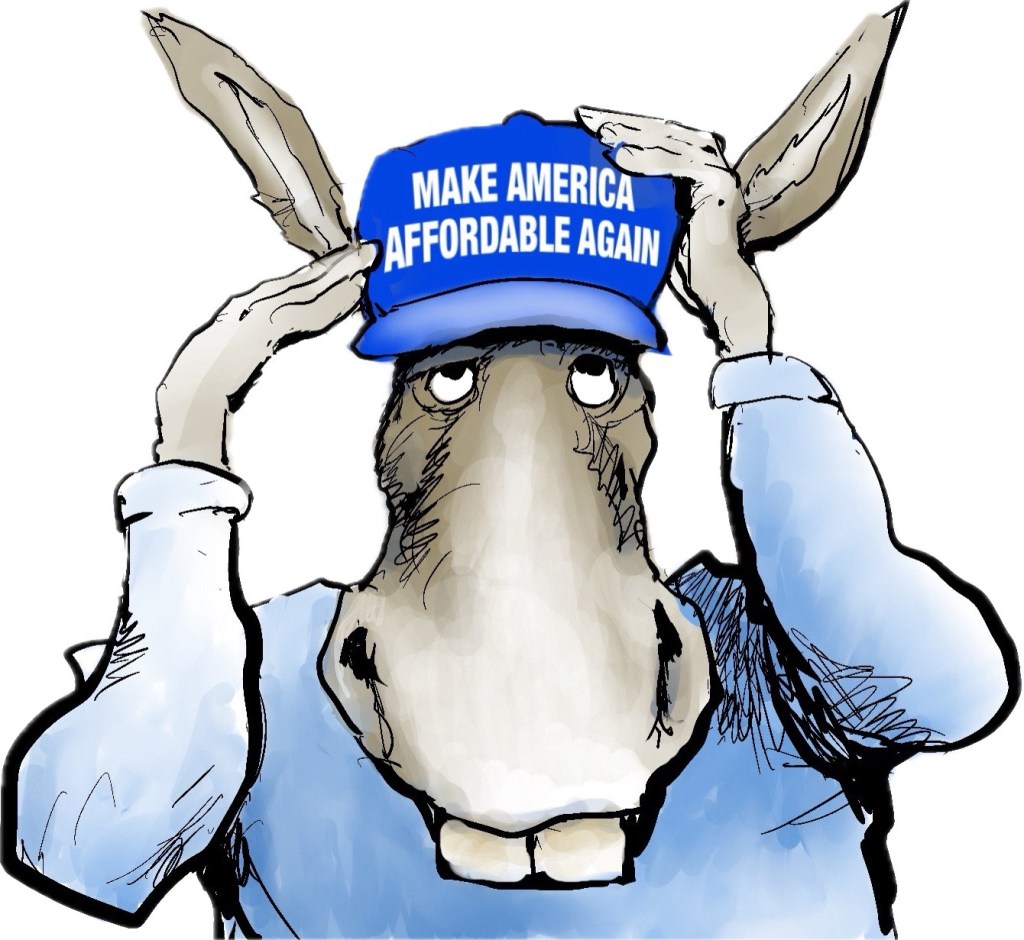
For decades, Democrats have been trapped in a political cycle that looks an awful lot like bringing a strongly worded memo to a bar fight. Republicans gain power and immediately begin advancing their agenda. They don’t ask permission. They don’t hold endless listening sessions. They don’t spend months worrying whether the opposition will approve. They simply govern according to their priorities.
Then Democrats finally win an election and immediately start talking about healing, restoring norms, reaching across the aisle, and finding common ground with people who have spent years proving they have no interest in meeting in the middle.
At some point, we have to ask: How’s that working out?
If Democrats retake the House in 2027, and especially if they reclaim the Senate and eventually the White House, they cannot afford another round of political amnesia. They cannot pretend the last decade never happened. They cannot spend precious political capital trying to win the approval of people who are determined to oppose them regardless of what they do.
In fact, Democrats need to remember their own history.
When Franklin Delano Roosevelt entered the White House in 1933, the country was on its knees. Banks were collapsing. Unemployment was staggering. Families were losing farms, homes, and hope. FDR didn’t respond by forming a bipartisan commission to study the possibility of maybe considering solutions sometime in the future.
He acted.
The first hundred days of his administration fundamentally reshaped the relationship between government and the American people. Banking reforms. Public works programs. Jobs programs. Rural electrification. Labor protections. Financial regulations. Social Security. The alphabet soup of New Deal agencies that helped drag the nation out of economic catastrophe.
Roosevelt understood something modern Democrats often forget: when voters give you power, they expect you to use it.
Did everyone agree with him? Of course not.
The wealthy hated him.
Corporate interests hated him.
Conservatives accused him of destroying America.
And when parts of the Supreme Court began striking down New Deal programs, Roosevelt didn’t politely wring his hands and surrender. He openly proposed expanding the Court, making it clear that if unelected judges intended to stand in the way of solving a national crisis, he was prepared to fight back.
Whether one agrees with the court-packing proposal or not, the point is that FDR understood leverage. He understood that governing sometimes requires pressure. He understood that elections have consequences.
Most importantly, he understood that the purpose of power is not to possess it. The purpose of power is to use it.
Somewhere along the way, Democrats became terrified of being accused of exercising authority. Every policy proposal comes wrapped in apologies, caveats, and negotiations before the first vote is even cast. Republicans start at their destination. Democrats start by compromising with themselves.
That has to end.
If Democrats regain power, they should govern with the same sense of urgency that Roosevelt brought to the Great Depression.
If abortion rights can be codified into federal law, do it.
If voting rights protections can be strengthened, do it.
If labor protections can be expanded, do it.
If healthcare can be protected and improved, do it.
If the Equal Rights Amendment can finally be recognized after nearly a century of delay, do it.
If reforms to the federal judiciary are necessary to restore public confidence, then have that fight.
The response from Republicans will be predictable. They’ll call it radical. They’ll call it socialism. They’ll call it an assault on democracy.
They called FDR all those things too.
History doesn’t remember the people who complained about Social Security. History remembers the people who created it.
History doesn’t remember the people who opposed rural electrification. History remembers the people who brought electricity to millions.
History doesn’t remember the defenders of the status quo. History remembers those who improved the lives of ordinary Americans.
The irony is that many Republican voters would benefit from these policies every bit as much as Democratic voters. Better healthcare doesn’t care who you voted for. Better wages don’t check party registration. Better infrastructure doesn’t ask whether your truck has a bumper sticker.
The people who would be threatened are not ordinary Americans. The people who would be threatened are the donors, lobbyists, and corporate interests that have enjoyed writing the rules for far too long.
Democrats don’t need to become Republicans.
But they do need to rediscover what made Roosevelt’s Democratic Party successful. Courage. Urgency. Confidence. The willingness to act. The willingness to fight. The willingness to say, “This is what we’re doing because it’s what the country needs.”
FDR didn’t ask history for permission.
He made history.
It’s time for Democrats to remember that.

