Dwain Northey (Gen X)
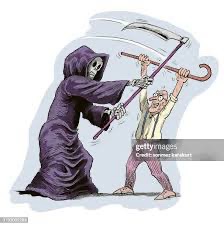
Forever Is a Long Time
Every few months, another headline appears announcing a breakthrough in genetics, genome sequencing, telomere research, cellular reprogramming, or some other field that promises to slow, halt, or perhaps even reverse aging. Scientists are increasingly discovering that aging is not simply “wear and tear” but a collection of biological processes. Cells lose their ability to repair themselves. DNA accumulates damage. Certain genes switch on and off differently over time. Some tissues stop replacing themselves efficiently. In theory, if those mechanisms can be repaired or reset, human lifespan could be dramatically extended.
From a purely scientific standpoint, that’s fascinating.
From a philosophical standpoint, it is terrifying.
Most people hear “end aging” and immediately imagine more healthy years. More time with family. More opportunities to travel, learn, and experience life. Who wouldn’t want to be thirty-five physically while retaining decades of wisdom?
The problem is that science rarely exists in isolation from economics, politics, and human nature.
Let’s assume researchers actually succeed. Imagine a treatment that stops biological aging. Not immortality in the Highlander sense. You could still be hit by a bus, contract a disease, or fall off a cliff. But barring accidents, you might live for centuries.
Now what?
Our current economic systems struggle to support people living eighty years. Retirement systems are already strained across much of the world. Healthcare systems are overwhelmed. Housing shortages exist on nearly every continent. Young adults struggle to afford homes, start families, or build wealth.
What happens when nobody dies?
The obvious answer is population growth, but that’s only the beginning.
Imagine a CEO who remains healthy and productive for three hundred years. A billionaire who never relinquishes control of assets. Political leaders who remain active indefinitely. Supreme Court justices serving not for decades but centuries.
Human societies have always depended on generational turnover. New ideas eventually replace old ones not because arguments win, but because generations change. Scientific revolutions, cultural shifts, and social progress often occur because younger people inherit the institutions of society.
If the same people remain in charge forever, society risks becoming frozen in place.
Then there is wealth.
The fantasy version of longevity looks a lot like Connor MacLeod from Highlander. Live for centuries, invest wisely, accumulate assets, and eventually become incredibly wealthy.
The reality is that most people are not starting with centuries of compound interest. They’re starting with credit card debt, medical bills, rent payments, and stagnant wages.
If anti-aging treatments become available, who gets them first?
History suggests the answer is obvious.
The wealthy.
The first generation of longevity therapies would almost certainly be expensive. They would begin as luxury medicine before becoming more accessible. That creates a disturbing possibility: a society where the rich don’t merely live better than everyone else—they live vastly longer.
For most of human history, inequality meant differences in comfort and opportunity.
Now imagine inequality measured in centuries.
The rich live to 250. The poor die at 80.
That is not merely economic inequality. It is a fundamentally different class of humanity.
There is also the question of meaning.
Part of what gives life urgency is that it ends.
People fall in love because time is limited. Parents treasure childhood because it passes. We pursue dreams because we know there are only so many years available.
Would a life of three hundred years make us wiser? Or would it make us procrastinate forever?
“I’ll learn that language next century.”
“I’ll write that book in 2150.”
“I’ll travel eventually.”
Death is unpleasant to contemplate, but it provides a framework that gives value to time.
Without limits, would time become less precious?
None of this means research into aging is wrong. If we can eliminate Alzheimer’s, Parkinson’s, cancer, and other diseases associated with aging, we absolutely should. Extending healthy life by ten, twenty, or thirty years while reducing suffering is a noble goal.
But there is a profound difference between helping people live healthier lives and creating a world where aging effectively stops.
Science often asks, “Can we do this?”
The harder question is, “Should we do this?”
Because before humanity celebrates the conquest of aging, we need answers to housing, employment, resource consumption, wealth concentration, political power, and the simple question of what it means to be human when the clock no longer ticks.
Living forever sounds wonderful until you start doing the math.
Then it starts looking less like a medical breakthrough and more like a civilization-wide stress test.
And unlike Connor MacLeod, most of us don’t have a Scottish castle, centuries of accumulated wealth, and a screenplay making sure things work out in the end.
 Esoteric Meandering Shouting Into the Void