Dwain Northey (Gen X)
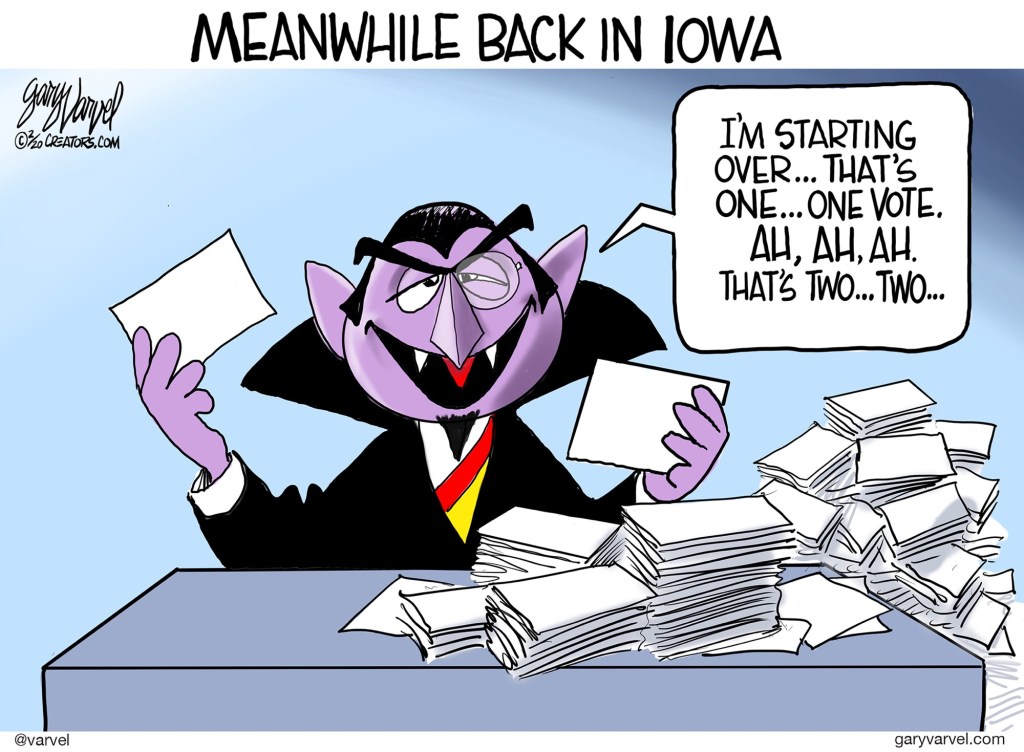
One of the latest election proposals is the call for paper ballots, hand-counted votes, and final election results before midnight on Election Day. On the surface, that may sound like a return to simplicity. In reality, it’s a proposal better suited for America in the 1800s than America in the 21st century.
When the United States was a nation of small farming communities and townships with a few hundred or a few thousand voters, hand-counting every ballot might have been practical. Today, millions of people vote in metropolitan areas where a single county may process more ballots than entire states did a century ago. Population growth has fundamentally changed the scale of elections.
The contradiction is obvious. If every ballot must be counted by hand, accuracy takes time. If every result must be certified before midnight on Election Day, speed becomes the priority. You simply cannot maximize both in jurisdictions processing hundreds of thousands—or even millions—of ballots.
Imagine it as a scene from an action movie.
Liam Neeson’s daughter has been kidnapped. The kidnappers demand five million dollars in cash. He races to the bank with only three hours before the deadline. The bank agrees to provide the money, but the cashier has one condition: every single dollar bill must be counted by hand. No counting machines. No electronic verification. One bill at a time.
One…two…three…
Meanwhile, the clock keeps ticking.
At some point, anyone watching the movie would yell at the screen, “Use the machine!”
Not because machines are perfect, but because they were invented to handle large volumes quickly while still allowing for verification. If there is a discrepancy, you investigate it. You don’t eliminate technology altogether because perfection is impossible.
That is why the proposal to hand-count every ballot while simultaneously demanding complete results by midnight feels detached from reality. Election workers aren’t counting a few hundred votes in a church basement anymore. They’re processing millions of ballots across thousands of precincts, often including military ballots, overseas ballots, provisional ballots, and legally accepted mail ballots that require signature verification.
Accuracy isn’t the enemy of democracy. Neither is taking the necessary time to get the count right.
In fact, rushing the process creates more opportunities for mistakes than allowing election officials to follow established procedures carefully.
Paper ballots themselves are not controversial. Many election experts support paper records because they provide a physical audit trail. The challenge isn’t the paper—it’s insisting that every one of those ballots be counted manually while expecting immediate final results from some of the largest population centers in the world.
Technology has transformed nearly every aspect of modern life because it allows people to perform enormous tasks efficiently while preserving the ability to audit and verify the results. We trust machines to count millions of dollars moving through banks every second. We trust computers to process taxes, airline reservations, payrolls, and medical records. Yet some would have us believe that elections should abandon modern counting methods entirely while somehow becoming faster.
Democracy deserves confidence. It deserves transparency. It also deserves practicality.
The goal shouldn’t be to count ballots the slowest way possible. The goal should be to count every lawful ballot accurately, securely, and with safeguards that allow the results to be verified if questions arise.
Sometimes taking an extra day—or even several days—to ensure every vote is counted correctly isn’t a weakness of democracy.
It’s evidence that democracy is taking its job seriously.

