Dwain Northey (Gen X)
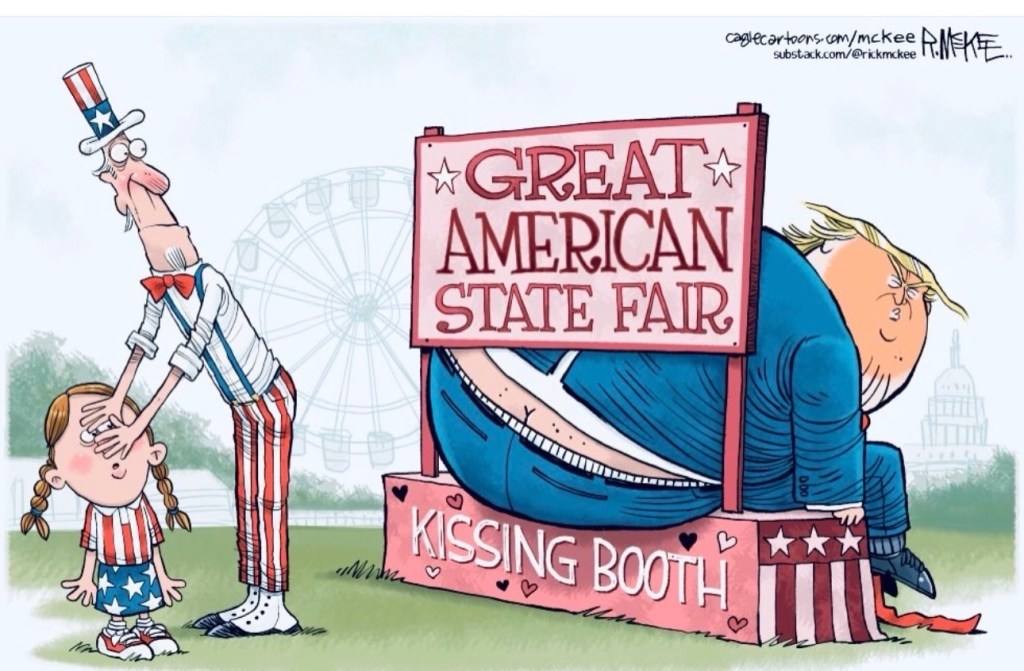
The Fourth of July has never belonged to a president.
Not to George Washington. Not to Abraham Lincoln. Not to Franklin Roosevelt. Not to Ronald Reagan. Not to Barack Obama. And despite what Donald Trump appears to believe, it doesn’t belong to him either.
The 250th anniversary of the Declaration of Independence should be one of those rare moments when Americans pause our endless political arguments and remember what we actually celebrate. We don’t celebrate a man. We don’t celebrate a political party. We don’t even celebrate a government.
We celebrate an idea.
That idea was radical in 1776. It was that governments derive “their just powers from the consent of the governed.” It was the notion that liberty belongs to the people, not to kings, not to emperors, and certainly not to presidents who believe the nation revolves around them.
America wasn’t even technically a country on July 4, 1776. We declared independence, but we had no Constitution. We had no presidency. We had no Bill of Rights. George Washington wasn’t President because the office didn’t even exist. The Declaration was the birth of an aspiration, not the completion of a nation.
Our country has spent the last 250 years trying to live up to those words.
That is why I find it troubling when Donald Trump attempts to wrap the entire anniversary around himself. Whether it’s speeches that portray him as the embodiment of America or events designed to elevate his personal image, the underlying message is always the same: I am America.
No, you’re not.
No president is.
America survived Washington stepping down voluntarily. It survived the Civil War. It survived the Great Depression. It survived two world wars, Watergate, Vietnam, recessions, pandemics, and every other crisis because America is larger than any individual.
The office serves the country.
The country does not serve the office.
The irony couldn’t be richer. The Declaration of Independence was, at its heart, a rejection of concentrating power in one man. The colonists listed grievance after grievance against a king who believed the government existed to serve him.
They didn’t trade one king for another.
The founders intentionally built a system where presidents come and go while the Republic endures.
That is the point.
Trump’s “Festival of the States” on the National Mall was apparently envisioned as a grand patriotic celebration. Yet reports and images suggested it struggled to generate the excitement and attendance one would expect from a once-in-250-years event. Rather than becoming a unifying national celebration, it often appeared overshadowed by its association with one political figure instead of the broader story of the American people. Public enthusiasm for the semiquincentennial cannot simply be manufactured through branding or personality. It has to be earned by inviting everyone into the celebration, regardless of party. When the focus shifts from the nation to the leader, the celebration loses what made it meaningful in the first place.
Perhaps that’s because Americans instinctively understand something our politicians sometimes forget.
We don’t celebrate presidents on Independence Day.
We celebrate independence.
We celebrate ordinary farmers who became soldiers. Merchants who became diplomats. Printers who became revolutionaries. Women who kept families and communities alive while the men fought. Enslaved Americans who heard the words “all men are created equal” and spent generations demanding that the nation finally live up to them. Immigrants who arrived decades later believing that this imperfect experiment was still worth joining.
That is America.
Not one man.
Not one administration.
Not one political movement.
An idea.
Ideas cannot be trademarked. They cannot be copyrighted. They cannot be licensed to a political campaign or turned into personal branding.
Thomas Jefferson’s words belong to every American, including those who disagree with whoever occupies the White House.
The greatest presidents have understood this. Washington surrendered power. Lincoln spoke of “the better angels of our nature.” Roosevelt reminded us that democracy belonged to the people. They recognized that history would judge them by whether they strengthened the Republic—not whether they convinced the Republic to revolve around them.
That is the lesson of 250 years.
Presidents are temporary.
The Constitution endures.
Political parties rise and fall.
The Declaration remains.
The fireworks fade.
The idea survives.
That is what we should be celebrating—not the ego of whoever happens to be holding the office at this particular moment in history.

