Dwain Northey
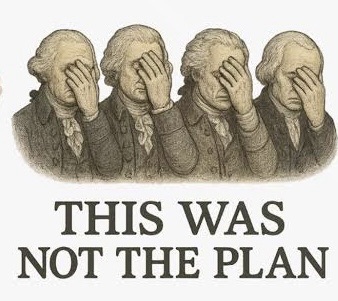
The older I get, the more convinced I become that the Democratic Party’s greatest political strategist isn’t some Republican consultant. It’s ourselves.
If history has taught us anything, it’s that Democrats have an uncanny ability to snatch defeat from the jaws of victory. Republicans don’t even have to beat us sometimes. They just have to wait patiently while we start arguing with each other over who is sufficiently pure enough to deserve support.
That is my greatest fear heading into the 2026 midterm elections.
Not that Republicans will suddenly become wildly popular. Not that they’ll unveil some brilliant new governing philosophy. My fear is far more mundane—and far more historically accurate.
We’ll turn on each other.
We’ll dust off the ideological purity tests that have become our favorite self-inflicted wound. Someone won’t be progressive enough. Someone else won’t be moderate enough. One candidate voted the wrong way fifteen years ago. Another used the wrong phrase in a speech. Someone else failed to embrace Issue Number 47 with sufficient enthusiasm.
Before long, social media will be filled with Democrats explaining why another Democrat is somehow “just as bad.”
No. They’re not.
Politics isn’t a search for your soulmate. It’s public transportation. You don’t refuse to board the bus because it doesn’t stop exactly at your front door. You get on the one that gets you 95% of the way there instead of standing on the curb congratulating yourself on your ideological consistency while the bus headed in the opposite direction wins the race.
Republicans understand something that Democrats often refuse to acknowledge. They know coalition politics is messy. They know every member of their coalition doesn’t agree on everything. Libertarians, evangelical Christians, fiscal conservatives, populists, business interests—they argue plenty behind closed doors.
Then Election Day arrives.
Suddenly they’re rowing the same boat.
Democrats, on the other hand, have a bad habit of drilling holes in our own hull because someone painted the oars the wrong shade of blue.
It’s maddening.
The Republican strategy practically writes itself. They know that if Democrats remain united around protecting democracy, expanding healthcare, defending voting rights, supporting workers, preserving reproductive freedom, and maintaining the rule of law, they’re facing a very difficult election.
But if they can sit back while Democrats begin the familiar ritual of cannibalizing our own candidates over relatively minor disagreements, they don’t have to win the argument.
We lose it for them.
And let’s be honest—that has happened more times than many of us care to admit.
A coalition isn’t supposed to be made up of clones. It’s supposed to be made up of people who agree on the big picture while accepting that they’ll disagree on the details. If you agree with someone 95% of the time, maybe—just maybe—that person is your ally, not your enemy.
The perfect candidate doesn’t exist.
The perfect political party certainly doesn’t exist.
Democracy itself is an exercise in compromise. The Constitution wasn’t written because everyone got exactly what they wanted. It was written because enough people agreed on enough things to move the country forward.
Imagine if the delegates had behaved like modern political social media.
“I agree with 95% of the Constitution, but I don’t like Clause 17, so burn the whole thing down.”
We’d probably still be arguing in Philadelphia.
Here’s the uncomfortable truth: every minute Democrats spend attacking fellow Democrats over the remaining 5% is a minute Republicans don’t have to spend defending their own record.
That’s a bargain they’re more than happy to accept.
So my plea heading into 2026 is simple.
Save the family arguments for after the election.
Fight passionately in the primaries. Debate ideas. Challenge assumptions. Demand better from candidates. That’s healthy.
But once voters make their choice, remember who the actual opponent is.
Because history has already shown us what happens when Democrats mistake allies for enemies. We become experts at moral victories and spectators at actual governing.
I’d much rather have a coalition that agrees on 95% of the journey than perfect agreement while watching the country head in the opposite direction.
Let’s not become the authors of another chapter titled How Democrats Managed to Lose an Election They Were Poised to Win.
We’ve written that story before.
It wasn’t a comedy the first time.
There’s no reason to produce the sequel.

