Dwain Northey ( Gen X)
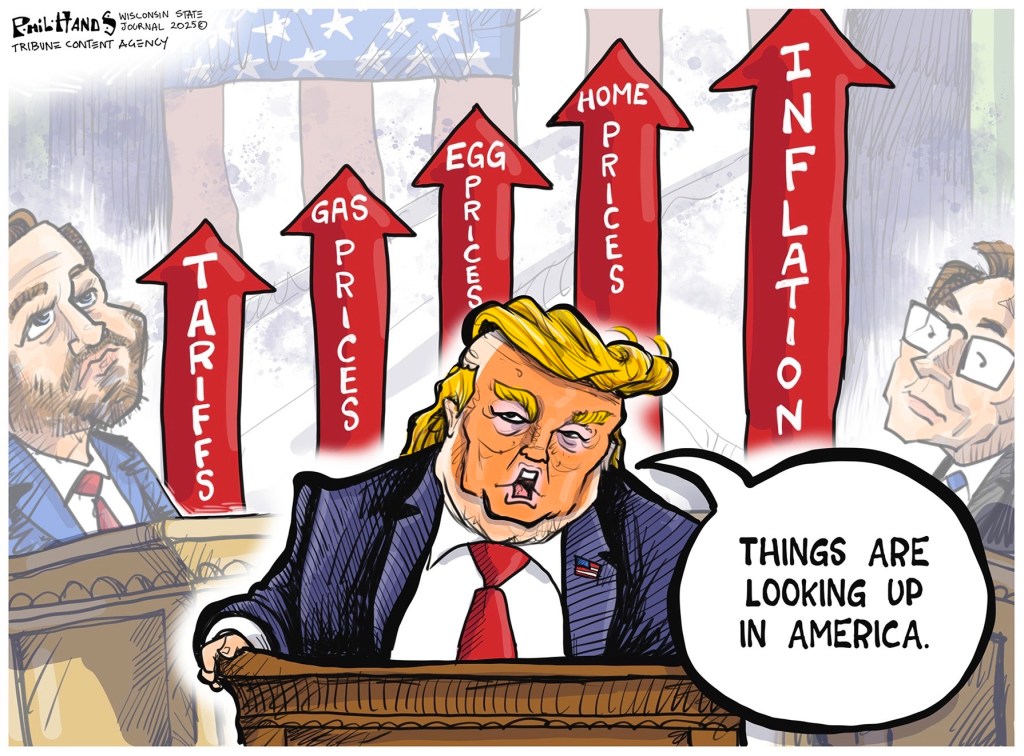
One of America’s favorite political myths is that what this country really needs is a businessman in the Oval Office. Every election cycle, someone inevitably declares, “The government should be run like a business.”
No. It shouldn’t.
Governments and businesses have fundamentally different purposes. A business exists to generate profit for its owners or shareholders. A government exists to provide stability, infrastructure, justice, security, and opportunity for its citizens. Those goals overlap occasionally, but they are not remotely the same mission.
Imagine if your local fire department were run strictly like a business. The fire chief would ask for your credit card before putting out your burning house. Public libraries would close because they don’t make money. National parks would be bulldozed into shopping centers because the quarterly earnings report looked better. Rural hospitals would disappear entirely because the return on investment wasn’t high enough.
Businesses ask one question: “Does this increase profit?”
Governments have to ask a much harder question: “Is this good for society?”
Those are not the same thing.
The irony is that many of the CEOs people idolize became successful precisely because they were willing to remove emotion from their decisions. Lay off 10,000 employees? If the stock goes up, congratulations. Close a factory that has supported a town for generations? Sorry, shareholder value comes first. Cut pensions? Eliminate healthcare? Outsource jobs? Wall Street applauds because the balance sheet looks prettier.
In corporate America, compassion is often treated as an expense.
That’s why many successful CEOs develop a reputation for emotional detachment. Whether it’s fair or not, the job rewards an ability to separate human consequences from financial outcomes. It’s not necessarily that they’re evil; it’s that the system incentivizes viewing people as costs, assets, liabilities, or productivity metrics rather than as human beings.
That mindset may increase quarterly profits.
It is a terrible way to govern 340 million people.
A president doesn’t oversee employees. A president represents citizens.
Children with disabilities aren’t line items. Veterans aren’t overhead. Seniors aren’t depreciating assets. Public schools aren’t profit centers. Disaster relief isn’t a bad investment because hurricanes don’t generate revenue.
Human beings don’t fit neatly into spreadsheets.
Running a government also requires accepting responsibilities that no rational business would ever voluntarily take on. The military loses money. Roads lose money. Public health departments lose money. National parks lose money. Scientific research often loses money for decades before producing breakthroughs. Education costs enormous amounts of money long before society sees the return.
A corporation would eliminate many of those expenses.
A civilization cannot.
History has shown this repeatedly. The greatest presidents weren’t necessarily the greatest financiers. They were leaders who understood diplomacy, compromise, history, law, and perhaps most importantly, people. They recognized that the health of a nation cannot be measured solely by GDP or the Dow Jones average. A country is measured by whether its citizens can build meaningful lives, whether justice is applied fairly, whether opportunity exists, and whether future generations inherit something better than what came before.
Balance sheets don’t capture hope.
Quarterly earnings don’t measure dignity.
Stock prices don’t tell you whether democracy is healthy.
Of course, fiscal responsibility matters. Governments shouldn’t waste money simply because they’re governments. Budgets matter. Efficiency matters. Accountability matters.
But reducing the presidency to the role of CEO misunderstands the office entirely.
A CEO’s legal duty is generally to maximize value for the company and its owners.
A president’s moral duty is to serve the people—including those who will never make anyone richer.
Those are entirely different jobs.
Perhaps it’s time we stop confusing corporate success with public service. Being brilliant at increasing shareholder value doesn’t automatically prepare someone to lead a nation of hundreds of millions of unique human beings with different needs, beliefs, struggles, and dreams.
The Oval Office isn’t a corner office.
America isn’t a corporation.
And citizens were never meant to be treated like shareholders—or worse, expendable expenses on someone else’s balance sheet.
 Esoteric Meandering Shouting Into the Void