Dwain Northey (Gen X)
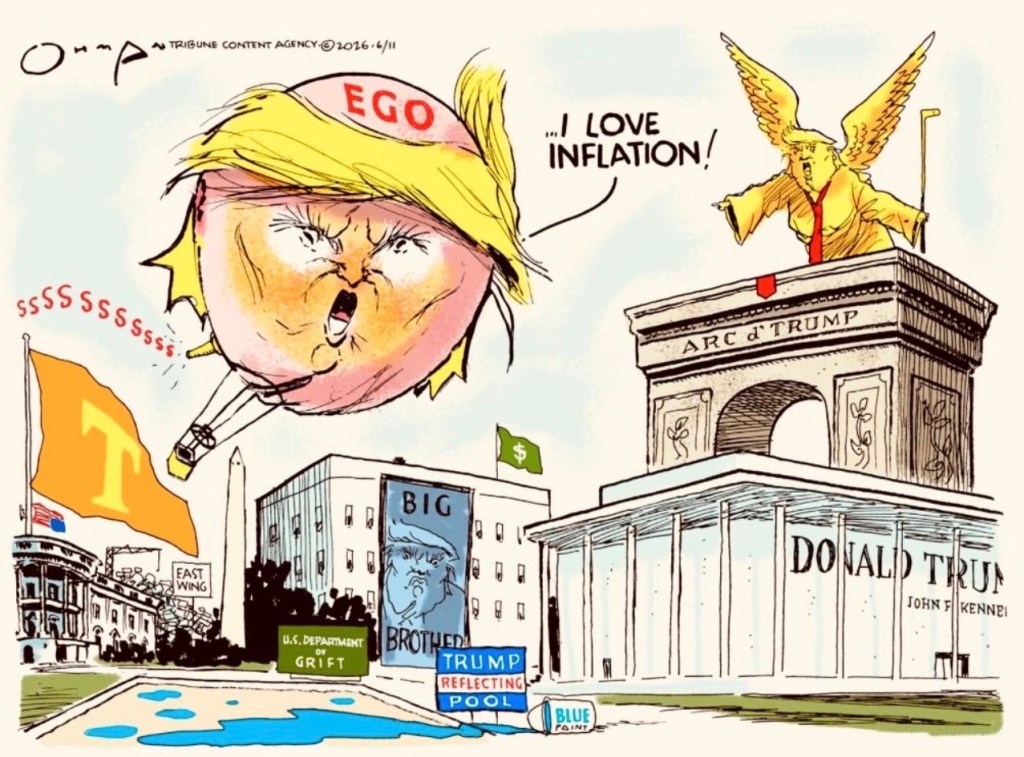
One of the more frustrating things about modern politics is how quickly we forget our own history. Every scandal becomes “unprecedented,” every constitutional crisis becomes “something we’ve never seen before,” and every abuse of power is treated as if it materialized out of thin air.
It didn’t.
Donald Trump is not the first president to view the Department of Justice as something that exists to protect him personally. Richard Nixon certainly tried. He expected loyalty over law, believed the machinery of government should shield him from accountability, and discovered the hard way that the Justice Department was not supposed to function as the president’s personal law firm.
History delivered an important lesson back then that seems to have faded from public memory: Attorney General John Mitchell didn’t simply lose his job. He went to prison for his role in Watergate. The Attorney General of the United States served time because the rule of law ultimately mattered more than loyalty to the president.
That’s a lesson worth remembering.
Where Trump differs from Nixon isn’t simply in trying to influence the Justice Department. It’s the breathtaking scope of what he appears to believe the federal government is for. The DOJ isn’t merely expected to defend administration policies. It’s expected to investigate his political enemies, ignore his political allies, defend him personally, and pursue whatever grievance happens to dominate the news cycle that day.
That’s not how constitutional government works. That’s how personal governments work.
Then there’s the Supreme Court.
The Court’s presidential immunity decision granted presidents broad immunity for official presidential acts. Whether one agrees with the ruling or not, it was never intended to mean that a president can wave a magic wand over every action and declare, “Official business.” The difficult question is where the line is drawn, and that line will almost certainly be litigated for years.
Sometimes I joke that if a president claimed he shot someone on Fifth Avenue because it was somehow necessary for national security, we’d spend years arguing whether it was an “official act.” It’s absurd, but that’s the uncomfortable place we’ve wandered into. The immunity decision answered one question while creating dozens more.
The Constitution was never designed around the assumption that one person would believe every institution exists solely for his personal benefit.
The Justice Department belongs to the American people, not to the president.
The Attorney General represents the United States, not the individual occupying the Oval Office.
The Supreme Court is an independent branch of government, not a presidential customer service desk.
Those distinctions matter. They always have.
I dislike using the word “unprecedented” because it’s become the media’s favorite adjective. Everything is unprecedented. Every Tuesday is unprecedented. At some point, the word loses all meaning.
But while Trump’s actions have historical echoes, the sheer scale of his expectations is remarkably different. Nixon tried to bend institutions to protect himself. Trump often behaves as though the institutions exist for no other purpose.
Nixon failed.
His presidency ended in disgrace, his administration unraveled, and some of the people who carried out his wishes paid a very real price—including the Attorney General himself.
History doesn’t repeat itself exactly, but it does rhyme. The hope is that it rhymes loudly enough for Americans to remember that no president is supposed to own the Justice Department, no attorney general is supposed to serve as personal counsel to the Oval Office, and no Supreme Court exists to function as a presidential insurance policy.
The strength of a republic isn’t measured by how much power a president can accumulate.
It’s measured by whether the institutions designed to restrain that power still have the courage to do so.

