Dwain Northey (Gen X)
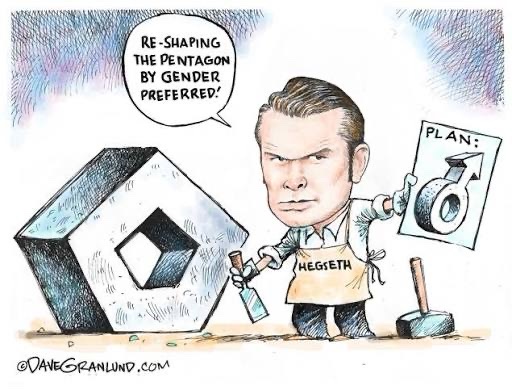
The Masculinity Olympics
For an administration that seems perpetually terrified of anything that might be labeled “woke,” “effeminate,” or “not masculine enough,” they sure spend an astonishing amount of time talking about… men.
Not policy. Not infrastructure. Not healthcare. Men.
Muscular men. Tough men. Young men. High-testosterone men. Men who apparently embody some mythical vision of American masculinity that was forged somewhere between a recruiting poster from 1943 and the cover of a bodybuilding magazine.
It’s almost become government policy.
Every speech seems to include praise for the physical strength, toughness, or appearance of soldiers, athletes, or law enforcement officers. Every cultural complaint somehow circles back to masculinity supposedly being under attack. Every problem in America apparently has the same prescription: more testosterone.
Now enter the Secretary of Defense—or perhaps, given the increasingly hawkish rhetoric, the Secretary of War.
The latest obsession? Testing troops over thirty for low testosterone and aggressively pursuing testosterone replacement therapy wherever it’s deemed appropriate. It’s presented almost as if America’s military readiness hinges not on training, logistics, strategy, or technology, but on everyone’s hormone levels.
You almost expect the next Pentagon budget to include a line item for protein powder and squat racks.
The irony is impossible to ignore.
This is an administration that rails endlessly against LGBTQ Americans, treats discussions of gender identity as existential threats to civilization, and acts as though simply acknowledging diversity is somehow dangerous.
Yet they’re utterly captivated by an incredibly narrow image of masculinity.
Everything becomes about muscles.
Everything becomes about testosterone.
Everything becomes about proving who’s the toughest guy in the room.
It’s as if they believe the Constitution came with a required bench press minimum.
Real strength has never been measured by biceps.
History’s greatest military leaders weren’t remembered because they had the highest testosterone levels. They were remembered because they understood strategy, logistics, diplomacy, discipline, and leadership.
Likewise, great presidents aren’t judged by how “alpha” they appear. They’re judged by whether the country is stronger, safer, and more prosperous after they leave office.
America has never required every citizen—or every soldier—to fit into one cartoonish stereotype of masculinity.
Our military succeeds because it recruits people with different skills, different backgrounds, and different strengths. Intelligence analysts don’t win wars by deadlifting. Cybersecurity experts don’t defend networks with bigger biceps. Pilots don’t fly better because their hormone levels fit some arbitrary ideal.
Competence beats machismo every time.
Perhaps that’s the strangest part of all this.
For a movement constantly accusing everyone else of “identity politics,” they seem remarkably consumed by one particular identity: a highly stylized, exaggerated version of masculinity.
It’s politics as a high school locker room.
The obsession isn’t strength.
It’s the performance of strength.
Because genuinely confident people don’t spend every waking moment trying to convince everyone else how masculine they are.
They simply get the job done.


