Dwain Northey (Gen X)
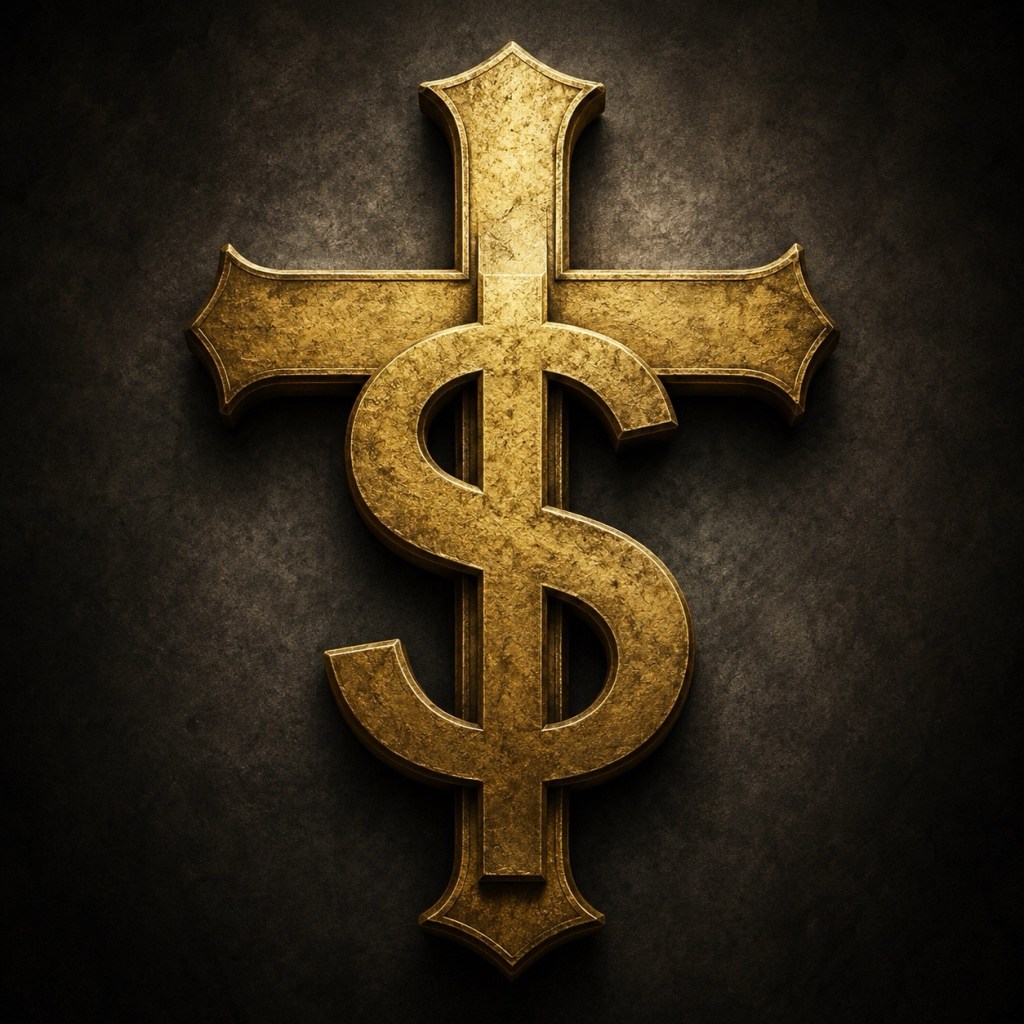
Christian Capitalism: The Bible Seems to Have Missed the Memo
I am continually amazed at how people can weld two completely different ideas together, slap a flag on it, put a cross next to it, and declare that they are inseparable. Recently someone confidently informed me, “This is a Christian capitalist country.”
I’m sorry… what?
Those aren’t synonyms. They’re not even naturally compatible philosophies. One is an economic system. The other is a religion centered around the teachings of a first-century Jewish rabbi who spent an awful lot of time warning people about wealth.
Capitalism is built around markets, competition, private ownership, profit, investment, and the accumulation of capital. Whether you think that’s wonderful or terrible is beside the point. That’s what capitalism is.
Christianity, if we’re actually talking about what Jesus taught instead of what modern politics wishes He taught, repeatedly warns about the dangers of wealth becoming an idol.
Jesus didn’t tell the rich young ruler, “Excellent portfolio. Diversify your investments.”
He told him to sell what he owned and give to the poor.
He didn’t praise the money changers in the Temple for providing valuable financial services.
He flipped over their tables.
He didn’t say, “Blessed are the shareholders, for they shall maximize quarterly returns.”
He said, “Blessed are the poor.”
He didn’t tell people to build bigger barns to store more wealth.
He told parables warning against exactly that mindset.
He didn’t preach, “Greed is good.”
He preached generosity.
He preached humility.
He preached caring for widows, orphans, strangers, and the least among us.
And then there’s that famously inconvenient camel-and-the-eye-of-a-needle passage. Christians have spent nearly two thousand years trying to explain that one away because, frankly, it’s uncomfortable. Apparently it’s easier to invent elaborate theological gymnastics than simply admit Jesus was pretty skeptical about wealth becoming the center of one’s life.
None of this means capitalism is inherently evil. It means capitalism is an economic tool. It has strengths. It has weaknesses. It creates innovation, but it also requires regulation because markets don’t possess a conscience.
Christianity, on the other hand, is supposed to be about conscience.
Those are different categories.
You can certainly be a Christian living in a capitalist society. Millions are.
You can believe capitalism is the best economic system currently available while also believing it should be tempered with compassion, charity, and protections for the vulnerable.
But calling capitalism itself “Christian” requires ignoring an astonishing amount of what Christ actually said.
It’s fascinating that many of the loudest voices proclaiming America a “Christian capitalist nation” are often the same people who accuse others of cherry-picking Scripture. Yet they somehow skip over nearly every sermon Jesus gave about wealth, possessions, generosity, and caring for the poor.
It’s almost as if they like the cross as a symbol but find the actual teachings attached to it… economically inconvenient.
If we’re going to invoke Jesus in our political or economic arguments, then we should probably start by reading what He actually said instead of assuming He’d be ringing the opening bell on Wall Street.
Christianity and capitalism are not the same thing.
One asks, “How do we create wealth?”
The other asks, “What do we owe one another?”
Confusing those two questions doesn’t strengthen either philosophy. It simply creates a version of Christianity that seems oddly more comfortable quoting stock prices than the Sermon on the Mount.
Perhaps the greatest irony is this: if Jesus walked into many of today’s churches preaching exactly the words recorded in the Gospels, some of the same people insisting this is a “Christian capitalist country” might accuse Him of sounding suspiciously… socialist.
That should probably give us pause.

