Dwain Northey (Gen X)
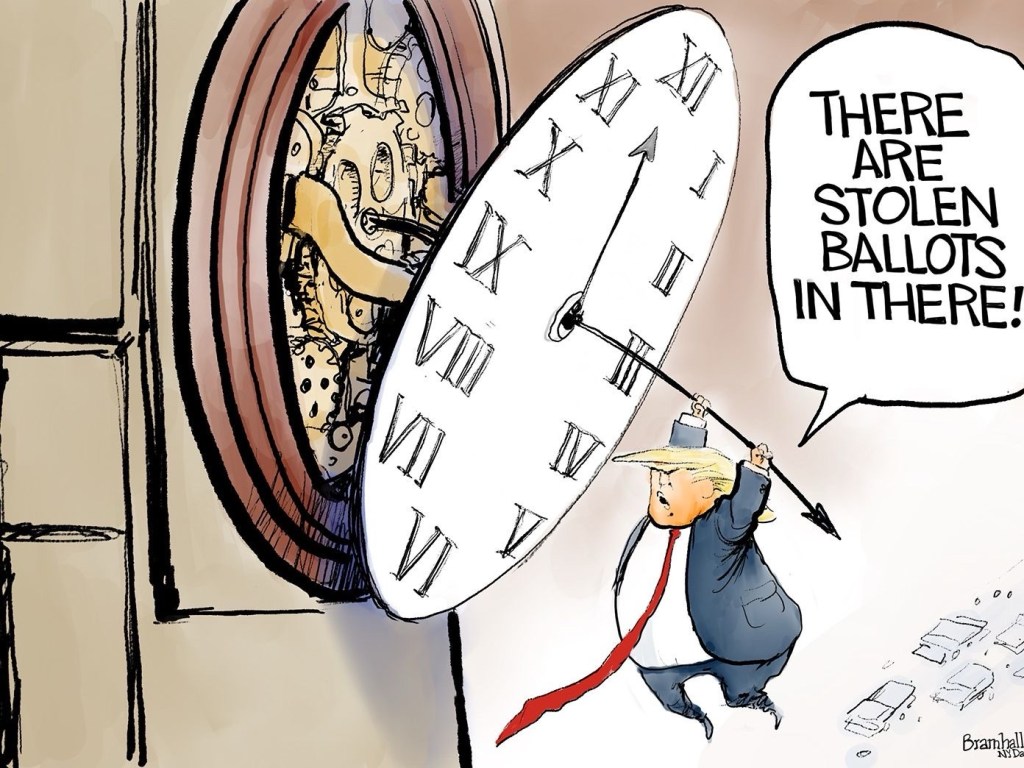
Six years. Think about that for a moment. Six years after the 2020 election, nominees sitting before the United States Senate—people seeking to become attorneys general, cabinet secretaries, judges, or other high-ranking officials entrusted with interpreting and enforcing the law—still cannot answer one of the simplest factual questions imaginable:
Who won the 2020 presidential election?
Not, “What are your political opinions?” Not, “Who did you vote for?” Not even, “Do you support Joe Biden’s policies?”
Just one straightforward question: Who won?
And almost without fail, the answer comes wrapped in verbal gymnastics.
“Joe Biden was certified.”
“He served as president.”
“The electoral votes were counted.”
“The transition occurred.”
Those statements are all true, but none of them answer the actual question. It’s like asking who won the Super Bowl and getting the response, “Well, one team was awarded the Lombardi Trophy.” That’s not an answer. It’s an attempt to avoid saying the obvious.
The obvious answer is that Joe Biden won the 2020 election.
He won the Electoral College by 306 electoral votes to Donald Trump’s 232. He also won the national popular vote by more than seven million votes. Those aren’t opinions. They’re historical facts.
Yet six years later, intelligent, highly educated lawyers and political appointees continue acting as though acknowledging that fact will somehow summon the wrath of Donald Trump.
One recent exchange perfectly illustrated the absurdity. A nominee admitted that Joe Biden received more Electoral College votes, was certified, and became president. A senator simply followed up:
“So you’re saying he won the election?”
Silence. Deflection. More carefully crafted legal language.
Apparently, saying every fact surrounding the election is acceptable—except the conclusion that naturally follows from those facts.
Imagine trying that logic anywhere else.
“The Diamondbacks scored more runs.”
“They were awarded the victory.”
“They advanced to the next round.”
“But I refuse to say they won.”
It’s ridiculous.
What’s most troubling isn’t that Donald Trump continues to insist he was wronged. Politicians have always struggled to accept defeat. What’s disturbing is watching otherwise qualified public servants refuse to acknowledge objective reality because they’re afraid of hurting one man’s feelings—or provoking his political retaliation.
These are people asking the Senate to trust their judgment, uphold the Constitution, and faithfully execute the laws of the United States. Yet many won’t utter a sentence that every election official, every court, every state certification process, and every peaceful transfer of presidential power has already established as fact.
If someone cannot answer a factual question with a factual answer, what confidence should we have that they’ll apply facts honestly when the stakes are even higher?
This has never really been about 2020 anymore. It’s about whether truth itself has become negotiable inside our government.
The irony is impossible to ignore. The same people who demand absolute honesty from witnesses, who insist on “just following the facts,” suddenly become masters of semantic escape whenever one particular fact might offend Donald Trump.
Not because the evidence is unclear.
Not because history is unsettled.
Not because there is legitimate doubt.
But because acknowledging reality has become politically dangerous.
A democracy cannot function if elected officials and presidential nominees are afraid to state historical facts simply because those facts bruise the ego of a former president. At some point, loyalty to one individual cannot be allowed to outweigh loyalty to the truth.
The question isn’t difficult.
Who won the 2020 election?
Joe Biden.
It took one sentence to answer—a sentence that, six years later, far too many people in Washington still seem unwilling to say out loud.

