Dwain Northey (Gen X)
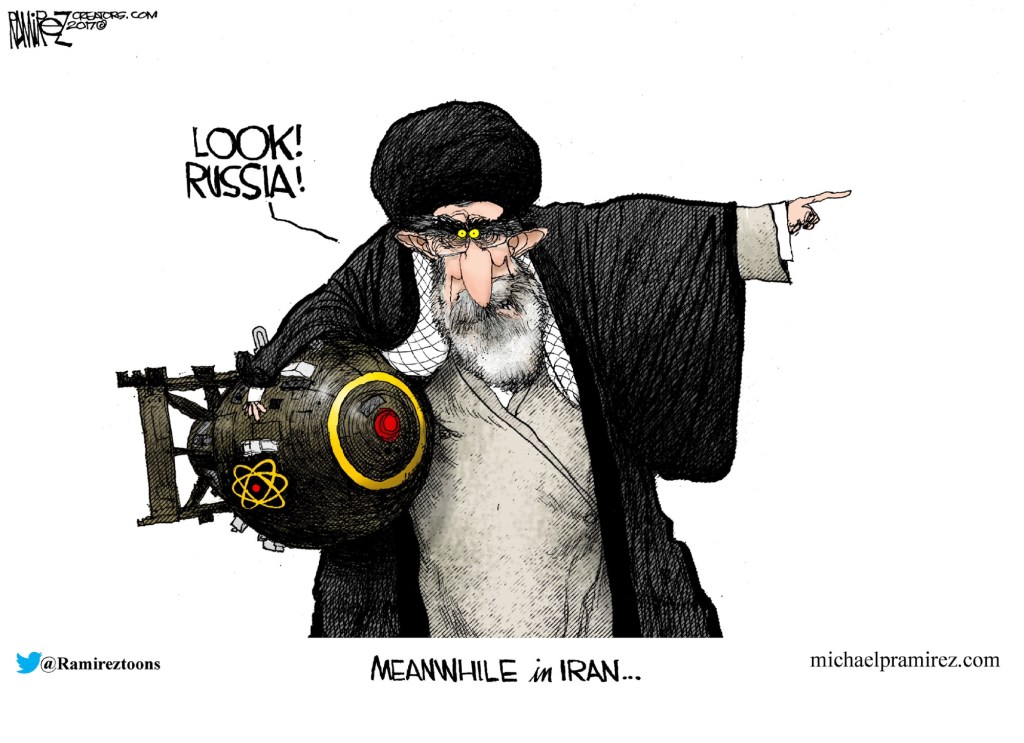
One of the most bewildering contradictions in modern foreign policy is watching the same administration justify military action against one nation over the possibility of nuclear weapons while simultaneously helping another nation develop nuclear capabilities.
Think about that for a moment.
The argument for bombing Iran was that it represented an unacceptable nuclear threat. Whether one believed that assessment or not, the justification was that the United States could not allow another destabilizing force in the Middle East to move closer to nuclear capability.
Then, almost in the same breath, we’re told that Saudi Arabia should receive American assistance to build a civilian nuclear program.
How does that make sense?
If the concern is nuclear proliferation, then shouldn’t our standard be consistent? Either spreading nuclear technology in one of the world’s most volatile regions is dangerous, or it isn’t. We can’t declare one country an existential threat while insisting another deserves American investment in nuclear infrastructure simply because it’s considered a geopolitical partner.
History should also give us pause.
The September 11 attacks remain the deadliest terrorist attack ever carried out on American soil. Of the 19 hijackers, 15 were Saudi nationals. That fact doesn’t mean Saudi Arabia as a nation was responsible for the attacks, nor does it mean every Saudi citizen shares extremist views. Those distinctions matter. But it does make the current enthusiasm for deepening strategic ties, especially involving sensitive nuclear technology, worthy of serious public debate.
Foreign policy shouldn’t operate on the principle that our adversaries are dangerous while our allies are incapable of making dangerous choices. Alliances change. Governments change. Regional politics change. Nuclear technology, once transferred, cannot simply be taken back.
This isn’t about defending Iran. It isn’t about condemning the Saudi people. It’s about asking for consistency.
If nuclear capability is truly one of the greatest threats to international stability, then our policies should reflect that principle regardless of which flag is flying over the facility. If we’re willing to use military force against one country over nuclear concerns, we should be extraordinarily cautious before helping another country acquire the same underlying technology—even for peaceful purposes—because history has a way of reminding us that today’s ally isn’t guaranteed to be tomorrow’s ally.
Consistency isn’t weakness. It’s credibility.
Without it, foreign policy begins to look less like a coherent strategy and more like choosing different rules for different countries based solely on convenience. And when that happens, it’s fair for Americans to ask a simple question:
Are we making the world safer, or are we simply redefining what counts as dangerous depending on who our friends are this week?

