Dwain Northey (Gen X)
Nothing Teaches Geography Like Another War
One unexpected benefit of America’s seemingly endless ability to stumble into new international conflicts is that it finally gets people to dust off something they haven’t looked at since eighth-grade social studies: a world map.
Who knew the greatest investment in geographic literacy would be military action?
Every time a new country dominates the headlines, millions of Americans collectively ask the same question: “Wait…where is that?” Suddenly Google Maps becomes the most patriotic app on their phone. People who couldn’t find Ukraine, Iran, Yemen, or Taiwan on a globe a week ago are now passionately debating military strategy over coffee.
It’s educational.
Before the crisis, half the country couldn’t tell you whether a nation was in Europe, Asia, Africa, or if it was just another county in Texas. But once American bombs, sanctions, aircraft carriers, or troops enter the conversation, everyone becomes an armchair geopolitical expert. “Well, if you look at the Strait of Hormuz…” says the guy who thought Hormuz was a brand of hummus last Tuesday.
That’s progress.
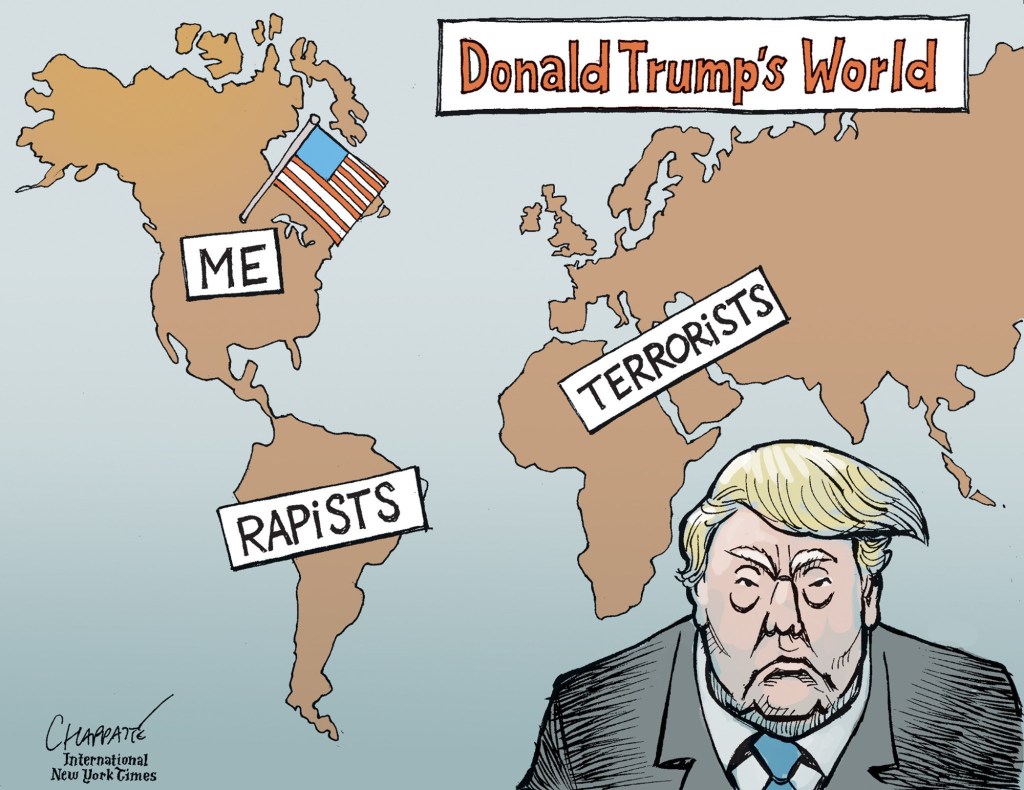
President Trump seems determined to provide a continuing education course in world geography. Every new confrontation is another chapter in “Countries You Didn’t Know Existed Until They Started Trending.”
Maybe next we’ll get flash cards.
“Class, today we’re learning where the Caucasus are.”
“No, not those caucuses. Different spelling.”
Of course, geography is only the beginning. Soon people discover that countries have histories stretching back thousands of years, complicated ethnic divisions, religious tensions, colonial legacies, border disputes, and alliances that don’t fit neatly into a thirty-second cable news segment. Imagine that. The world isn’t just a collection of blank spaces waiting for America to arrive and explain democracy.
Who could have guessed?
It’s amazing how often Americans ask, “Why do they hate us?” while never asking, “What happened there over the last hundred years?” Context is apparently optional until it starts affecting gas prices.
And that’s usually when the map comes back out.
The irony is that learning geography is genuinely valuable. Understanding where nations are, who their neighbors are, what resources they possess, what trade routes they control, and why regional conflicts matter creates informed citizens. That’s something schools have tried to accomplish for generations.
Apparently, they were using the wrong incentive.
Forget textbooks. Forget globes. Forget National Geographic. Just announce another international crisis, and suddenly millions of people can point to places they couldn’t pronounce the day before.
It’s an expensive educational program, admittedly. The tuition is measured in billions of taxpayer dollars, countless lives disrupted or lost, veterans carrying lifelong scars, refugees fleeing their homes, and decades of geopolitical consequences. But look on the bright side—someone finally learned the difference between the Persian Gulf and the Gulf of Mexico.
That’s got to count for something…right?

