Dwain Northey (Gen X)
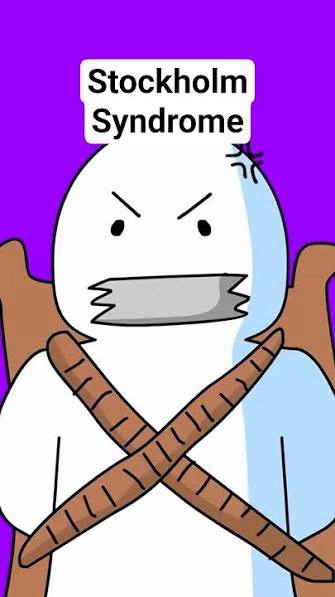
Stockholm Syndrome, American Edition
This is my opinion, and I want to make that distinction clear because apparently in 2026, having an opinion that doesn’t come with a government-issued talking point is becoming an act of rebellion.
I have come to believe that the current Republican Party—or the Trump Republican Party, MAGA, whatever branding we’re using this week—has developed something that looks an awful lot like political Stockholm syndrome.
Not literally, of course. I’m talking about the psychological dynamic where someone becomes so accustomed to intimidation, threats, punishment, and control that eventually they begin defending the person doing the intimidating, threatening, punishing, and controlling.
And honestly, what could be more useful to an authoritarian than that?
You don’t necessarily need everyone to love you.
You just need them to become afraid enough of what happens if they stop loving you.
That’s a very different thing.
There is a familiar metaphor for this: the abused spouse who learns to navigate the household by avoiding the next explosion.
“I’ll make dinner. I’ll keep my mouth shut. I’ll tell you you’re right. I’ll do whatever you want. Just don’t hit me again.”
Eventually, survival starts looking like loyalty.
And that’s what I see happening with a significant portion of today’s Republican Party.
Again, that’s my opinion. I’m not claiming that every Republican is an authoritarian, that every Trump supporter is abused, or that political disagreement is somehow equivalent to domestic violence. I’m talking about a behavioral dynamic that, from where I sit, increasingly resembles the psychology of someone who has learned that obedience is the safest option.
Trump doesn’t have to convince them that everything he does is good.
He only has to convince them that everything he does is preferable to whatever he tells them is waiting on the other side.
Immigrants.
Democrats.
Socialists.
“Communists.”
The “deep state.”
The media.
Universities.
Scientists.
Teachers.
Minorities.
LGBTQ Americans.
Anybody who can be turned into the next existential threat.
Fear becomes the currency.
And once fear becomes the currency, the person who claims to be the only one capable of protecting you suddenly becomes indispensable.
That’s one of the oldest tricks in the authoritarian playbook.
Create the threat.
Amplify the threat.
Convince people that only you can save them from the threat.
Then make obedience the price of protection.
And suddenly people aren’t asking, “Is this person behaving like a democratic leader?”
They’re asking, “What do I have to do so he doesn’t turn on me?”
That’s not patriotism.
That’s survival instinct.
And here’s the particularly bizarre part: some people will actually defend the person frightening them because admitting they’ve been manipulated is psychologically painful.
Nobody wants to look in the mirror and say, “Holy shit. I’ve been defending the guy who has been making me afraid.”
It’s much easier to say, “No, he’s fighting for people like me.”
So the abuse gets rationalized.
The threats become jokes.
The cruelty becomes strength.
The lies become “owning the libs.”
The corruption becomes “draining the swamp.”
The attacks on institutions become “taking back our country.”
And every time the behavior becomes more extreme, the rationalization has to become more extreme right along with it.
It’s a psychological treadmill.
And eventually, you aren’t even running because you believe in where you’re going.
You’re running because you’re terrified of stopping.
I’ve never been a Republican. But I’ve always liked to think for myself, and that’s precisely why this bothers me.
I don’t care whether someone is Republican, Democrat, independent, conservative, liberal, socialist, libertarian, or politically undecided. Nobody should surrender their capacity for independent thought to a political personality.
Democracy requires citizens who can look at their own side and say, “You’re wrong.”
That’s the whole damn point.
Your political party isn’t your spouse.
Your president isn’t your parent.
Your political movement isn’t a religion.
And your vote isn’t a blood oath.
If your guy does something terrible, you don’t have to invent a reason why it’s actually wonderful because he’s your guy.
You can simply say:
“That’s wrong.”
It shouldn’t be revolutionary.
Yet here we are.
And I think something interesting is happening beneath all the noise.
People are waking up.
Maybe not all at once. Maybe not dramatically. Maybe not with some Hollywood moment where everybody suddenly drops their MAGA hat in the rain and realizes they’ve been living in a political cult.
Real life doesn’t work that way.
Trauma doesn’t disappear because somebody finally recognizes it.
But little by little, people are beginning to recognize the pattern.
They’re recognizing the constant outrage.
The constant enemy.
The constant emergency.
The constant demand for loyalty.
The constant insistence that criticism is betrayal.
The constant shifting of the goalposts.
And eventually somebody starts asking the most dangerous question an authoritarian can hear:
“Wait. Why am I afraid of my own government?”
That’s when the spell starts to break.
Because authoritarianism ultimately depends on people believing that resistance is more dangerous than obedience.
And the moment enough people decide that obedience has become more dangerous than resistance, the equation changes.
That’s why I don’t think this is permanent.
I’m not a Republican.
I never have been.
But I’m an American, and I don’t want to live in a country where half the population has been psychologically conditioned to believe that keeping the powerful happy is the same thing as keeping the country safe.
I don’t want a political system where the objective is simply to avoid getting hit again.
I want citizens who don’t have to negotiate with power like an abused spouse negotiating with an angry partner.
“I’ll make dinner. I’ll stay quiet. I’ll tell you you’re right. Just please don’t hurt me.”
No.
That’s not freedom.
That’s compliance.
And compliance is not democracy.
Maybe the most patriotic thing any American can say to their own political party is:
“No. You’re wrong.”
Even when it’s your guy.
Especially when it’s your guy.
Because if you have to surrender your conscience to keep your political tribe happy, you’ve already surrendered the one thing democracy was supposed to protect in the first place:
your ability to think for yourself.

